Iran's Supreme Leader Levels 'Guilty' Charge Against Trump Over Protest Deaths, Escalating Tensions
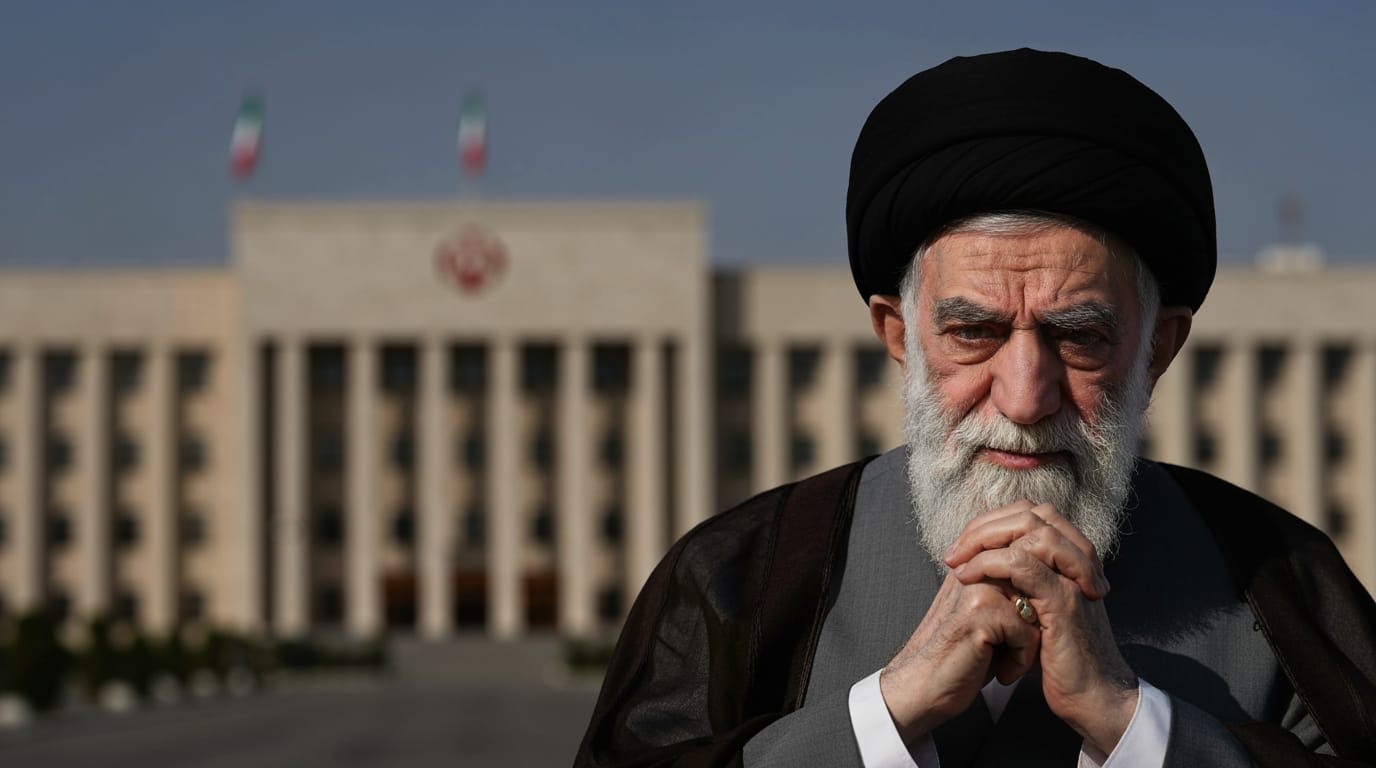
Tehran, Iran – Iran's Supreme Leader Ayatollah Ali Khamenei has publicly accused former U.S. President Donald Trump of culpability for casualties in recent Iranian protests, branding him a "criminal" in a significant escalation of rhetoric between the two long-antagonistic nations. The pronouncement, delivered on Saturday, January 17, 2026, signals a deepening of the ideological divide and reinforces Tehran's narrative that domestic unrest is orchestrated by external adversaries.
The supreme leader's remarks came amid a backdrop of renewed economic hardship and sporadic demonstrations across Iran, echoing the widespread unrest that has periodically gripped the country. Khamenei's direct accusation links Trump to what he described as "casualties, damages, and accusations" inflicted upon the Iranian nation, asserting that the recent turmoil constituted an "American plot" designed to undermine Iran's sovereignty.
The Supreme Leader's Stinging Indictment
In his address, Ayatollah Ali Khamenei left no ambiguity regarding his view of American involvement in Iran's internal affairs. He stated unequivocally that the Iranian leadership considered the U.S. president responsible for the lives lost and the destruction wrought during the protest waves. Khamenei further alleged that Trump "personally intervened" in the unrest, actively encouraging "rioters" and even promising military support to those challenging the government. This, he contended, was part of a broader American strategy to "devour Iran" and reassert control over its economic and political destiny.
The supreme leader dismissed international portrayals of the demonstrations as genuine popular uprisings, instead accusing Trump of misrepresenting "vandals" as the true Iranian nation. He underscored the Iranian state's resolve, asserting that the nation, having "broken the back of the riot," would now similarly confront and dismantle the efforts of its instigators, both "domestic and international criminals" connected to the disturbances. This forceful statement not only assigns blame but also serves as a warning to those within and outside Iran perceived as challenging the Islamic Republic's authority.
A Cycle of Unrest and Repression
The accusations by Ayatollah Khamenei draw upon a history of internal dissent in Iran, often exacerbated by economic pressures and met with stern government responses. While Khamenei's recent statements refer to current unrest, they resonate most strongly with the aftermath of the widespread November 2019 protests. These demonstrations erupted following an abrupt 50-200% increase in fuel prices, quickly evolving from expressions of economic anger into broader anti-government sentiment across numerous cities and towns.
The state's response in 2019 was swift and brutal. Security forces opened fire on demonstrators, and a near-total internet shutdown was imposed, isolating Iran and obscuring the extent of the violence. Independent estimates from human rights organizations, such as Amnesty International, reported at least 321 deaths during the November 2019 crackdown, though other reports suggested much higher casualty figures, possibly exceeding a thousand. More recent reports, covering protests that began in late December 2025, sparked by a plummeting currency and soaring inflation, indicate thousands of deaths, with authorities acknowledging roughly 2,000 fatalities, while human rights groups cite numbers over 3,000. The intensifying presence of security forces across multiple cities in January 2026 further underscored the government's determination to quell the unrest.
Washington's "Maximum Pressure" and Support for Protesters
Throughout Donald Trump's presidency, the U.S. adopted a "maximum pressure" campaign against Iran, which began in 2018. This policy involved the re-imposition and tightening of extensive sanctions, severely crippling Iran's economy by targeting its oil exports and access to global financial markets. The economic downturn and subsequent inflation have been identified as primary catalysts for the public discontent that has fueled multiple waves of protests.
During the 2019 protests, the Trump administration publicly condemned the Iranian government's use of force and expressed strong support for the Iranian people's right to protest, with Trump stating that Iranian authorities were killing "thousands" of their own citizens. The U.S. also imposed additional sanctions on Iranian officials deemed responsible for the crackdown, with the Treasury Department asserting that Trump "stands with the people of Iran." This dual approach of economic pressure and rhetorical support for protesters has been a consistent element of Washington's strategy, interpreted by Tehran as direct interference and incitement. Trump had also threatened military intervention, signaling that the U.S. would "get involved" if Iran continued to kill protesters.
A Deep-Seated Geopolitical Blame Game
The latest accusation from Ayatollah Khamenei is deeply rooted in the four-decade-long adversarial relationship between the U.S. and Iran, which has lacked diplomatic ties since the 1979 Islamic Revolution. Tehran has consistently framed domestic dissent as foreign-backed conspiracies, leveraging statements of support from U.S. officials to justify its crackdowns and reinforce its narrative of external threats to national security. Khamenei's claim that Americans meticulously planned the recent events to gain control over Iran aligns with this long-standing official discourse.
This pattern of mutual recrimination is further highlighted by past events, such as the U.S. killing of Iranian General Qassem Soleimani in January 2020. At that time, President Trump publicly justified the strike by, in part, accusing Soleimani of having "led the brutal repression of protestors in Iran, where more than a thousand innocent civilians were tortured and killed by their own government." The irony is palpable as both nations point fingers, each accusing the other of being responsible for the tragic loss of Iranian lives during periods of unrest.
Conclusion
Ayatollah Ali Khamenei's recent charge holding Donald Trump "guilty" for protest casualties underscores the profound and enduring animosity between Iran and the United States. This accusation, while directed at a former American president, serves to reinforce the Iranian government's narrative of foreign instigation behind internal challenges, a common strategy employed by Tehran. The cyclical nature of protests in Iran, often ignited by economic grievances intensified by international sanctions, and consistently met with forceful state repression, continues to extract a heavy human toll. As both Washington and Tehran remain entrenched in their respective positions, the tragic consequences for the Iranian populace caught in the crossfire of this geopolitical rivalry persist, with little sign of de-escalation in the immediate future.


