Iraq Grapples with Iran-Aligned Militias as U.S. Demands Disarmament, Sovereignty Hangs in Balance
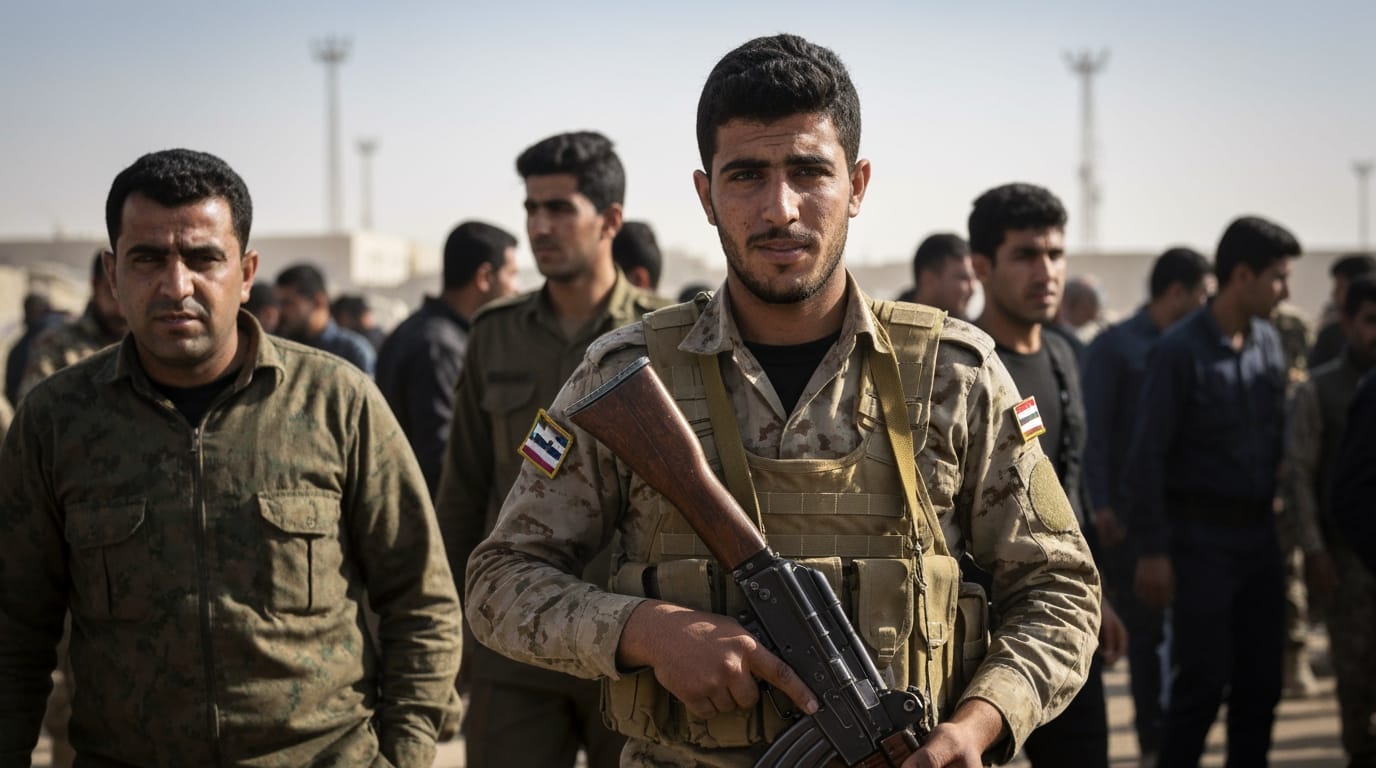
Baghdad finds itself navigating a perilous tightrope, caught between persistent demands from the United States to disarm powerful Iran-aligned militias and the entrenched political and security realities these groups represent within Iraq. The long-standing issue of armed factions operating outside full state control has reached a critical juncture, directly impacting Iraq's sovereignty, its stability, and the future of its strategic partnership with Washington. With recent deadlines for weapons handover looming, the Iraqi government faces immense pressure to assert its authority over groups that have become deeply interwoven with the state's security apparatus and political landscape.
Roots of Power: The Rise of Iran-Aligned Militias in Iraq
The origins of many Iran-aligned militias, often referred to as "Special Groups," trace back to the aftermath of the 2003 U.S.-led invasion of Iraq. Iran, through its Islamic Revolutionary Guard Corps (IRGC) Quds Force, began sponsoring Iraqi paramilitary proxies, establishing deep ties that persist today. Groups such as Kataib Hezbollah (KH), Asaib Ahl al-Haq (AAH), Harakat al-Nujaba, and Kataib Sayyid al-Shuhada emerged, some with a foundational ideology rooted in resisting Western influence and establishing a Shiite-controlled state.
Their influence significantly expanded following the collapse of the Iraqi army in 2014 when the Islamic State (ISIS) swept across northern Iraq. A fatwa by Grand Ayatollah Ali al-Sistani called for volunteers, leading to the formation of the Popular Mobilization Forces (PMF or al-Hashd al-Sha’abi), an umbrella organization of various militias. While many PMF units played a crucial role in defeating ISIS, several Iran-backed factions within the PMF maintained independent command structures and strong ideological links to Tehran. Critically, these groups became formally integrated into Iraq's security framework under PMF Commission Law No. 40 in 2016, granting them state salaries and access to government resources, including weapons and intelligence. This integration, however, inadvertently allowed them to penetrate security, political, and economic institutions, creating a "deep contradiction" where state-funded entities often operate in line with Iranian priorities, even when it undermines Iraq's national interests.
Washington's Imperative: Pressure for Disarmament
The United States has consistently viewed these Iran-aligned militias as a significant threat to its interests, personnel, and Iraqi sovereignty. U.S. officials frequently highlight the groups' history of attacks against American forces and diplomatic facilities in Iraq and the broader region. Recent escalations, including hundreds of attacks on U.S. and coalition targets since February 2026, have intensified Washington's calls for their disarmament. The U.S. has responded with counter-strikes targeting militia infrastructure and leadership, further demonstrating its resolve.
For Washington, the disarmament of these groups is not merely a security concern but a fundamental test of Iraq's independence. A senior U.S. administration official, speaking on condition of anonymity, stated that "a government controlled by Iran cannot successfully put Iraq's own interests first, keep Iraq out of regional conflicts, or advance the mutually beneficial partnership between the United States and Iraq." The U.S. is pushing for clear, measurable results on militia disarmament, linking future cooperation and financial aid to Baghdad's success in asserting state control over all armed groups. The State Department has designated several of these groups, including Kataib Hezbollah and Asaib Ahl al-Haq, as Foreign Terrorist Organizations, underscoring the severity with which the U.S. views their activities.
Baghdad's Balancing Act: Sovereignty Under Siege
Iraqi Prime Minister Ali al-Zaidi, who took office in May 2026 with the backing of a coalition including influential pro-Iran Shiite factions, faces an unenviable task. He is under immense domestic and international pressure to consolidate weapons under state authority and prevent Iraq from becoming a proxy battleground for regional conflicts.
In a significant move, the Iraqi government recently announced a September 30 deadline for pro-Iran armed groups to disarm, coinciding with the planned end of the U.S.-led anti-jihadist coalition's mission. Government spokesman Haidar al-Aboudi stated that any weapons remaining outside the state framework after this date would be "subject to legal redress." This announcement was made ahead of al-Zaidi's visit to Washington, signaling Baghdad's commitment to addressing U.S. concerns.
However, the path to disarmament is fraught with challenges and internal divisions. While some factions, like Asaib Ahl al-Haq and Kataib Imam Ali, have signaled a willingness to cooperate and integrate into official security institutions, others, most notably Kataib Hezbollah, have outright rejected disarmament unless all foreign forces, particularly the U.S., withdraw from Iraq. Critics argue that some "disengagement" declarations may be largely symbolic, intended to appease U.S. pressure rather than representing a genuine dismantling of militia structures. Moreover, the deep political and economic influence of these groups, many of whom have elected representatives and control lucrative networks, makes a complete disarming operation politically perilous for any Iraqi government. The struggle highlights a core conflict within Iraq: the vision of a sovereign nation-state versus that of a "resistance" state intertwined with regional ideological struggles.
Tehran's Enduring Influence and Regional Dynamics
Iran's enduring support for these militias is a cornerstone of its regional foreign policy, providing Tehran with a crucial lever to project influence, deter adversaries, and counter U.S. presence in the Middle East. These groups are considered integral to Iran's "axis of resistance," extending its strategic depth and operational reach. Iran provides not only weapons and training but also ideological indoctrination and significant financial support, often in the hundreds of millions annually.
Recent reports suggest that Iran has granted its field commanders greater autonomy over militias in Iraq, potentially decentralizing command structures in response to regional pressures and ongoing conflicts. This adaptive strategy allows the groups to secure specialized weaponry and hidden supply lines, ensuring their operational lethality even amidst calls for their disarming.
The broader regional conflict, particularly the ongoing tensions between the U.S., Israel, and Iran, directly exacerbates the situation in Iraq. Attacks on U.S. interests in Iraq are often framed by these militias as retaliation for actions elsewhere in the region, drawing Iraq further into a confrontation not of its own making. This dynamic makes any U.S.-Iran understanding or de-escalation crucial for the future stability of Iraq and the potential for successful militia disarmament.
A Nation at a Crossroads
The question of disarming Iran-aligned militias in Iraq is not merely a military or security issue; it is a multifaceted challenge deeply embedded in Iraq's political, economic, and social fabric. The Iraqi government's ability to assert its monopoly on force is central to its aspirations for true sovereignty and long-term stability. The continued existence of powerful armed groups, operating with external allegiances and undermining state authority, presents the greatest risk to Iraq itself, threatening its economy, regional standing, and democratic institutions.
For the U.S. and its partners, the delicate balance involves supporting a sovereign Iraq without inadvertently strengthening elements hostile to its own interests. The push for disarmament, coupled with diplomatic engagement and potential economic incentives, represents a complex strategy aimed at empowering Baghdad to reclaim full control. However, the deep integration of these militias into the state, their political power, and Iran's unwavering support mean that a complete and rapid disarmament is highly unlikely. Instead, Iraq and its allies face a protracted struggle requiring a comprehensive approach that extends beyond security measures to address the political, economic, and ideological underpinnings of militia power. The nation stands at a critical juncture, with its future trajectory dependent on navigating these intricate and often contradictory forces.


