Turkey's Enduring Transformation: A Decade After the Failed Coup
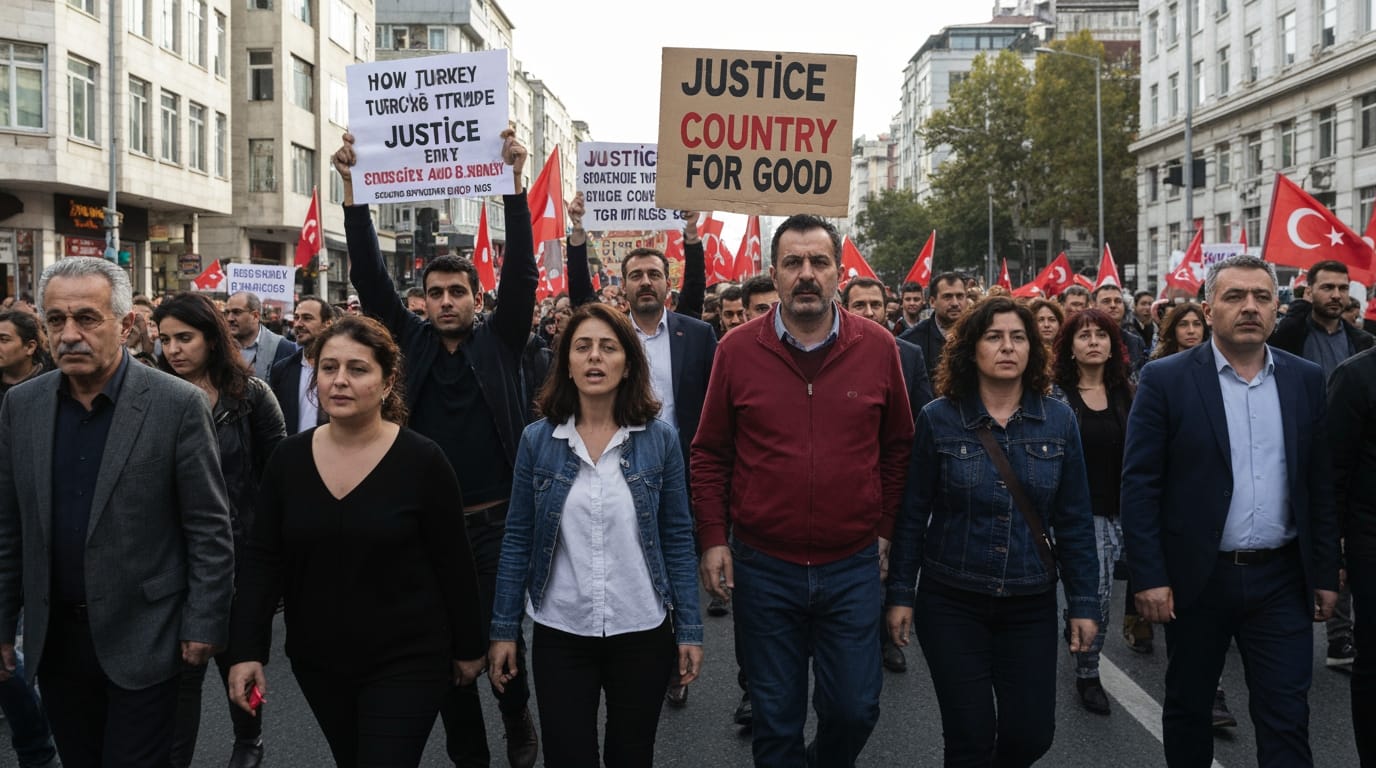
ANKARA, Turkey – Ten years ago, on the night of July 15, 2016, a faction within the Turkish military launched a sudden and violent attempt to overthrow the government, plunging the nation into a night of chaos and uncertainty. While the coup itself was swiftly defeated, leaving at least 250 dead and more than 2,000 injured, its reverberations have irrevocably reshaped Turkey's political landscape, societal norms, and international relations, ushering in a new era defined by intensified state control, diminished civil liberties, and a dramatic consolidation of power. The events of that pivotal night did not merely pass; they served as a catalyst for a profound transformation that continues to define the country's trajectory today.
The Night of Turmoil and the Immediate Crackdown
The attempted coup began with military units seizing key bridges in Istanbul, fighter jets bombing Ankara, and soldiers taking control of critical government buildings, including the Turkish Parliament. President Recep Tayyip Erdoğan, calling on citizens to resist, mobilized widespread public opposition, which, alongside loyalist security forces, played a crucial role in thwarting the putsch. The rapid suppression of the coup led to an immediate and expansive government response. Within days, a three-month nationwide state of emergency was declared on July 20, 2016, a measure that would ultimately be renewed multiple times before culminating on July 18, 2018. This state of emergency granted the government broad powers, enabling it to rule by decree and suspend certain due process protections, setting the stage for the sweeping changes that followed. The government quickly attributed the coup attempt to the Fethullah Gülen movement, an accusation the U.S.-based cleric Fethullah Gülen has consistently denied.
Sweeping Purges and the Redefinition of State Institutions
In the aftermath of the failed coup, Turkey embarked on an unprecedented campaign of purges and arrests, targeting individuals suspected of links to the Gülen movement, which Ankara designated as a terrorist organization (FETÖ). The scale of this crackdown was vast, affecting virtually every sector of public life. More than 125,000 public servants were dismissed from their positions through emergency decrees, their names published in official gazettes without formal hearings or avenues for defense. This included over 4,500 judges and prosecutors, fundamentally altering the composition and independence of the judiciary. The military, traditionally a powerful secular institution, also underwent a radical restructuring, with over 26,000 members, including thousands of senior officers and generals, dismissed or arrested.
Beyond state employees, hundreds of thousands of individuals were detained or arrested in post-coup investigations, with over 90,000 formally arrested in the subsequent years, many on terrorism-related charges often based on tenuous evidence like digital traces or association claims. Critics argue that these measures went beyond legitimate responses to the coup, becoming a tool to eliminate broader political opposition and consolidate power around the presidency. The state expanded rapidly during this period, with public employment growing significantly, creating new dependencies and strengthening the government's resilience.
Erosion of Civil Liberties and Democratic Space
The post-coup environment significantly curtailed fundamental rights and freedoms in Turkey. The state of emergency provided the legal framework for adopting over 30 decrees that severely limited, and in some cases entirely waived, numerous fundamental rights. While the state of emergency officially ended in 2018, many of these legislative measures were integrated into permanent law, perpetuating limitations on freedoms.
Media freedom faced severe restrictions, with scores of journalists arrested and numerous television channels, radio stations, newspapers, and publishing houses shut down. Accusations of links to the Gülen movement or other "terrorist" organizations became a common pretext for silencing critical voices. Academic freedom also suffered, with thousands of academics removed from their positions. Civil society organizations were not spared; more than 1,500 associations and foundations were shuttered, and activists faced increased pressure and criminalization. The European Court of Human Rights has, between 2002 and the close of 2025, issued 432 judgments finding that Turkey violated free speech rights. The government's actions effectively reshaped the democratic framework, transforming the parliamentary system into a heavily centralized presidential one, removing crucial checks and balances, and further polarizing society.
Economic Resilience and Geopolitical Realignments
The immediate economic impact of the coup attempt was a short-term contraction, with Turkey's GDP per capita shrinking by 1.3 percent in the third quarter of 2016. However, robust government intervention, including credit lines and tax breaks, led to a strong rebound in subsequent quarters, with annual growth rates reaching 7.4 percent in 2017. Despite this apparent resilience, the period also saw an increase in the current account deficit and a growing dependence on domestic consumption to fuel growth, raising concerns about long-term macroeconomic stability and indebtedness. Structural vulnerabilities, such as a persistent current account deficit and a saving-investment gap, were exacerbated by increased political uncertainty, affecting foreign direct investment and leading to exchange rate volatility.
Geopolitically, the coup attempt spurred a re-evaluation of Turkey's foreign policy alliances. Perceived lukewarm support from Western allies, particularly the United States and European Union, in the immediate aftermath of the coup deepened existing skepticism and mistrust within Ankara. Turkey's leaders expressed frustration over the extradition of Fethullah Gülen from the U.S. and the EU's critical stance on post-coup purges. This led to a more assertive and independent foreign policy, characterized by strengthened ties with non-Western partners, notably Russia, and increased military operations in the region without always consulting NATO allies. The shift also saw Ankara prioritizing national security concerns in its foreign policy, often at the expense of previously strong relationships with Western nations.
A Nation Transformed: The Enduring Legacy
A decade after the failed coup, Turkey exists as a profoundly altered nation. The events of July 15, 2016, became a "turning point" that President Erdoğan utilized to consolidate power, transforming the political system significantly. The widespread purges decimated previous power structures within the military and bureaucracy, replacing them with personnel perceived as loyal to the ruling party, thereby weakening institutional independence. The state's narrative of heroes and traitors effectively reframed any opposition as terrorism, further intensifying political polarization within society.
While the immediate threat of military intervention was quelled, many observers contend that the failed coup paradoxically paved the way for a more stable, albeit authoritarian, regime under the ruling Justice and Development Party (AKP). The lasting impact includes a significantly altered balance of power, a constricted space for civil liberties, a reoriented foreign policy, and a society grappling with deepened divisions. The 2016 coup attempt, initially viewed as an assault on democracy, ultimately catalyzed a transformation that redefined the very nature of governance and civil-military relations in Turkey, creating a "new normal" that continues to unfold.


