Israel Demolishes UNRWA Headquarters in East Jerusalem, Igniting International Condemnation
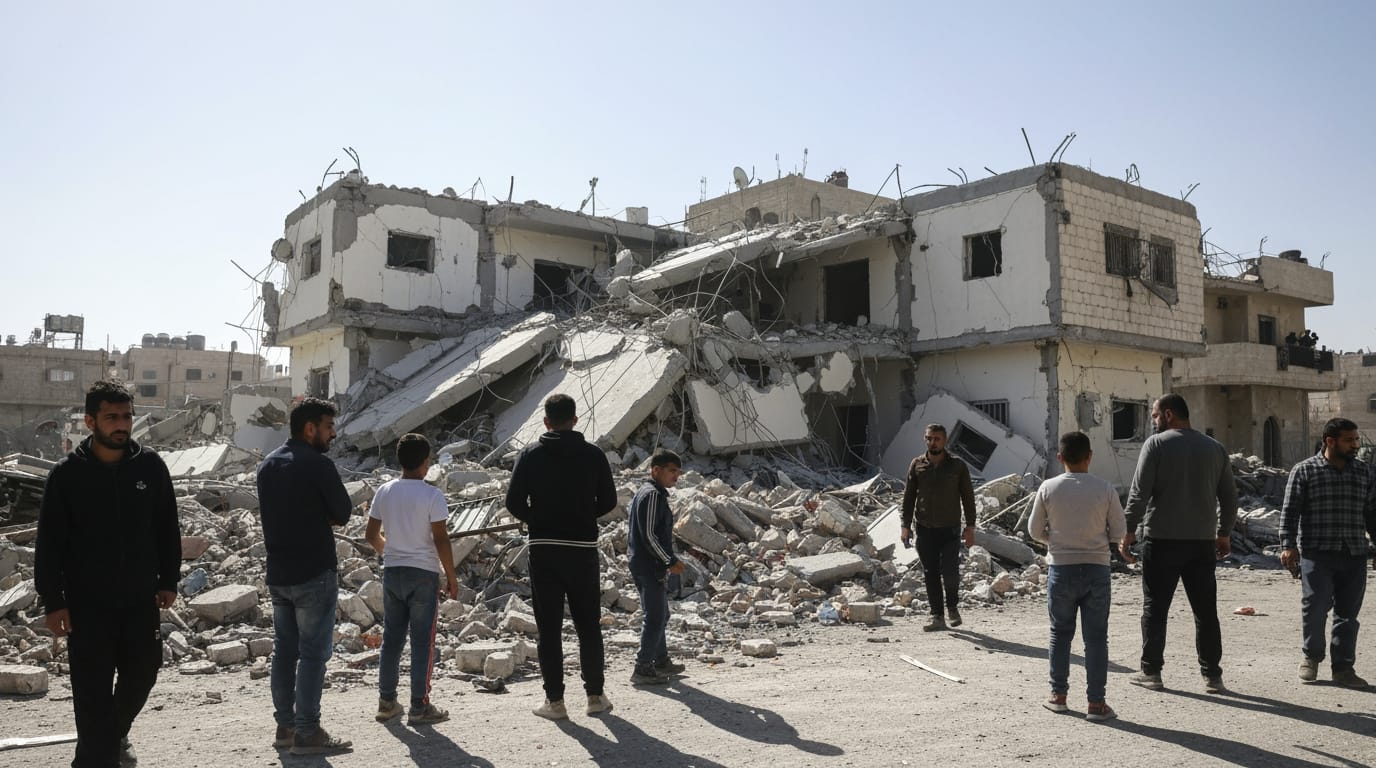
East Jerusalem, January 20, 2026 – Israeli forces on Tuesday demolished structures within the United Nations Relief and Works Agency (UNRWA) headquarters compound in East Jerusalem, an action swiftly condemned by the UN agency as an "unprecedented attack" and a "defiance of international law." The demolition, carried out by bulldozers under heavy security in the Sheikh Jarrah neighborhood, marks a significant escalation in Israel's long-standing campaign against the principal UN agency serving Palestinian refugees. Israel justified the move by citing a new law banning UNRWA operations and alleging ties between the agency and Hamas, claims vehemently denied by the United Nations.
The Dawn Demolition: A Point of No Return
The events unfolded early Tuesday morning as Israeli demolition crews and police arrived at the UNRWA compound in Sheikh Jarrah. Eyewitnesses reported bulldozers entering the premises, forcing out security guards before proceeding to raze several large buildings and other smaller structures. These buildings, though vacated by UNRWA staff nearly a year ago due to mounting security concerns and incitement, were reportedly used for storing humanitarian aid destined for the West Bank and Gaza. National Security Minister Itamar Ben-Gvir was present at the scene, hailing the demolition as a "historic day" and a "holiday" for Israeli sovereignty in Jerusalem, further stating that "terror supporters" were being removed. His presence, alongside Jerusalem's Deputy Mayor Aryeh King, underscored the political significance Israel attached to the operation. Israeli flags were reportedly raised over the main building during the demolition.
UNRWA Commissioner-General Philippe Lazzarini immediately denounced the action on social media, describing it as "a new level of open and deliberate defiance of international law" and an "unprecedented attack against a United Nations agency and its premises." UNRWA spokesman Jonathan Fowler reiterated that the compound remained UN property, protected by international law and diplomatic immunities, irrespective of its operational status.
Israel's Justification: Security, Sovereignty, and Allegations
Israel's rationale for the demolition rests on several pillars. Foremost is the assertion that the action enforces a law passed by the Knesset in October 2024, which bans UNRWA from operating within Israeli territory and prohibits Israeli officials from engaging with the agency. This legislation was reportedly amended in December 2025 to allow for the cutting of utilities to UNRWA facilities.
The Israeli Foreign Ministry stated that the compound "does not enjoy any immunity" and that its seizure and demolition were conducted "in accordance with both Israeli and international law." They also claimed that UNRWA-Hamas had already ceased operations at the site and no UN personnel or activity was present. Additionally, Israeli authorities cited unpaid municipal property taxes amounting to 11 million shekels, alleging that the Jerusalem municipality acted only after repeated warnings and due process.
A central theme in Israel's narrative is the accusation that UNRWA harbors anti-Israel bias and has deep ties to militant groups, particularly Hamas. Israeli officials have repeatedly claimed that some UNRWA staff members are affiliated with Hamas and even participated in the October 7, 2023 attacks. They contend that UNRWA facilities are used by Hamas and other groups for military purposes and that the agency's continued operations perpetuate the Palestinian refugee status, thereby hindering peace efforts.
UNRWA and International Law: A Contested Ground
UNRWA, however, strongly refutes Israel's claims of illegality and alleged terrorist ties. The agency maintains that its premises, as United Nations property, are inviolable under international law, including the Convention on the Privileges and Immunities of the United Nations. Jonathan Fowler, an UNRWA spokesperson, highlighted that the demolition constitutes a serious violation of these protections.
The agency also points to a ruling by the International Court of Justice (ICJ) in October 2025, which reaffirmed Israel's obligation under international law to facilitate UNRWA's operations, not hinder them. The ICJ further stressed that Israel has no jurisdiction over East Jerusalem, which is considered occupied territory under international law by the UN and most of the international community. The site itself has been used by UNRWA since 1951, a fact the agency underscores in its defense.
UNRWA leadership has characterized the demolition as part of a broader "large-scale disinformation campaign" and a series of punitive actions, including a recent raid on an UNRWA medical clinic and threats to cut power and water supplies to other facilities. Commissioner-General Lazzarini warned that such actions set a dangerous precedent, potentially impacting the safety and operations of all international organizations globally.
Broader Implications for Humanitarian Aid and Regional Stability
The demolition of UNRWA's East Jerusalem headquarters represents a significant escalation in the ongoing tensions between Israel and the United Nations, with profound implications for humanitarian assistance in the region. UNRWA serves approximately 5.9 million Palestinian refugees across Gaza, the West Bank, East Jerusalem, Jordan, Syria, and Lebanon, providing essential services such as education, healthcare, and aid distribution. Critics argue that targeting UNRWA facilities and operations directly impacts the most vulnerable populations, especially amid the dire humanitarian situation in Gaza and the West Bank.
The Israeli government's actions are viewed by some as an attempt to delegitimize the agency and, by extension, the issue of Palestinian refugees, thereby altering the demographic and political landscape of Jerusalem and the wider Palestinian territories. The demolition feeds into concerns expressed by humanitarian organizations and the UN about a broader pattern of forced displacement and the erosion of international legal protections for Palestinians.
A Future Clouded by Contention
The demolition of UNRWA's East Jerusalem compound underscores the deeply entrenched and conflicting narratives surrounding the Israeli-Palestinian conflict. While Israel frames its actions as a matter of national security and sovereignty, addressing perceived threats and enforcing its laws, UNRWA and the international community view it as a violation of international law and an attack on critical humanitarian operations. The incident highlights the vulnerability of humanitarian agencies operating in politically charged environments and raises serious questions about the future of international aid to Palestinian refugees, further complicating an already intractable conflict.


