Israelis Vote in First General Election Since October 7 Attacks
The parliamentary ballot serves as a decisive test for Prime Minister Benjamin Netanyahu after years of regional conflict and political turmoil.
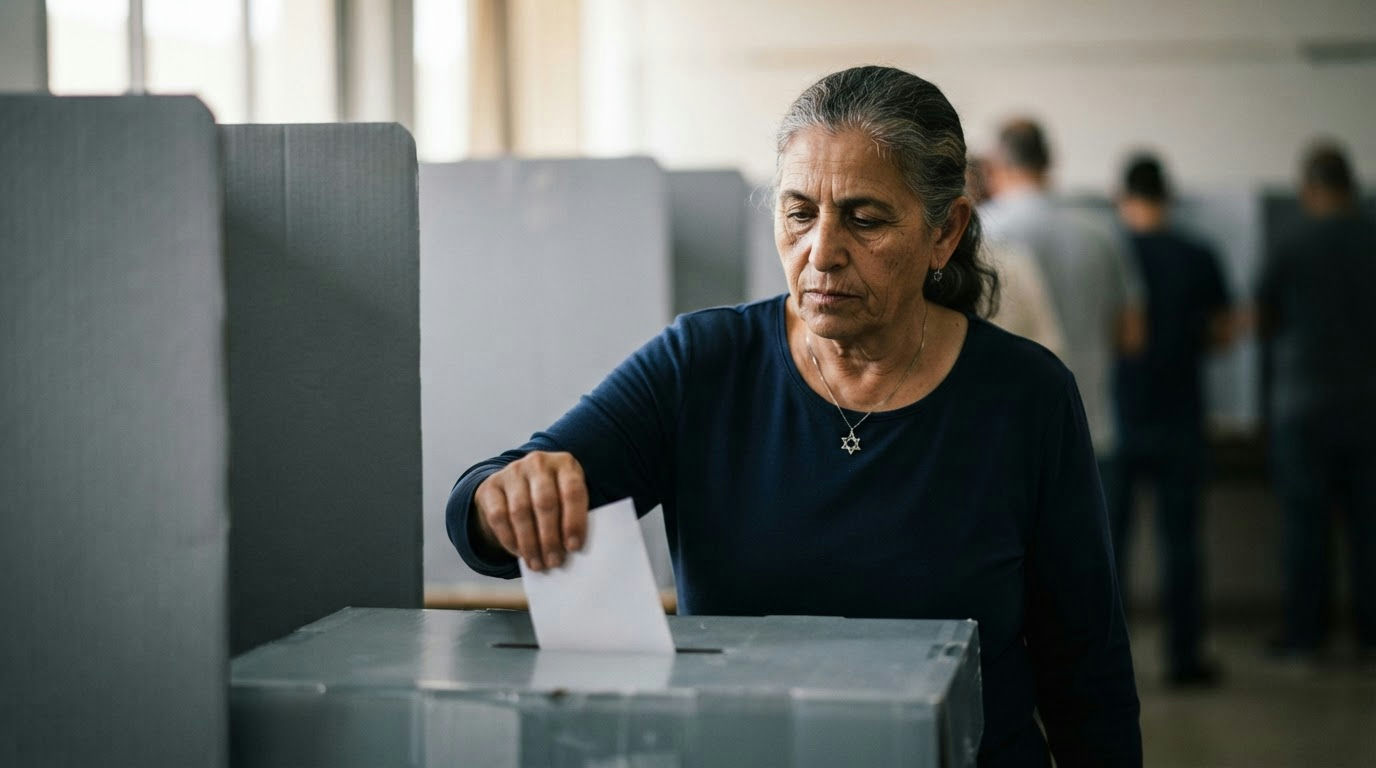
Israelis cast ballots on October 27, 2026, in the country's first national general election since the October 7, 2023, Hamas-led attacks. Polling places opened at 7:00 a.m. local time across roughly 12,018 stations nationwide to elect the 120-seat 26th Knesset. Initial morning voter turnout was the highest recorded in 45 years.
The election centered on a contest between 77-year-old Prime Minister Benjamin Netanyahu of Likud and 66-year-old former military chief Gadi Eisenkot of Yashar. Final television surveys projected the centrist Yashar winning 22 to 23 seats against 19 to 21 seats for Likud.
Neither major bloc was expected to reach an outright 61-seat majority. Polls projected the pro-Netanyahu right-wing religious bloc at around 50 seats, while the Zionist opposition bloc polled at 52 to 56 seats. Arab-majority parties were projected to win 14 to 16 seats, positioning them as potential kingmakers.
About 7.3 million citizens were eligible to vote, including 1.2 million Arab citizens and over 500,000 first-time youth voters. Thirty-seven parties contested the race, each needing to clear a 3.25 percent threshold to enter parliament.
After voting in Herzliya, Eisenkot urged voters to reject scare tactics and called the vote a critical moment for the nation. Eisenkot campaigned on clean governance, living costs, and an immediate state inquiry into October 7 failures. He previously lost his son and two nephews in the Gaza fighting.
Netanyahu presented himself as an indispensable wartime leader who guided the country after the 2023 catastrophe. His campaign advertisements warned that Eisenkot could not govern without Arab political backing. Ra'am leader Mansour Abbas stated before the vote that he was open to governing agreements with centrist and right-leaning opposition figures.
Election watchdog volunteer Eyal Sher of the Elections Guards said volunteers monitored stations because they believed the government was corrupt. The vote functioned as a referendum on Netanyahu, who faced scrutiny over intelligence breakdowns, ongoing conflicts, and an International Criminal Court arrest warrant.
The Israel Democracy Institute reported that over 60 percent of voters considered October 7 a decisive factor. The election followed the dissolution of the 25th Knesset on July 17, 2026. It was the first legislature since 1988 to complete a full four-year term.
Polls were scheduled to close at 10:00 p.m. local time, followed by television exit polls and days of official counting. President Isaac Herzog will consult elected parties before selecting a candidate to form the 38th government. If negotiations fail, the country faces prolonged political deadlock.