Israel's Southern Lebanon Offensive Deepens Amidst Ceasefire Attempts
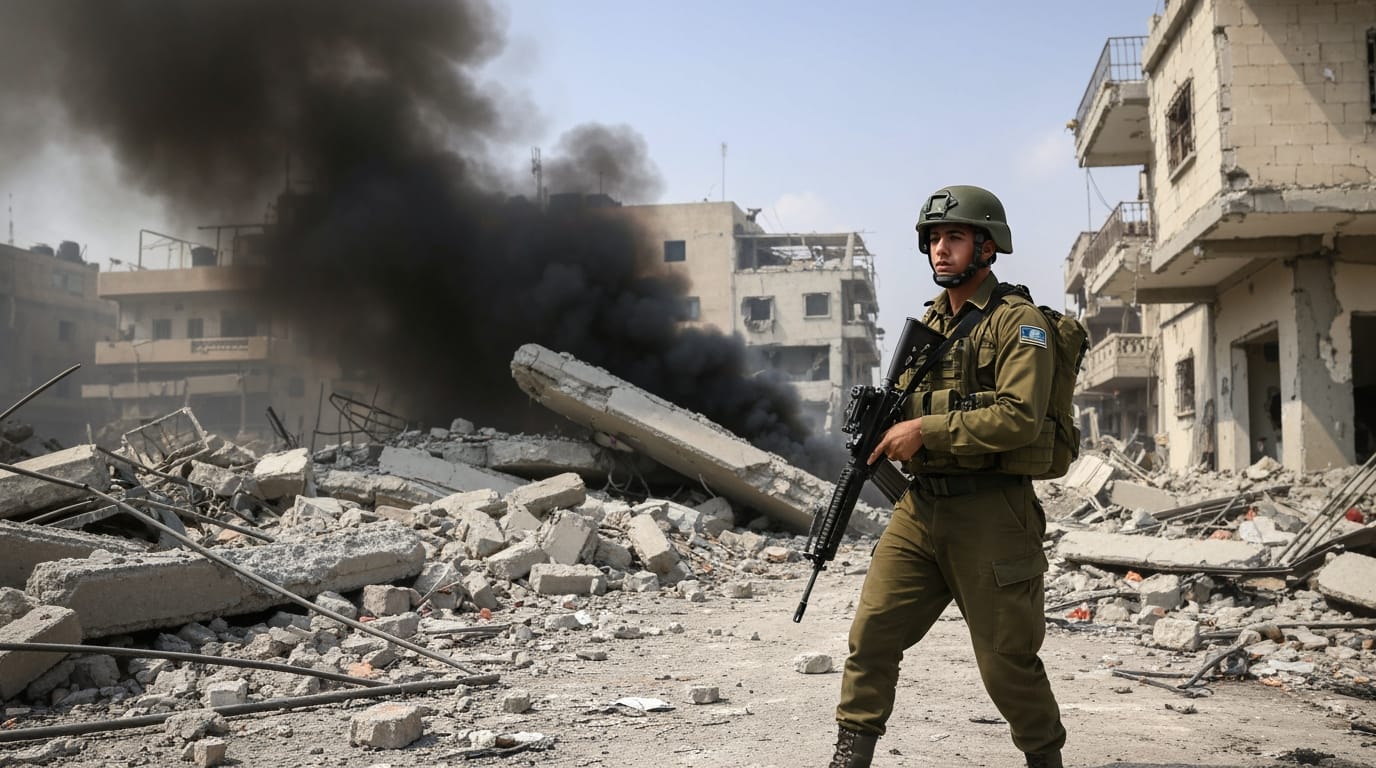
Beirut, Lebanon – Israeli forces have significantly expanded their ground operations in southern Lebanon, pushing deeper into Lebanese territory with explicit objectives to establish a security zone and dismantle Hezbollah's infrastructure. This escalation comes amidst persistent hostilities and repeated, often faltering, ceasefire attempts, painting a grim picture for a region already grappling with widespread displacement and destruction.
The current phase of the conflict, which intensified dramatically in September 2024, has seen Israeli troops advance more than 10 kilometers into Lebanese land, occupying dozens of villages and placing approximately 6% of Lebanon's territory under Israeli control. Israeli officials, including Defense Minister Israel Katz, have openly declared their aim to control southern Lebanon up to the Litani River to create a security buffer. This strategic push seeks to address what Israel describes as an existential threat from Hezbollah and to enable the safe return of hundreds of thousands of its northern residents, who were displaced by ongoing rocket fire and attacks from Lebanese territory.
Escalation and Strategic Objectives
The recent surge in military activity marks a significant deepening of the conflict that began in October 2023, following Hezbollah's initial rocket attacks on Israel in support of Hamas. After months of cross-border exchanges, September 2024 witnessed a dramatic escalation, including widespread Israeli airstrikes across Lebanon, a mysterious series of pager and walkie-talkie explosions targeting Hezbollah members, and the assassination of Hezbollah's long-time leader, Hassan Nasrallah. These events culminated in Israel's full-scale ground invasion of southern Lebanon on October 1, 2024, under the codename Operation Northern Arrows.
Israel's stated goals for the ground operation extend beyond merely curbing immediate threats. The military aims to significantly degrade Hezbollah's capabilities, dismantle its extensive network of military infrastructure, and destroy its missile stockpiles, which include tens of thousands of rockets and UAVs. Furthermore, there is a clear intent to reshape the security landscape along the border. Plans for a security zone, potentially evacuated of its civilian population and free of any armed presence other than the Lebanese Armed Forces and UNIFIL, have been discussed by Israeli strategists. Israeli Prime Minister Benjamin Netanyahu has reportedly ordered the military to expand the invasion even further, signaling potential strikes into Beirut's southern suburbs, a known Hezbollah stronghold. This strategy suggests a long-term vision to restructure southern Lebanon to align with Israel's security imperatives.
Hezbollah's Response and Resilience
Hezbollah, an Iranian-backed group, has historically maintained a significant and often dominant presence in southern Lebanon. Despite sustaining heavy losses, including the assassination of key commanders and the disruption of its communication devices in September 2024, the group has demonstrated resilience and an ability to adapt. Following the initial blows, Hezbollah has reportedly begun reconstituting and adjusting its tactics, shifting towards a more dispersed, guerrilla-style warfare. In response to Israel's deepening ground incursions, Hezbollah has intensified its counter-attacks, launching increased numbers of drones and rockets into northern Israel and targeting Israeli forces within Lebanese territory. The group maintains its stance as a resistance movement and insists on retaining its weaponry, complicating any prospects for a lasting disarmament through diplomatic means. This ongoing resistance contributes to the protracted nature of the conflict, which Israeli military analysis now describes as a "sustained war of attrition."
International Diplomacy on a Tightrope
The international community has watched the escalating conflict with growing alarm, attempting to mediate a de-escalation that has proven elusive. The United Nations Interim Force in Lebanon (UNIFIL), established in 1978 and augmented after the 2006 conflict, is mandated to monitor hostilities and support the Lebanese Armed Forces in establishing an area free of unauthorized armed personnel between the Blue Line and the Litani River. However, Israel's current operations challenge the effectiveness of this mandate, and UNIFIL itself has reported incidents of Israeli forces impeding its movements and even damaging its installations. Adding to the complexity, UNIFIL's mandate is slated to end by December 2026, with a drawdown period through 2027, raising concerns about a potential security vacuum.
Diplomatic efforts, primarily led by the United States, have sought to broker a lasting ceasefire. Multiple attempts have been made, including a ceasefire agreement in November 2024 that ultimately failed to halt hostilities fully. In June 2026, a new conditional ceasefire was announced following US-led talks in Washington. This agreement stipulated a complete cessation of Hezbollah fire and the withdrawal of its operatives from south of the Litani River, with plans for the Lebanese Armed Forces to assume control of designated "pilot zones." Despite this announcement, clashes persisted on the ground, with both Israeli and Hezbollah forces reporting continued engagements. US officials, including Secretary of State Marco Rubio, have engaged in separate discussions with Lebanese and Israeli counterparts, proposing phased de-escalation plans and emphasizing diplomacy as the optimal path forward. However, divergent demands—Lebanon's insistence on an immediate Israeli cessation of military actions and Israel's precondition of Hezbollah's withdrawal—have hampered significant breakthroughs.
International reactions have largely condemned the Israeli attacks, with many nations and global bodies calling for restraint and the inclusion of Lebanon in any broader ceasefire agreements. The United States, while advocating for diplomacy, has simultaneously supported Israel's "limited operations," a stance that has been viewed by some as out of step with global appeals for de-escalation.
The Devastating Human Cost
The prolonged conflict has exacted a catastrophic toll on civilian populations in southern Lebanon. Since March 2026 alone, Israeli strikes have reportedly killed over 3,500 people in Lebanon, with 2,914 fatalities recorded in the southern regions. The conflict has triggered a massive humanitarian crisis, displacing more than 1 million Lebanese citizens—over 20% of the national population. Homes and vital infrastructure have been extensively damaged or destroyed, with an estimated 36,000 homes ruined in the south and significant damage to water networks and agricultural land. Reports indicate daily barrages of missiles, causing widespread destruction that extends beyond targeted Hezbollah positions, impacting medical teams and bringing commercial activity to a standstill. The unpredictability of attacks and forced evacuation orders have created immense panic and isolated communities, pushing people into exile.
An Unfolding Future
The situation in southern Lebanon remains highly volatile, characterized by an ongoing Israeli military offensive seeking to establish a new security reality, a resilient Hezbollah adapting its tactics, and international diplomatic efforts struggling to find common ground. The explicit Israeli objective to create a buffer zone extending to the Litani River, coupled with active ground operations and continued targeting of Hezbollah assets, suggests a sustained military presence and a potential long-term reshaping of the border region.
While conditional ceasefires have been announced, their immediate implementation has been challenged by continued hostilities. The future stability of southern Lebanon hinges on the effectiveness of diplomatic solutions in achieving a genuine cessation of hostilities, the demilitarization of the border region as outlined by UNSCR 1701, and the willingness of all parties to adhere to international agreements. Without a robust and enforceable framework, the humanitarian crisis is likely to deepen, and the cycle of violence risks further engulfing the region. The international community faces the arduous task of preventing a wider regional conflagration while addressing the profound human suffering in southern Lebanon.


