Japan Redefines Post-War Defense Policy, Ends Decades-Old Lethal Arms Export Ban
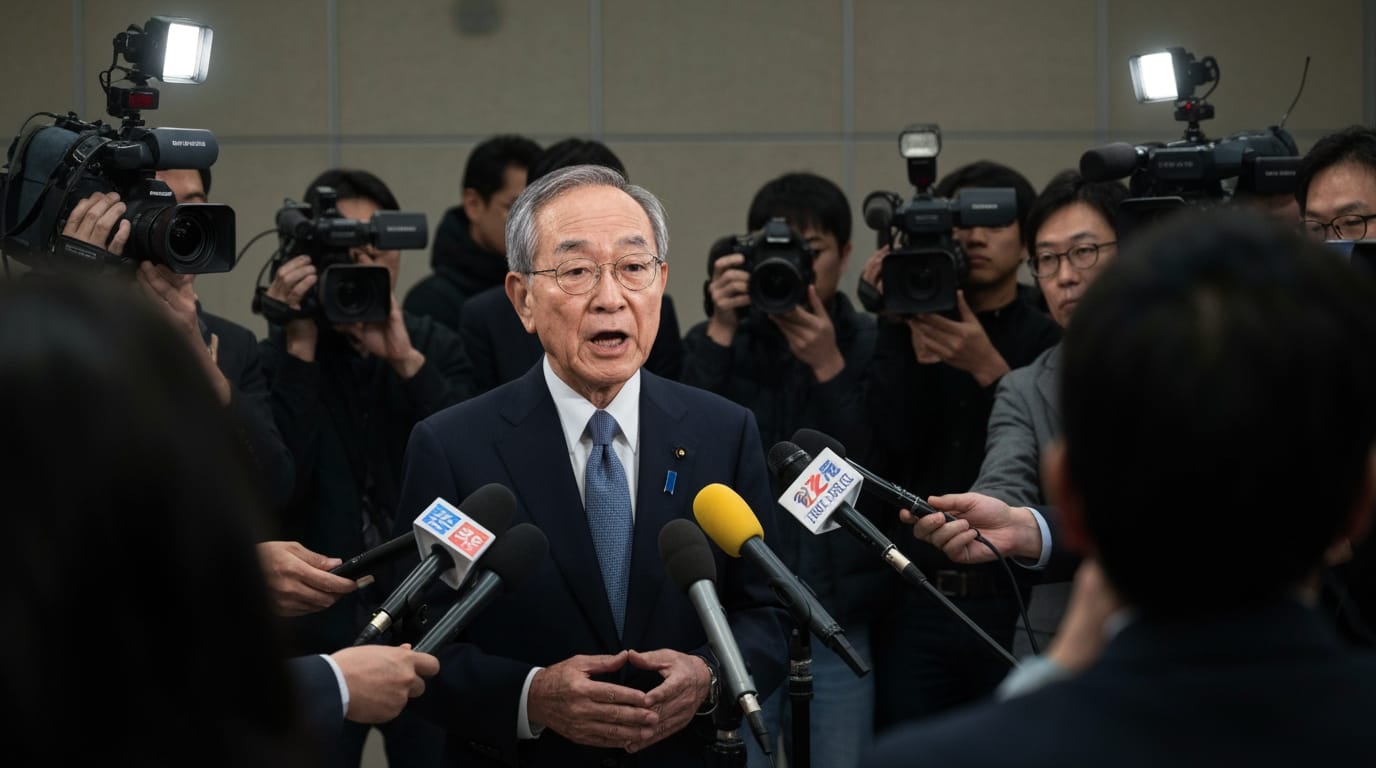
Tokyo, Japan – In a monumental departure from its post-World War II pacifist principles, Japan has officially lifted its decades-old blanket ban on the export of lethal weapons, signaling a profound reorientation of its defense policy and global security engagement. The Cabinet of Prime Minister Sanae Takaichi approved the sweeping changes on Tuesday, April 21, 2026, effectively dismantling stringent restrictions that have long constrained Japan's defense industry and international military cooperation. This historic decision paves the way for Japan to become a significant player in the global arms market, enabling it to export a broad spectrum of military hardware, including fighter jets, missiles, and destroyers, to partner nations.
The End of a Pacifist Era: New Guidelines Unveiled
The revised guidelines abolish the previous framework that limited military equipment transfers to just five non-lethal categories: rescue, transport, vigilance, surveillance, and minesweeping. Under the new system, defense equipment will be classified into two distinct groups: "weapons," encompassing lethal systems such as warships, tanks, and missiles, and "non-weapons," which includes non-lethal equipment like radars and protective gear. While the export of non-weapons faces no restrictions, decisions regarding lethal weapons will undergo rigorous review by Japan's National Security Council and will be limited to countries that have established defense equipment and technology transfer agreements with Tokyo, currently totaling 17 nations.
A critical provision of the new policy is the general prohibition of lethal weapon exports to countries engaged in active armed conflicts. However, this restriction includes an "exceptional circumstances" clause, allowing transfers if deemed necessary for Japan's security needs. This flexibility underscores Japan's intent to strategically leverage arms sales to enhance its national security and contribute to regional stability. Furthermore, the new rules permit the transfer of jointly developed weapons to third countries, a crucial aspect for international collaborative projects like the sixth-generation fighter aircraft being developed with Britain and Italy under the Global Combat Air Program (GCAP). Chief Cabinet Secretary Minoru Kihara emphasized that the aim is to deepen cooperation with allies and like-minded partners, thereby improving "sustained combat capabilities" in emergencies and fostering a more favorable security environment for Japan.
A Legacy of Restraint: Japan's Post-War Stance
For nearly eight decades, Japan has adhered to a uniquely pacifist foreign policy, enshrined in its post-World War II constitution. This stance was largely codified by the "Three Principles on Arms Exports," first articulated in 1967. These principles initially prohibited arms exports to communist bloc countries, nations under UN arms embargoes, and countries involved in or likely to be involved in international conflicts. In 1976, the government further tightened these restrictions, declaring a collateral policy that effectively established a near-total ban on all arms exports, regardless of destination.
This self-imposed restraint fostered a domestic defense industry that, while technically advanced, operated in a "Galapagos ecosystem," producing high-quality but exceptionally expensive equipment exclusively for Japan's Self-Defense Forces. The lack of export markets stifled scale, innovation, and international competitiveness, leading to concerns about the long-term viability of the industry.
However, the ban began to see gradual relaxation under Prime Minister Shinzo Abe in 2014, allowing limited transfers of non-lethal equipment. Subsequent adjustments in recent years further eased controls, facilitating sales such as Patriot air-defense missiles to the United States and upgraded frigates to Australia, primarily to support allies and enhance interoperability. The latest decision represents the most significant overhaul of this policy since the war, fundamentally altering Japan's approach to defense production and international security cooperation.
Driving Forces Behind the Shift: Geopolitical Realities and Economic Imperatives
Several interconnected factors have converged to prompt this historic policy shift. A rapidly deteriorating security environment in East Asia, characterized by escalating tensions with China and North Korea's advanced missile and nuclear programs, has been a primary catalyst. Japan's government views the loosening of arms controls as essential to strengthening its own deterrence capabilities and bolstering the security of its allies in the Indo-Pacific and beyond. Prime Minister Sanae Takaichi noted that "no country can now safeguard its own peace and security alone, making it necessary to have partners that support each other in areas including defense equipment."
Beyond geopolitical concerns, economic considerations play a crucial role. The domestic defense industry has struggled with high production costs and a limited customer base. The new policy aims to stimulate the economy by expanding market opportunities for Japanese defense manufacturers, promoting research and development, and fostering technological advancement. Companies like Toshiba and Mitsubishi Electric are already anticipating increased sales and are hiring staff and expanding facilities in response. This move is expected to reduce Japan's heavy reliance on foreign, particularly American, defense imports, thereby enhancing its industrial autonomy and resilience.
Furthermore, global events such as the wars in Ukraine and the Middle East have strained U.S. weapons supplies, prompting allies in Europe and Asia to seek alternative defense partners. This global demand presents a strategic opportunity for Japan to diversify defense partnerships and contribute to collective security.
Navigating New Frontiers: Implications and Concerns
The policy shift has drawn a mixed international and domestic response. Key defense partners like Australia have welcomed the change, with Philippine Defense Secretary Gilberto Teodoro stating it would provide access to "articles of the highest quality" to strengthen domestic resilience and regional deterrence. Countries across Southeast Asia and Europe have also expressed interest in Japanese defense equipment, with potential deals for used frigates to the Philippines and cooperation with Poland on anti-drone and electronic warfare systems.
Conversely, China has expressed sharp criticism, viewing the move as part of a U.S.-led containment strategy and raising concerns about potential regional arms races and increased tensions.
Domestically, the decision has ignited debate. While proponents highlight national security imperatives and economic benefits, critics argue that it undermines Japan's pacifist constitution and could draw the nation into international conflicts. Opposition parties have demanded greater parliamentary oversight, particularly prior notification for significant arms exports, to prevent Japan from inadvertently exacerbating conflicts. Public opinion has historically shown skepticism towards arms exports, though attitudes among younger generations are reportedly shifting. Prime Minister Takaichi has countered criticism by asserting that the changes do not represent a break from Japan's "exclusively defense-oriented policy" and that the nation remains committed to its path as a peaceful country.
To mitigate concerns, the revised guidelines include measures for monitoring exported lethal weapons, including provisions for on-site inspections in recipient nations to prevent diversion to unintended parties.
A Redefined Role in Global Security
Japan's decision to end its lethal arms export ban marks a profound moment in its post-war history, signaling a proactive stance in global security affairs. This policy reorientation positions Japan to not only enhance its own defense capabilities and industrial base but also to deepen strategic partnerships and contribute more directly to regional and international security through military equipment transfers. The long-term implications will depend on how judiciously Japan manages these new freedoms, balancing its national interests with its commitment to peace and stability in an increasingly complex world. The shift underscores a recognition that in an interconnected global landscape, maintaining a strictly insulated defense posture may no longer be sustainable for a nation of Japan's economic and strategic prominence.


