Japan's Dual Challenge: A Deepening Labor Crisis Meets Persistent Social Barriers for Foreign Workers
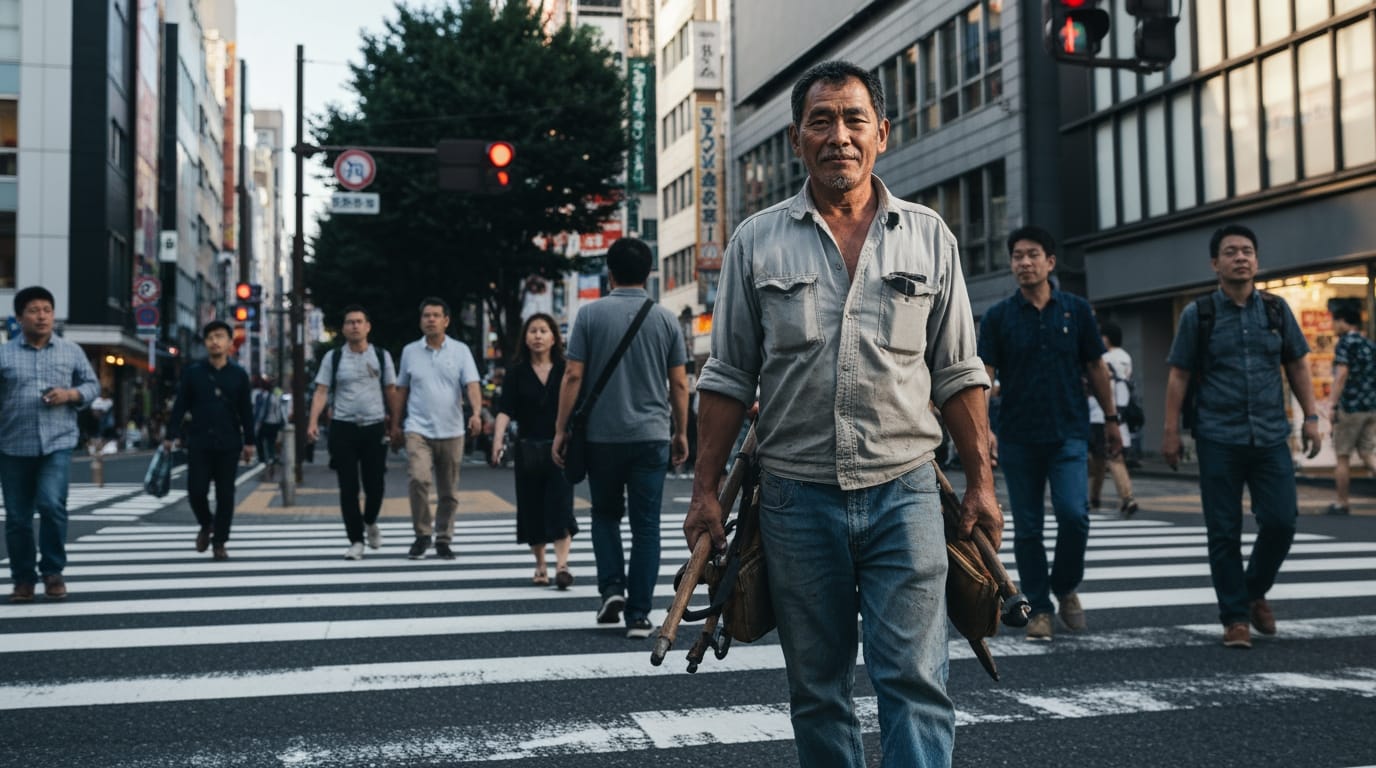
TOKYO – Japan, a nation grappling with one of the world's most rapidly aging populations and persistently low birth rates, faces a critical demographic precipice. This profound shift has led to severe labor shortages across vital sectors, pushing the historically insular country to increasingly rely on foreign workers. While the number of foreign residents has quadrupled since 2008, surpassing 4 million by the end of 2025, a stark paradox emerges: many of these essential contributors report feeling unwelcome, encountering widespread discrimination and isolation that undermine long-term retention efforts.
The nation's economic sustainability now hinges on its ability to attract and, crucially, retain an international workforce, yet a significant percentage of foreign workers depart within three years, citing structural barriers and a lack of social integration. This creates a complex and urgent challenge for policymakers and society alike: how to reconcile the undeniable economic necessity of foreign labor with deeply ingrained cultural attitudes and systemic issues that make Japan a difficult place for many to call home.
The Unstoppable Tide of Demographic Decline
Japan's demographic crisis is not a future projection but a present reality. The working-age population has been steadily shrinking since its peak in 1995, with nearly a third of the total population now over 65, and more than one in ten exceeding 80 years old. With a total fertility rate hovering around 1.2 births per woman, far below the replacement level, the pool of young domestic workers continues to dwindle.
This has created acute labor shortages across a spectrum of industries, from the hands-on care of nursing homes to the rigorous demands of construction and manufacturing, and the everyday operations of services like retail and logistics. Small and medium-sized businesses, which form the backbone of Japan's economy, are particularly affected, with over 60% reporting significant difficulties in finding adequate staff. Experts estimate that Japan will require approximately 6.88 million foreign workers by 2040 to maintain its economic growth trajectory. Despite the rising influx, foreign nationals still constitute only 2-3% of Japan's total population, a figure significantly lower than the 10% average across OECD countries, indicating substantial untapped potential if integration challenges can be overcome.
Evolving Immigration Policies: A Gradual Opening
Historically, Japan has approached immigration with caution, prioritizing cultural homogeneity and economic stability over large-scale migrant integration. For decades, official policies largely focused on admitting highly skilled workers, though various temporary programs allowed for lower-skilled foreign labor in practice. However, the intensifying demographic pressures have prompted a gradual, yet significant, shift in policy.
Major reforms began in 2016 with an amendment to the Immigration Control and Refugee Recognition Act, introducing a visa category for mid-skilled care workers. A more substantial change arrived in 2019 with the launch of the Specified Skilled Worker (SSW) program. This framework was designed to admit mid-skilled foreign nationals into industries facing severe labor shortages, such as nursing, food services, manufacturing, and construction, offering them pathways to long-term employment and even permanent residency.
Further acknowledging past shortcomings, the Japanese government announced in 2024 its plan to abolish the controversial Technical Intern Training Program (TITP) by 2027. The TITP had faced widespread criticism over human rights concerns and operational problems, with its replacement, the Employment for Skill Development (ESD) program, promising improved employment conditions, greater job mobility, and stronger labor protections. The ESD program is envisioned as an entry point for low-skilled workers to develop skills over three years, making them eligible to transition into the SSW system for long-term employment.
Despite these steps towards a more open system, recent policy trends in 2025 and 2026 reflect a tightening of regulations in certain areas. These include stricter enforcement, increased visa and application fees, modifications to permanent residency requirements (including a new 5-year rule for eligibility and potential revocation for unpaid taxes or social security), and an extended naturalization period to 10 years. Additionally, capital requirements for business manager visas have seen a sixfold increase, posing new hurdles for foreign entrepreneurs.
The Invisible Wall: Discrimination and Social Isolation
Even as Japan opens its doors wider to foreign labor, the experience on the ground for many remains challenging, characterized by pervasive feelings of being unwelcome. Justice Ministry surveys conducted in 2016 and 2017 painted a stark picture of discrimination. Nearly 40% of foreign residents reported being denied housing applications, and almost a quarter were rejected for jobs. A significant 29.8% stated they had experienced discriminatory treatment, including insults, within the preceding five years.
Workplace discrimination is a particular concern, with reports of foreign workers receiving lower pay for the same work (19.6%), being denied promotions due to their nationality (17.1%), or being outright rejected for jobs (25%). Many also endure derogatory remarks from colleagues and superiors. These issues are compounded by a prevalent sense of social isolation. Many foreign workers struggle to build strong local networks and social support systems, making daily life and mental well-being more difficult.
Underlying these challenges is Japan's emphasis on cultural homogeneity and its historical insularity, which often leads to a perception of foreigners as perpetual "outsiders." Subtle forms of discrimination, known as microaggressions, are common, such as assumptions about foreign customs or languages, exclusion from social gatherings, and a preference for native Japanese in hiring and promotion. This unwelcoming atmosphere directly impacts retention; an estimated 35% of foreign workers leave Japan within three years, citing factors such as limited career opportunities, lower salaries compared to their home countries, and the difficulty of social integration. Beyond socio-economic challenges, concerns about human rights also persist, particularly regarding the ethical treatment of undocumented migrants and restrictive asylum policies.
Bridging the Divide: Integration Efforts and Future Directions
The dual challenge of a pressing labor shortage and an unwelcoming environment necessitates a comprehensive approach. While national integration policies remain somewhat underdeveloped, particularly for adult migrants, some local governments and communities are proactively implementing initiatives. These efforts include providing Japanese language classes, organizing cultural activities, and establishing support systems for newcomers, with a focus on building trust and fostering smoother integration into local life.
However, public opinion surveys indicate a cautious stance among the Japanese populace regarding increased foreign worker acceptance, with a rising trend of opposition in recent years. Preferences often lean towards highly skilled, Japanese-speaking immigrants from specific regions, highlighting a societal selectivity that could hinder broader integration efforts. Interestingly, some political discourse also suggests a future where AI and automation could reduce Japan's reliance on foreign labor, presenting technology as a complementary solution to demographic challenges.
Despite these complexities, foreign workers demonstrably contribute positively to Japan's economy by slowing the decline in the labor force, mitigating fiscal pressures, and expanding the local labor market without depressing wages for native workers.
Conclusion: A Path to Sustainable Coexistence
Japan stands at a critical juncture. The demographic reality dictates an increasing reliance on foreign workers to sustain its economy and societal functions. Yet, the persistent challenges of discrimination, social isolation, and insufficient integration mechanisms create a revolving door, hindering the long-term retention of this vital workforce. To navigate this paradox successfully, Japan must move beyond simply recruiting foreign labor and commit to creating a truly welcoming and inclusive society.
This requires not only robust policy frameworks that protect workers' rights and facilitate pathways to long-term residency, but also a concerted societal effort to dismantle prejudices and embrace diversity. Without addressing the underlying issues that make foreign workers feel unwelcome, Japan risks undermining its own economic future, struggling to fill essential roles while a valuable source of human capital seeks opportunities elsewhere. The nation's long-term sustainability will ultimately depend on its capacity to balance its demographic imperatives with a genuine commitment to human rights and social acceptance, forging a path towards sustainable coexistence where all residents can thrive.


