Julia Klöckner Elected President of the German Bundestag
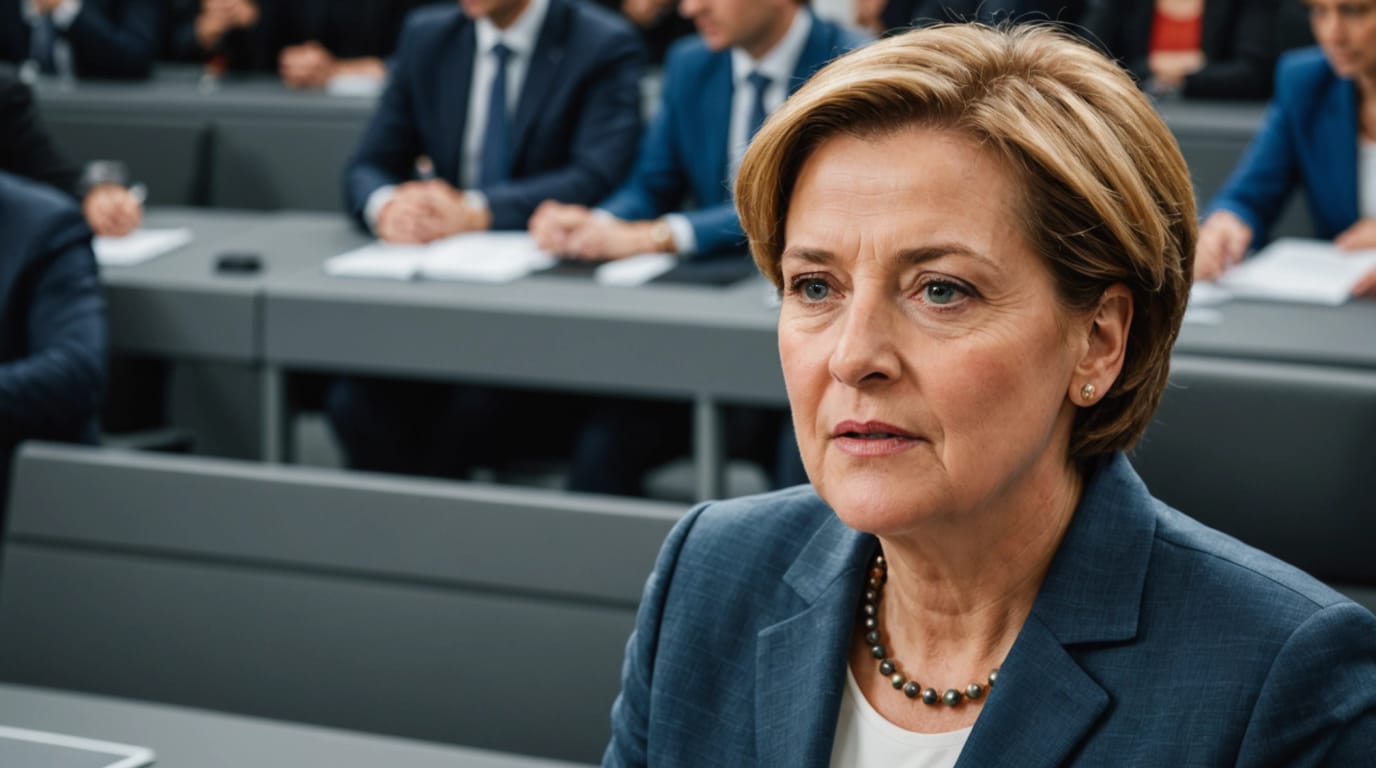
BERLIN (March 25, 2025) – Julia Klöckner, a prominent politician from the Christian Democratic Union (CDU), was elected President of the German Bundestag today, marking a significant moment in German politics. Klöckner's election positions her as the fourth woman to hold this esteemed office and the first time a female President of the Bundestag will be succeeded by another woman.
The election took place during the first session of the 21st Bundestag, following the February elections. Klöckner secured 382 out of 622 votes cast, with 204 votes against her and 31 abstentions. She succeeds Bärbel Bas of the Social Democratic Party (SPD), who had presided over the Bundestag since 2021.
A Career Rooted in Rhineland-Palatinate
Born on Dec. 16, 1972, in Bad Kreuznach, Rhineland-Palatinate, Klöckner's journey into politics began with strong ties to her home region. She grew up on her family's vineyard in Guldental, instilling in her a deep understanding of agriculture and rural life. This background would later influence her political focus and policy initiatives.
Klöckner pursued higher education at Johannes Gutenberg University Mainz, where she studied political science, Catholic theology, and education. She graduated with a double degree, earning a Magistra Artium degree and a teaching qualification. Before fully entering politics, Klöckner worked as a journalist, including a stint as editor-in-chief of Sommelier magazine, which she co-founded. She also worked for the SWR-Fernsehen television channel in Mainz.
Her political career officially began in 2002 when she was elected to the German Bundestag.
Rise Through the CDU Ranks
Klöckner's ascent within the CDU has been steady and impactful. She joined the Junge Union (JU), the CDU's youth wing, and the Frauen Union (FU), the party's women's organization, in 1996. Her involvement quickly expanded, and she became a member of the CDU's state executive committee in Rhineland-Palatinate in 2003.
In 2009, Klöckner was appointed Parliamentary State Secretary of the Federal Ministry of Food and Agriculture under Minister Ilse Aigner. She resigned from this position in 2011 to focus on leading the CDU in Rhineland-Palatinate. From 2010 to 2022, she served as the chairwoman of the CDU in Rhineland-Palatinate. Additionally, she held the position of deputy chairwoman of the CDU Germany from 2012 to January 2022. Before assuming the role of Bundestag President, Klöckner served as the CDU's federal treasurer starting in January 2022.
Minister of Food and Agriculture
From 2018 to 2021, Klöckner served as the Federal Minister of Food and Agriculture in Chancellor Angela Merkel's cabinet. During her tenure, she focused on policies related to agricultural sustainability, food security, and environmental practices. Klöckner spearheaded initiatives aimed at strengthening Germany's agricultural sector while addressing global environmental challenges. Her work included significant reform efforts in agriculture, with a particular focus on enhancing the country's food production systems while ensuring environmental protection.
One of her key achievements was her leadership in reforming the Common Agricultural Policy (CAP) within the European Union, championing policy initiatives that encourage sustainable farming practices and help address the challenges posed by climate change.
Responsibilities as Bundestag President
As President of the Bundestag, Klöckner assumes a crucial role in the German political system. The President presides over the sessions of the Bundestag, ensuring the maintenance of parliamentary order. This includes opening and closing sittings, calling items of business, and granting members leave to speak. The President also determines the order of speakers and ensures that debates take place in an orderly fashion.
Beyond chairing sessions, the President represents the Bundestag and, therefore, the legislative branch of Germany. In protocol terms, the office ranks second only to the Federal President, surpassing the Federal Chancellor and the President of the Bundesrat. The President upholds the dignity and rights of the Bundestag, furthers its work, conducts its debates fairly and impartially, and maintains order within the body.
The President also chairs the Council of Elders, which manages the internal affairs of the Bundestag. Additionally, the President receives the statements of account of the political parties, monitors party financing, and regulates campaign cost reimbursement. The President has police power over the premises of the parliament and oversees its police force, and acts as the employer of the Bundestag's public servants.
Looking Ahead
Klöckner's election as President of the Bundestag marks a new chapter in her political career and for the German parliament. In accepting the nomination, Klöckner emphasized the great honor it represents and articulated the role's significance as a representative of the entire Bundestag, highlighting the responsibility to uphold the dignity of the institution. She acknowledged that fulfilling this role may require her to occasionally use strong words, particularly when addressing the future federal government.
As she steps into this significant role, Klöckner brings a wealth of experience and a commitment to upholding the principles of German parliamentary democracy. Her leadership will be closely watched as the Bundestag addresses critical issues facing the nation.


