Junta Chief Formally Assumes Presidency in Myanmar Amid Deepening Crisis
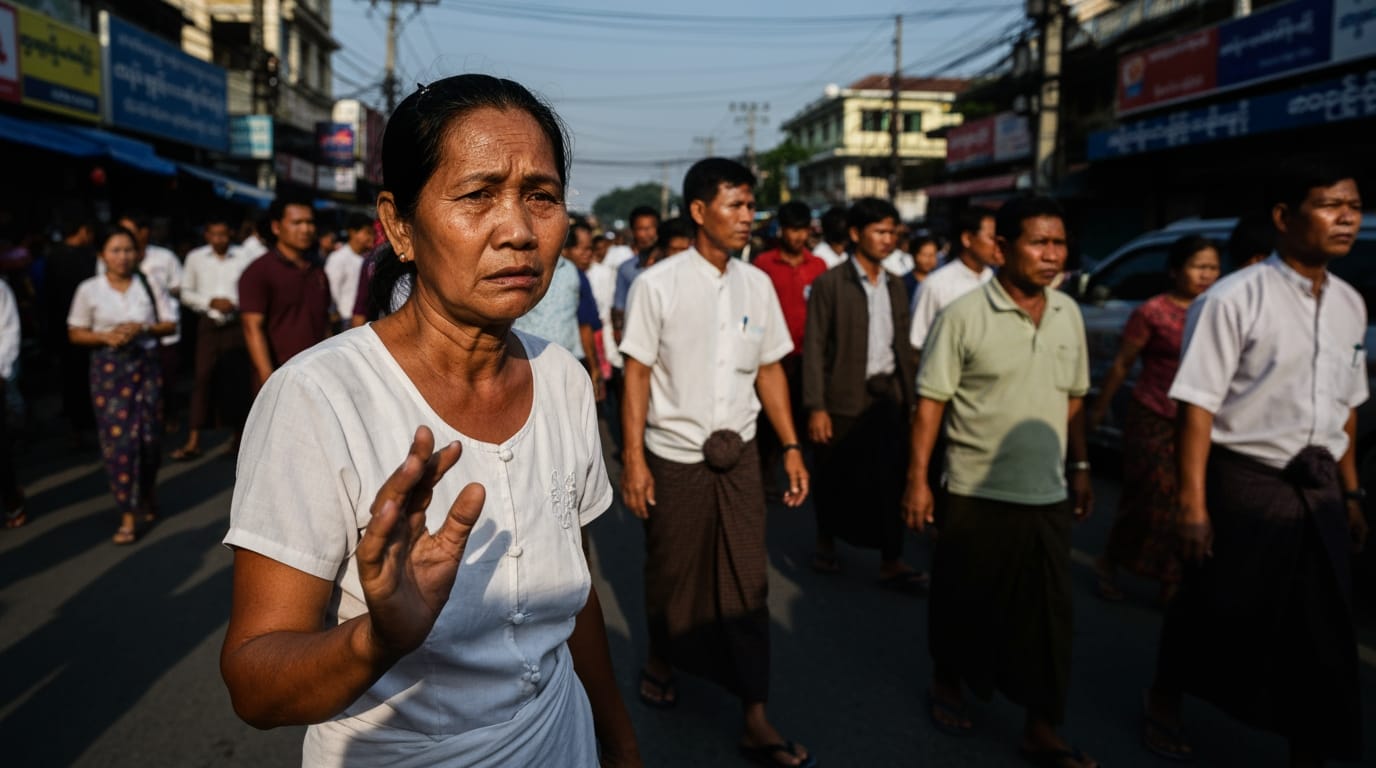
NAYPYITAW, MYANMAR – Senior General Min Aung Hlaing, the architect of Myanmar's 2021 military coup, has officially ascended to the presidency, formalizing his control over the war-torn nation five years after seizing power. The parliamentary vote on Friday, April 3, 2026, saw the junta chief elected to the highest office, a move widely condemned internationally as a sham designed to solidify military rule under a civilian veneer. The transition comes amidst a deepening civil war and a protracted humanitarian crisis, casting a long shadow over the future of the Southeast Asian country.
Formalizing Control: From Coup Leader to President
Min Aung Hlaing's elevation to the presidency followed a carefully orchestrated series of events. The 69-year-old general was elected by a pro-military parliament, composed primarily of lawmakers from the dominant Union Solidarity and Development Party (USDP) and the military's quota of appointed armed forces legislators. This parliamentary process followed a lopsided election held between December and January, which an army-backed party won in a landslide. Critics and Western governments swiftly denounced this election as a facade intended to perpetuate military control behind a semblance of democracy.
To circumvent a constitutional provision prohibiting active-duty military personnel from holding the presidency, Min Aung Hlaing stepped down from his 15-year tenure as Commander-in-Chief on March 30, just days before the presidential vote. He appointed Ye Win Oo, a former intelligence chief and staunch loyalist, as his successor to lead the military, ensuring his continued influence over the armed forces. Analysts view this move as a clear attempt to consolidate his power as the head of a nominally civilian government and to seek a degree of international legitimacy, while simultaneously safeguarding the interests of a military that has historically dominated Myanmar's political landscape. Min Aung Hlaing has long harbored ambitions for the presidency, a goal now realized through a process devoid of genuine democratic participation. He secured 429 votes out of 584 cast, overwhelmingly defeating his competitors, who will now serve as vice presidents.
The Shadow of the Coup: Five Years of Conflict and Resistance
Min Aung Hlaing's journey to the presidency began with the military coup on February 1, 2021, when the Tatmadaw, Myanmar's armed forces, overthrew the democratically elected government led by Aung San Suu Kyi's National League for Democracy (NLD). The military claimed widespread voter fraud in the November 2020 general elections, an accusation for which it presented no evidence, using it as a pretext to seize power and detain elected leaders, including President Win Myint and State Counsellor Aung San Suu Kyi. The coup abruptly halted a decade of nascent democratic reforms and plunged the country into immediate turmoil.
The military takeover triggered widespread protests, leading to a robust Civil Disobedience Movement across the country. The junta responded with brutal crackdowns on peaceful demonstrators, escalating violence that ultimately fueled a nationwide armed resistance. This resistance coalesced into various armed groups, most notably the People's Defence Force (PDF), the armed wing of the National Unity Government (NUG), formed by ousted officials and pro-democracy activists. These groups, often coordinating with long-standing ethnic armed organizations, have engaged in a fierce civil war against the Tatmadaw. The conflict has been marked by significant territorial gains by resistance forces, with some estimates in 2024 suggesting the military government controlled only 21 percent of the country's territory, while rebel forces held 42 percent. The ongoing hostilities have resulted in devastating human costs, with thousands killed, countless human rights abuses documented, and a staggering 3.5 million people internally displaced.
International Condemnation and Limited Leverage
The international community's response to the 2021 coup and the subsequent violence has been largely condemnatory, though fragmented in its effectiveness. Many governments, particularly in the West, denounced the military takeover, with the U.S. and the European Union imposing sanctions on coup leaders, their business interests, and military-owned conglomerates. The UN Security Council has expressed deep concern and called for the release of detainees and the upholding of democratic processes. However, resolutions have often fallen short of imposing a global arms embargo, with Russia and China abstaining from some votes, signaling a continued reluctance to fully isolate the junta.
Regional efforts, particularly by the Association of Southeast Asian Nations (ASEAN), have also struggled to yield significant results. ASEAN's Five-Point Consensus, established in April 2021, called for an immediate cessation of violence, constructive dialogue, and humanitarian assistance. However, the military largely repudiated it, and internal wrangling and the rotating chairmanship have hampered its meaningful impact. Despite the international pressure, including Min Aung Hlaing being wanted by the prosecutor of the International Criminal Court (ICC) for crimes against humanity related to the Rohingya genocide, the junta has largely continued its conduct unchanged.
A Nation in Crisis: Humanitarian and Economic Devastation
Five years of military rule and civil conflict have inflicted profound humanitarian and economic damage on Myanmar. The country faces a severe humanitarian catastrophe, with over 3.5 million people internally displaced and millions more in need of assistance. The military has frequently restricted access for humanitarian aid, exacerbating the suffering of affected populations. Vulnerable communities, including the Rohingya ethnic minority, continue to face severe restrictions and violence.
Economically, Myanmar has experienced a sharp contraction, with the World Bank warning of an 18 percent contraction in 2021 and a doubling of poverty rates since 2019. The currency has lost significant value, inflation continues to rise, and over 70% of the population reportedly lives below the poverty line. The civil war has disrupted supply chains, destroyed infrastructure, and deterred investment, pushing the country further into economic despair. The widespread devastation and lack of security have created an environment of fear and uncertainty for its citizens.
An Uncertain Future
Min Aung Hlaing's formal assumption of the presidency marks a symbolic, rather than substantive, shift in Myanmar's political landscape. It entrenches the military's power under a civilian guise but does little to alleviate the deep-seated political crisis or the raging civil war. Analysts suggest this "election" changes little on the ground, instead serving to deepen the conflict and solidify the military's intent to maintain control.
The resistance movement, comprising both the PDF and various ethnic armed organizations, remains determined to restore democracy through armed struggle, holding significant territory and challenging the junta's authority across the nation. However, the military, reinforced by conscription and external support, continues its counteroffensives, leading to a bloody stalemate. As Myanmar enters this new phase of formal military presidency, the path forward remains fraught with violence, instability, and a continued struggle for genuine democratic governance. Without inclusive dialogue and a cessation of hostilities, the humanitarian suffering and political deadlock are poised to persist, leaving the future of Myanmar profoundly uncertain.


