Justice on Trial: Nuremberg Forges a New Era of International Law
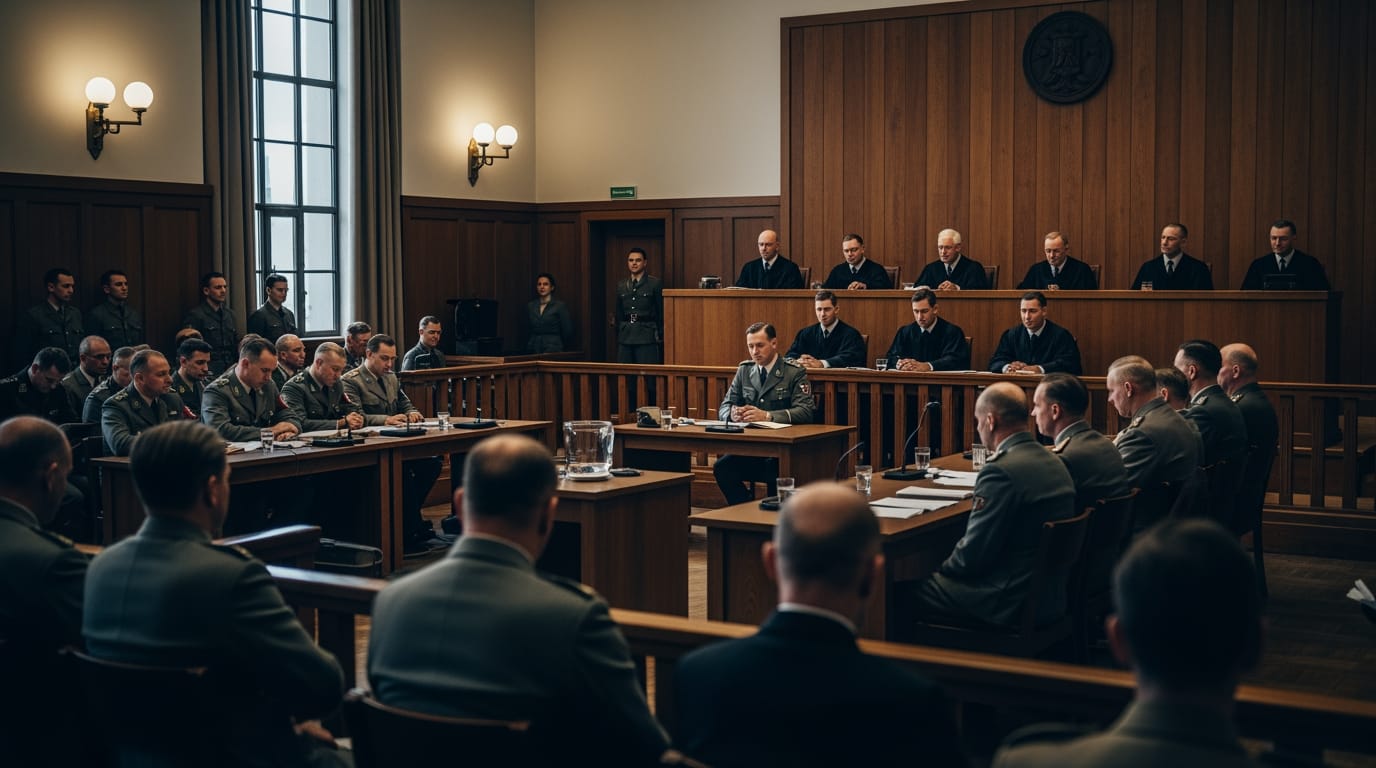
In the immediate aftermath of World War II, with the scorched earth of Europe bearing witness to unprecedented atrocities and systematic destruction, the victorious Allied powers faced a monumental challenge: how to reconcile the desire for retribution with the imperative for justice. This dilemma culminated in the historic Nuremberg Trials, a series of military tribunals that, for the first time, held individual state leaders accountable for crimes against peace, war crimes, and crimes against humanity. From November 1945 to October 1946, in the very city that once hosted massive Nazi rallies, the world watched as a new chapter in international law was painstakingly written, setting a profound precedent for individual responsibility in the face of state-sponsored brutality.
The Genesis of Accountability: From Vengeance to Verdict
As the Allied forces pushed into Germany and liberated concentration camps, the full horror of the Nazi regime's crimes became undeniable. Initial discussions among the Allied leaders — the United States, Great Britain, the Soviet Union, and France — ranged from summary executions to traditional courts-martial. However, a consensus emerged for a formal legal process, driven by the desire not merely for vengeance but to establish an irrefutable historical record of Nazi atrocities, delegitimize the former German elite, and offer a stark lesson to the defeated nation. This ambition led to the London Agreement of August 8, 1945, which established the International Military Tribunal (IMT) and outlined the legal framework for prosecuting the "major war criminals of the European Axis." The symbolic choice of Nuremberg, once a propaganda stronghold for the Nazi Party, underlined the Allies' intent to dismantle the regime's ideology and underscore its demise. The trials sought to demonstrate that even leaders of a sovereign state could be held personally responsible for their actions under international law, a radical departure from previous legal norms.
Crafting a New Legal Framework: Defining Unprecedented Crimes
The IMT Charter established three categories of crimes under which the defendants would be prosecuted, along with a fourth charge of conspiracy to commit these crimes. These classifications represented groundbreaking developments in international jurisprudence. The first, "Crimes Against Peace," addressed the planning, initiation, and waging of aggressive war in violation of international treaties and agreements. This charge, while critical to the prosecution's case, generated debate, with some defense lawyers arguing it constituted ex post facto law, as waging aggressive war had not been explicitly criminalized in the same manner prior to the trials.
The second category encompassed traditional "War Crimes," defined as violations of the laws and customs of war. This included acts such as the murder or ill-treatment of civilian populations in occupied territory, mistreatment of prisoners of war, killing of hostages, plunder of property, and wanton destruction not justified by military necessity. These were largely rooted in existing international conventions like the Hague Conventions.
The most novel and perhaps most enduring legal contribution of Nuremberg was the concept of "Crimes Against Humanity." This category covered actions such as "murder, extermination, enslavement, deportation, and other inhumane acts committed against any civilian population, before or during the war, or persecutions on political, racial, or religious grounds in execution of or in connection with any crime within the jurisdiction of the Tribunal, whether or not in violation of domestic law of the country where perpetrated." While initially limited in its scope to acts connected with a war of aggression, this definition laid the foundation for recognizing widespread human rights abuses as offenses against the global community, transcending national sovereignty. The IMT's assertion that individuals, not just states, could be held criminally responsible for breaches of international law was a pivotal shift, establishing that "crimes of international law are committed by men" and that individual punishment was essential for enforcement.
The Trials Unfold: Defendants, Evidence, and Due Process
On November 20, 1945, the trials commenced in the Palace of Justice, with 22 of the 24 indicted Nazi leaders appearing before the tribunal. Key figures included Hermann Göring, commander-in-chief of the Luftwaffe and Hitler's designated successor; Joachim von Ribbentrop, the foreign minister; and Wilhelm Keitel, head of the Armed Forces High Command. Adolf Hitler, Heinrich Himmler, and Joseph Goebbels, the architects of much of the Nazi terror, had committed suicide before they could be brought to justice.
The prosecution, led by chief prosecutors Robert H. Jackson of the United States, Sir Hartley Shawcross of Great Britain, François de Menthon of France, and Roman A. Rudenko of the Soviet Union, faced the immense task of presenting the complex narrative of Nazi Germany's rise, its aggressive wars, and its systematic extermination policies. They meticulously presented an overwhelming volume of evidence, including thousands of Nazi documents, photographs, and eyewitness testimonies, which laid bare the regime's systematic planning of aggression and genocide. Harrowing footage of concentration camps, captured by Allied military photographers, served as powerful and irrefutable evidence of the atrocities committed. The proceedings, conducted in English, were simultaneously translated into French, Russian, and German, ensuring accessibility and fairness for all parties involved. Despite the defendants' largely unrepentant stance, they were afforded legal representation and the opportunity to present their defense, thereby adhering to a framework of due process.
Verdicts and Enduring Legacies: A Foundation for Future Justice
On October 1, 1946, after nearly a year of proceedings, the IMT delivered its verdicts. Of the 22 defendants who stood trial, 19 were found guilty. Twelve were sentenced to death by hanging, including Göring (who committed suicide hours before his scheduled execution) and Martin Bormann (sentenced in absentia). Three defendants received life imprisonment, while four others were given prison sentences ranging from 10 to 20 years. Three defendants were acquitted. Additionally, the tribunal declared several Nazi organizations, including the Leadership Corps of the Nazi Party, the SS, and the Gestapo, to be criminal organizations, paving the way for the subsequent prosecution of their members.
The Nuremberg Trials represented a monumental shift in international law. They unequivocally established the principle of individual criminal responsibility for violations of international law, shattering the notion that state leaders could act with impunity under the guise of national sovereignty. The legacy of Nuremberg extended far beyond its immediate verdicts. It profoundly influenced the development of international human rights law, contributing to the Genocide Convention, the Universal Declaration of Human Rights, and the Geneva Conventions. The trials provided a foundational model for subsequent international tribunals, such as those for the former Yugoslavia and Rwanda in the 1990s, and ultimately paved the way for the establishment of the International Criminal Court (ICC).
Following the IMT, the United States conducted 12 "Subsequent Nuremberg Trials" between 1946 and 1949, prosecuting an additional 177 high-ranking individuals including physicians, judges, and industrialists for their roles in the Nazi regime's crimes. These trials further solidified the legal precedents set by the IMT. While not without their criticisms, particularly regarding the novelty of some charges and the victors' justice narrative, the Nuremberg Trials stand as an enduring testament to the international community's determination to confront and punish those who perpetrate grave crimes against humanity, ensuring that the lessons of the past continue to inform the pursuit of global justice.