Kashmir Attack: Modi Cuts Trip Short to Plan Response
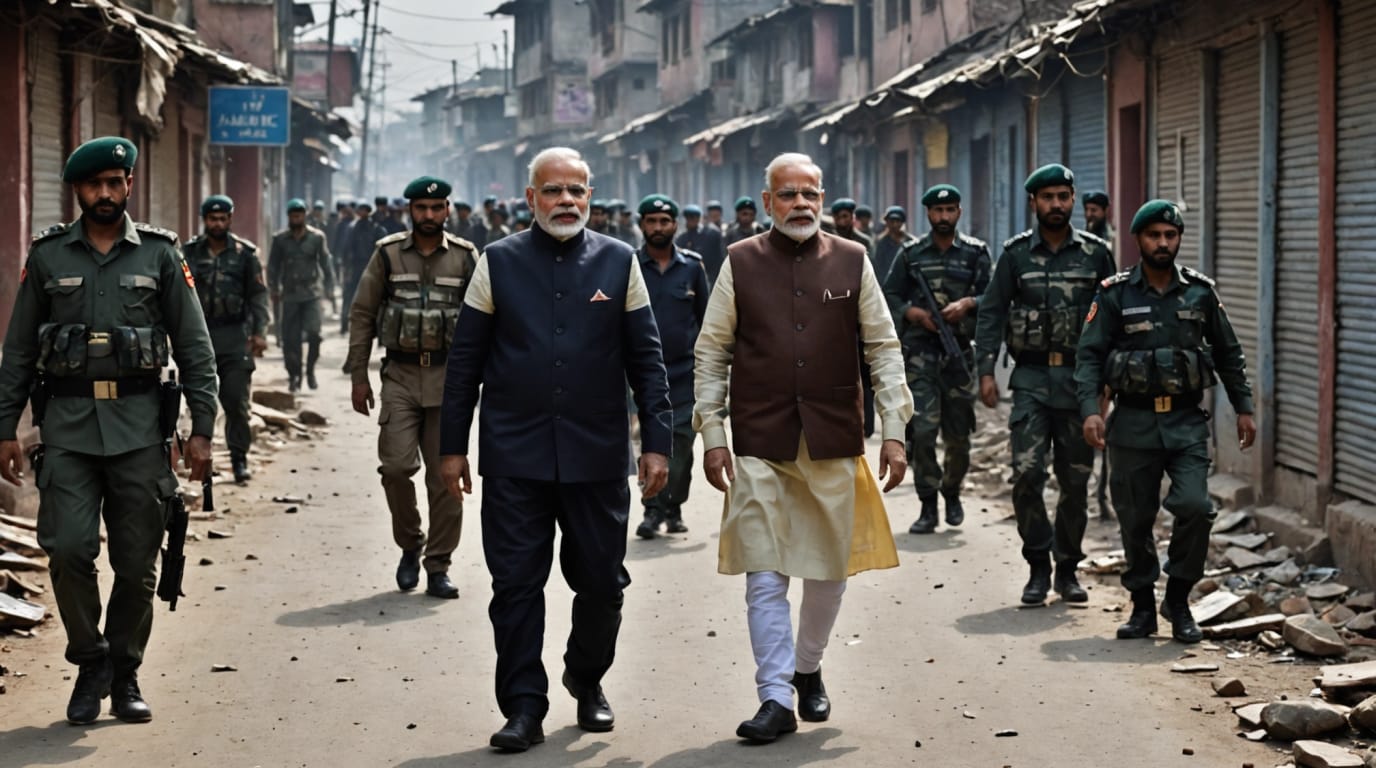
A deadly terrorist attack in the Baisaran Valley of Pahalgam, Jammu and Kashmir, has prompted Prime Minister Narendra Modi to cut short his visit to Saudi Arabia and return to New Delhi on Tuesday night. The attack, which claimed the lives of 26 people, mostly tourists, has sparked widespread condemnation and triggered high-level meetings to assess the situation and plan a response.
Details of the Attack
The attack occurred on Tuesday, April 22, 2025, in the scenic Baisaran Valley, a popular tourist destination in Pahalgam, Anantnag district. Gunmen opened fire on tourists, resulting in the immediate deaths of many and leaving several others injured. Security forces and medical teams were immediately dispatched to the scene, and the area was cordoned off as a search operation was launched to apprehend the attackers. The Resistance Front (TRF), an offshoot of the Pakistan-based terror group Lashkar-e-Taiba (LeT), has claimed responsibility for the assault.
Among the victims were two members of the Telugu community, identified as JS Chandramouli and Madhusudhan, prompting Andhra Pradesh Chief Minister N Chandrababu Naidu to express deep sorrow. One survivor recounted a chilling detail: after killing her husband, the terrorists spared her and her son, telling them to "Go and tell Modi."
Modi's Response and Government Action
Prime Minister Modi, who was in Jeddah for bilateral talks with Saudi Crown Prince Mohammed bin Salman, delayed their scheduled meeting to assess the situation in Kashmir. He also skipped an official dinner hosted that evening. Upon his return to New Delhi, Modi held a key meeting at the airport with National Security Advisor Ajit Doval, External Affairs Minister S Jaishankar, and Foreign Secretary Vikram Misri to discuss the situation. A meeting of the Cabinet Committee on Security (CCS) is scheduled to be held.
Modi strongly condemned the attack, expressing condolences to the families of the victims and vowing to bring the perpetrators to justice. He stated, "Those behind this heinous act will be brought to justice...they will not be spared! Their evil agenda will never succeed. Our resolve to fight terrorism is unshakable and it will get even stronger."
Union Home Minister Amit Shah also held a high-level meeting with Jammu and Kashmir Chief Minister Omar Abdullah to assess the situation and ensure all necessary measures are taken.
International Reaction
The international community has also reacted strongly to the attack. New Zealand Prime Minister Christopher Luxon expressed his condolences, saying, "Having woken in London to news of the shocking terrorist attack in Kashmir, I'm appalled by the senseless deaths of so many. New Zealanders' thoughts are with the people of India at this difficult time." The United States President Donald Trump condemned the attack and extended support to India, with White House Press Secretary Karoline Leavitt stating that President Trump would call PM Modi to discuss the Pahalgam terrorist attack. Pakistan responded by expressing concern at the loss of life and extending condolences.
Historical Context and Impact on India-Pakistan Relations
This attack comes against a backdrop of long-standing tensions between India and Pakistan, particularly concerning the disputed territory of Kashmir. Both countries claim the region, and it has been a source of conflict for decades. Militant groups, often operating from Pakistani territory, have been involved in attacks in Indian-administered Kashmir.
A similar attack in Pulwama in 2019, where a suicide bomber killed 40 Indian Central Reserve Police Force (CRPF) personnel, led to a significant deterioration in India-Pakistan relations. India blamed Pakistan for the attack, a charge Pakistan denied. The incident resulted in the 2019 India-Pakistan military standoff, with India launching airstrikes on what it claimed were terrorist camps in Balakot, Pakistan.
In the aftermath of the 2019 Pulwama attack, India revoked Pakistan's most favored nation status and raised customs duties on Pakistani goods to 200%. Pakistan, in turn, suspended bilateral trade with India. Relations have remained strained, with cross-border terrorism remaining a core concern for India.
Tourism and Local Reaction
The attack has dealt a blow to the tourism industry in Kashmir, which has been showing signs of recovery in recent years. Tourism and business operators in Kashmir have called for a shutdown to protest the attack. Local residents have also expressed shock and grief, emphasizing that Kashmir is known for its hospitality and that they are devastated by the loss of lives.
Future Implications
The Pahalgam attack is likely to have several implications. It will likely further strain India-Pakistan relations, making any near-term improvement in ties even more difficult. India is expected to increase pressure on Pakistan to take action against terrorist groups operating on its soil.
Domestically, the attack may lead to increased security measures in Kashmir and heightened scrutiny of potential security lapses. Some Indian leaders have already called for accountability for what they see as intelligence failures that allowed the attack to occur.
The attack also underscores the continued challenges of maintaining peace and stability in Kashmir, and the ongoing threat of terrorism in the region.
Conclusion
The terrorist attack in Pahalgam is a stark reminder of the ongoing security challenges in Jammu and Kashmir. Prime Minister Modi's decision to cut short his Saudi Arabia visit reflects the seriousness with which the Indian government is treating the situation. The coming days will be crucial as India formulates its response and takes steps to address the security concerns raised by this attack. The incident is a tragedy for the families of the victims and a setback for the region's efforts to promote peace and stability.


