Kazakhstan Votes in Parliamentary Election, Solidifying Presidential Power Amid Sweeping Reforms
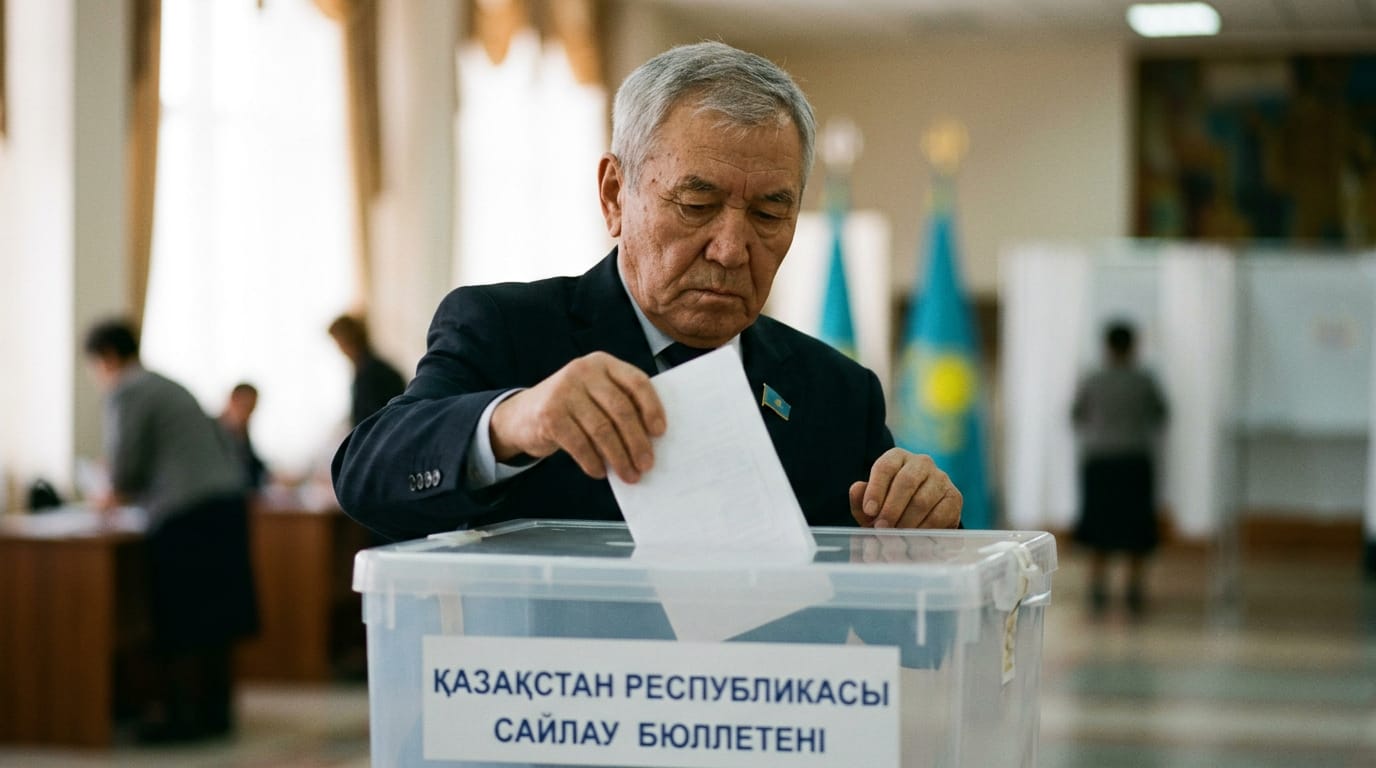
ASTANA, KAZAKHSTAN – Citizens across Kazakhstan cast their ballots today in a snap parliamentary election, a vote widely anticipated to further solidify President Kassym-Jomart Tokayev's hold on power. The election for the newly established single-chamber parliament, known as the Kurultai, marks the culmination of a rapid constitutional overhaul initiated by Tokayev, which critics argue streamlines governance to the executive's advantage despite official narratives of democratic modernization.
The polling, which commenced at 7 a.m. local time, is the latest in a series of strategic political maneuvers following widespread unrest in January 2022 that saw the nation grappling with its most significant challenge to stability since independence. With the ruling Adilet party, a successor to the long-dominant Amanat, projected to secure an overwhelming majority, the outcome is expected to reinforce President Tokayev's authority over Central Asia's largest nation.
The Dawn of a Unicameral Legislature
Today's parliamentary election ushers in a fundamentally restructured legislative landscape. The vote follows a constitutional referendum held on March 15, 2026, where over 87% of participating citizens approved sweeping changes to the nation's foundational law. These amendments notably merged Kazakhstan's previous bicameral parliament, comprising the Majilis (lower house) and Senate (upper house), into a single, new legislative body: the Kurultai.
Beyond the structural alteration, the constitutional revisions granted the president increased authority to appoint key government officials, a process now subject to the Kurultai's approval. The post of vice president, abolished under previous administrations, has also been re-established. This dramatic shift, enacted just months prior to the current election, significantly alters the balance of power, concentrating decision-making capabilities within the executive branch. Officials have asserted that the transition to a unicameral system is intended to enhance parliamentary influence and facilitate more efficient governance, fostering rapid decision-making in a dynamic global environment.
A Pattern of Political Transformation
The constitutional changes and subsequent elections under President Tokayev's leadership are rooted in the turbulent events of January 2022. The widespread protests, initially sparked by fuel price hikes, rapidly escalated into broader demands for political change and exposed deep-seated societal frustrations. In the aftermath, President Tokayev moved to dismantle the lingering influence of his predecessor, Nursultan Nazarbayev, including stripping him of special constitutional powers and lifetime immunity.
A June 2022 constitutional referendum marked the initial phase of these reforms, introducing a non-renewable seven-year presidential term, a measure designed to demonstrate a move away from the "super-presidential" system of the past. This was followed by a snap presidential election in November 2022, which Tokayev won with over 81% of the vote. Subsequently, snap legislative elections for the then-bicameral Majilis in March 2023 saw Tokayev's Amanat party secure a majority, alongside other pro-presidential parties. These earlier reforms also adjusted electoral thresholds and allowed for independent candidates, aiming to present an image of increased political pluralism. However, the swift pace and scope of the latest constitutional amendments, particularly the shift to a unicameral parliament and expanded presidential appointment powers, are viewed by many as a calculated acceleration of presidential authority.
"New Kazakhstan" or Renewed Centralization?
President Tokayev has championed these political transformations under the banner of building a "New Kazakhstan," a vision he asserts is founded on principles of equal opportunity, political liberalization, and economic diversification. The government maintains that the reforms are crucial for modernizing the state and responding effectively to domestic challenges and international pressures. However, the rapid succession of constitutional amendments and elections has drawn skepticism from both domestic and international observers.
Critics contend that while presented as a move towards a "presidential republic with a strong parliament," the changes effectively entrench a super-presidential system under a different guise. Concerns have been raised regarding the process by which the constitutional amendments were drafted and approved, with reports of a working group operating largely behind closed doors and public proposals receiving limited consideration. Furthermore, the political landscape remains tightly controlled. The parties contesting today's parliamentary election, while seemingly more numerous than in previous contests, are largely perceived as loyal to the president, with genuine opposition groups facing substantial hurdles to registration and participation. International monitoring bodies, including the OSCE, have consistently highlighted limitations on fundamental freedoms, lack of genuine political competition, and administrative obstacles for independent candidates. The ability for the recent constitutional amendments to potentially reset presidential term limits, allowing Tokayev to seek another seven-year term beyond his current mandate expiring in 2029, has also fueled concerns about the long-term democratic trajectory.
Implications for Kazakhstan's Future
The outcome of today's parliamentary election, alongside the recently approved constitutional changes, carries significant implications for Kazakhstan's political future. On a domestic level, the concentration of power within the presidency suggests a continued top-down approach to governance. While the stated aim is to achieve stability and efficient reform, the absence of a robust, independent parliamentary check and balance, coupled with persistent restrictions on political pluralism and media freedom, raises questions about the long-term health of democratic institutions.
Economically, the nation faces ongoing challenges, including inflation and public discontent over tax hikes, factors that previously contributed to the January 2022 unrest. The government's strategy appears to be one of consolidating power to better manage these economic strains and prevent future widespread social instability. This approach aims to provide a clear direction for the country, particularly in navigating its complex geopolitical position between Russia and the West.
In conclusion, the parliamentary election on August 23, 2026, serves as a critical juncture in Kazakhstan's political evolution. While presented as a step towards a modernized and more responsive state, the array of constitutional amendments and tightly managed electoral processes underscore a determined effort by President Tokayev to centralize authority. The reforms have undoubtedly reshaped the institutional framework, creating a more streamlined, albeit less pluralistic, political system designed to reinforce presidential power under the guise of stability and progress. The coming years will reveal whether this new architecture can truly address the nation's complex challenges while navigating the delicate balance between state control and the aspirations for broader societal engagement.