Kenyan Police Clash with Protesters as Anger Mounts Over US Ebola Quarantine Center
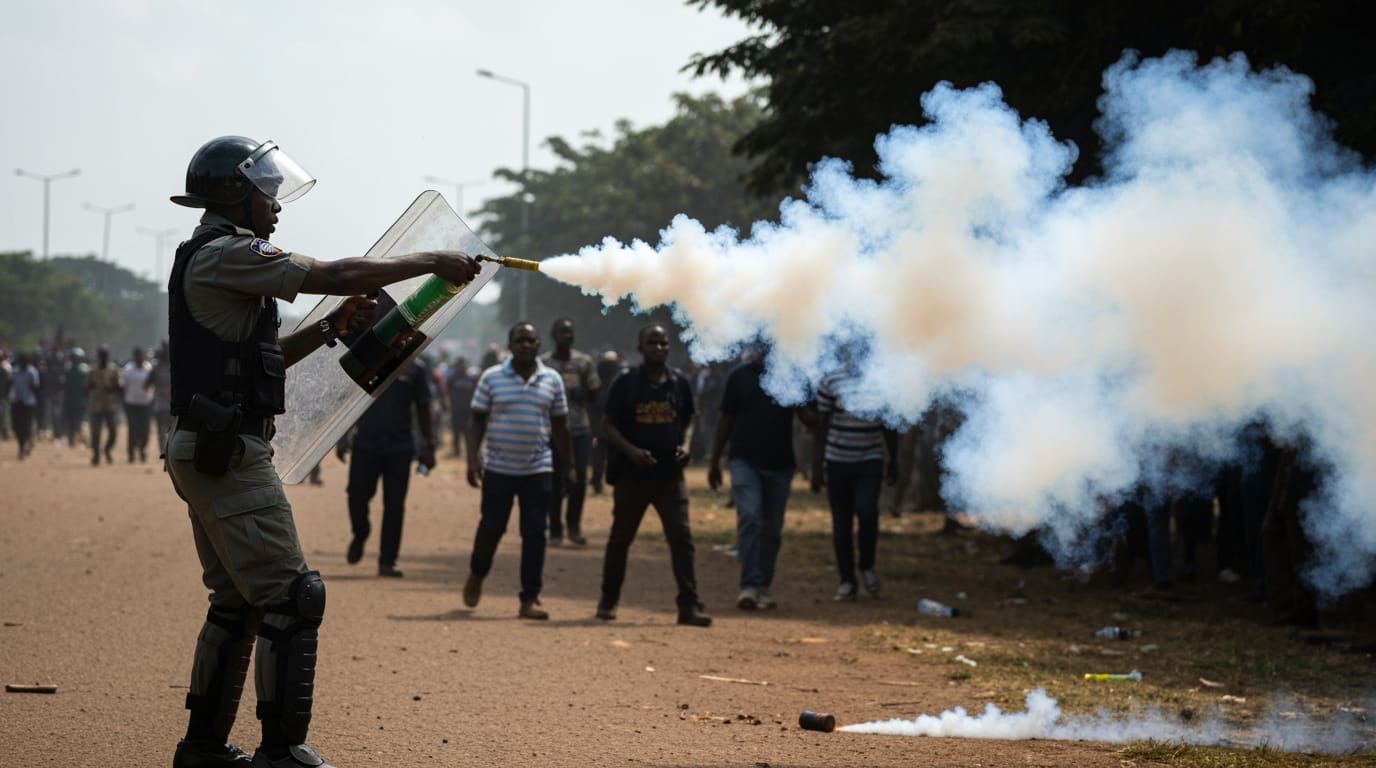
NANYUKI, Kenya – Kenyan police on Tuesday deployed tear gas to disperse angry demonstrators in Nanyuki, a town in central Kenya, as protests intensified against the construction of a U.S.-backed Ebola quarantine facility. The confrontation marks a significant escalation in local opposition to the proposed center, which many Kenyans view as an attempt by the United States to offload public health risks associated with the ongoing Ebola outbreaks in the Democratic Republic of Congo and Uganda. This latest clash follows previous protests last week in Nanyuki that tragically resulted in two fatalities.
The Day's Unrest in Nanyuki
The Tuesday protests saw small groups of demonstrators gathering near the Laikipia Air Base, the site of the contentious 50-bed quarantine unit. Police rapidly moved to scatter the crowds, firing tear gas to prevent further convergence and disruption. The scenes of unrest underscore the deep-seated frustration pervading the community, particularly given that the construction of the facility is proceeding despite Kenyan court orders that explicitly barred further work. One demonstrator was seen carrying a white cross emblazoned with "Respect Ebola," symbolizing the profound apprehension and perceived disregard for local concerns. The renewed police action comes just days after the previous week's demonstrations turned deadly, highlighting the volatile nature of the public's opposition.
A Deep-Seated Controversy
The core of the protests stems from the belief among many Kenyans that the United States is attempting to transfer the health risks of caring for individuals exposed to the Ebola virus onto Kenyan soil. This perception has fueled accusations of a lack of transparency and public participation in the decision-making process for establishing the facility. Residents of Laikipia county have voiced strong objections, arguing that local communities were not consulted, and their concerns about public health, safety, and the potential impact on their towns have been ignored.
Furthermore, the protests gained legal backing when Kenya's High Court temporarily halted the establishment of the center and the admission of any foreign patients. This judicial intervention followed a petition filed by the Law Society of Kenya and a constitutional watchdog, which asserted that Kenya's healthcare system is inadequately equipped to manage foreign Ebola cases. Despite these court orders, satellite imagery has shown a continuous buildup of white tents within an 11-acre plot at the Laikipia Air Base since May 27, indicating ongoing construction. Sources and flight-tracking data also suggest that U.S. military planes continue to transport personnel and equipment to the site.
The Facility's Contested Purpose
U.S. officials have stated that the Nanyuki facility is intended for asymptomatic Americans who have been exposed to the Ebola virus. They clarify that any symptomatic patients would be directed to other locations. This initiative aligns with the Trump administration's declared policy that it "cannot and will not allow" Ebola cases to enter the United States, a departure from the 2014-2016 Ebola outbreak when infected U.S. nationals were treated on American soil.
However, the purpose and scope of the facility have been a point of contention between the two governments. While Kenyan officials have indicated that the center would serve a broader population, including Kenyans and other foreign nationals, U.S. officials have not publicly confirmed this broader usage. The United States government has acknowledged the court challenges and has stated it is "working with the Kenyan government to resolve any objections." This divergence in communication has further eroded public trust and contributed to the prevailing skepticism among the Kenyan populace.
Broader Implications and Public Health Diplomacy
The unrest in Nanyuki casts a spotlight on the complexities of international public health initiatives, particularly when they intersect with national sovereignty and community sentiment. The U.S. government's push to establish the facility, driven by a domestic policy aimed at preventing Ebola cases from entering American borders, has inadvertently created significant friction with a key African partner. This situation highlights the critical need for transparent communication, robust public engagement, and clear legal adherence in cross-border health collaborations.
The ongoing protests, coupled with judicial injunctions, signal a challenge to traditional diplomatic approaches where such facilities might be established with less local resistance. The incident also raises questions about the ethical implications of transferring potential public health burdens to developing nations, particularly when those nations' own health infrastructures are perceived as fragile. The two deaths during previous protests underscore the severe human cost that can arise when international health policies clash with local concerns and legal mandates.
Conclusion
The confrontation in Nanyuki represents a critical juncture for both Kenyan and U.S. authorities. The continued construction of the Ebola quarantine facility in defiance of court orders and mounting public anger suggests a significant communication and diplomatic chasm. For the people of Nanyuki, the fight is one for perceived self-preservation and sovereignty, challenging what they view as an external imposition of risk. As police continue to disperse demonstrators and the U.S. proceeds with its plans, the path forward remains uncertain, demanding a resolution that addresses legal precedents, community concerns, and the delicate balance of international public health cooperation.


