Khaleda Zia, Bangladesh's Former Premier, Dies at 80, Ending an Era of Tumultuous Politics
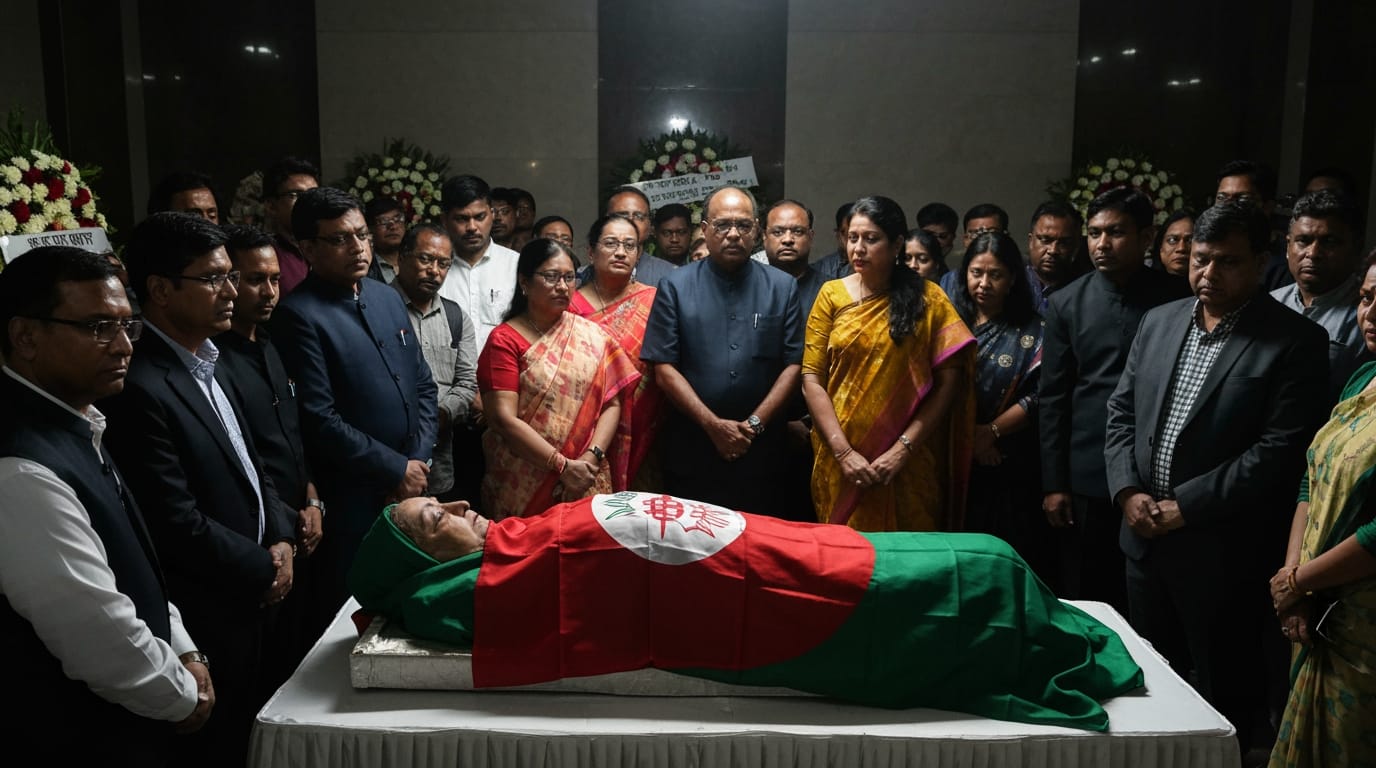
Dhaka, Bangladesh – Begum Khaleda Zia, the iron-willed former Prime Minister of Bangladesh whose political career spanned decades of intense rivalry and profound influence, has died at the age of 80. Her passing on Tuesday, December 30, 2025, at Evercare Hospital in Dhaka, marks the end of an extraordinary chapter in the nation's history, leaving a significant void in the political landscape she helped shape. Zia had been battling a prolonged illness, complicated by advanced liver cirrhosis, arthritis, diabetes, and heart and chest problems. Her death comes at a critical juncture for Bangladesh, as the nation prepares for general elections in early 2026, with her Bangladesh Nationalist Party (BNP) poised as a frontrunner.
A Political Journey Forged in Tragedy
Born Khaleda Khanam Putul on August 15, 1945, in Dinajpur, British India, Khaleda Zia's entry into politics was not by initial design but rather a response to profound personal tragedy. She was primarily a homemaker, marrying Ziaur Rahman, then a military officer, in 1959. Her husband rose to prominence as a key figure in Bangladesh's liberation war and later served as President from 1977 until his assassination in 1981. His death propelled Zia into the national spotlight and, crucially, into the leadership of the Bangladesh Nationalist Party (BNP), which her husband founded in 1978.
Taking the helm of the BNP in 1984, Zia quickly established herself as a formidable opposition figure against the military rule of Hussain Muhammad Ershad. She led a powerful seven-party alliance, organizing numerous protests and enduring multiple detentions for her unwavering stance against authoritarianism, earning her the moniker "Uncompromising Leader". Her resilience and leadership were instrumental in the movement that culminated in Ershad's resignation in 1990 and the restoration of parliamentary democracy.
Trailblazing Terms as Prime Minister
In the 1991 general elections, Khaleda Zia led the BNP to a landmark victory, becoming Bangladesh's first female prime minister and the second woman in the Muslim world to hold such a position, following Benazir Bhutto of Pakistan. Her initial term from 1991 to 1996 saw efforts to liberalize the economy, privatize industries, and expand access to education, particularly for women. Her government was also responsible for restoring the parliamentary system through the 12th amendment to the Constitution.
She served two more terms, briefly in 1996, and then from 2001 to 2006. During her tenures, Zia consistently maintained a strong focus on economic development and social welfare, though her time in power was also marked by periods of political unrest and challenges. She was re-elected in 2001 on promises to eradicate corruption and terrorism. Throughout her political career, Zia was elected to five separate parliamentary constituencies in multiple general elections, a unique feat in Bangladeshi history.
A Legacy Entangled in Rivalry and Legal Battles
Zia's political career was inextricably linked to her fierce and often volatile rivalry with Sheikh Hasina, leader of the Awami League. This dynastic contest, often referred to as the "Battle of the Begums," defined Bangladeshi politics for over three decades, oscillating between periods of cooperation against military rule and intense confrontation in power.
In her later years, Zia faced significant legal challenges. She was convicted in two corruption cases – the Zia Orphanage Trust and the Zia Charitable Trust – in 2018, receiving a total sentence of 17 years in prison. Her party and supporters maintained that these charges were politically motivated, a claim denied by the then-ruling Awami League government. She was initially imprisoned, then released on humanitarian grounds for medical treatment under house arrest in March 2020.
Following the student-led "Monsoon Revolution" in August 2024, which led to the ouster of Sheikh Hasina's government, Khaleda Zia was unconditionally released and all cases against her were withdrawn. She was subsequently acquitted in the graft cases on November 27, 2024.
Final Days and Lingering Health Struggles
Despite her release, Zia's health remained a critical concern. She had been suffering from multiple chronic conditions, including advanced cirrhosis of the liver, cardiac issues, diabetes, kidney problems, and arthritis. Her condition deteriorated sharply in late 2025, leading to her admission to Evercare Hospital in Dhaka on November 23.
Doctors described her condition as "very critical" and "fragile," with reports of her being placed on ventilator support in early December to assist her lungs and other vital organs. Despite calls from her family and party for advanced medical treatment abroad, doctors deemed her condition too unstable for air travel. Her son, Tarique Rahman, the acting chairperson of the BNP, had recently returned to Bangladesh from 17 years of exile in London, reportedly visiting his ailing mother in her final days.
A Party's Future and a Nation's Reflection
Khaleda Zia's death leaves the Bangladesh Nationalist Party at a crossroads, just weeks before a crucial general election scheduled for February 2026. The BNP, which she chaired until her passing, had been widely seen as a leading contender in the upcoming polls, especially after the ban on the Awami League. While her son Tarique Rahman has returned and is positioned to take a more direct leadership role, questions linger about the party's ability to maintain its broad appeal without its unifying matriarch.
Her legacy is complex, marked by both democratic achievements and controversies. However, her unwavering commitment to fighting military rule and her significant role as the first female head of government in Bangladesh cement her place as a pivotal figure. Her passing prompts a national reflection on her impact, the future of multi-party democracy in Bangladesh, and the enduring political narratives she embodied.
Khaleda Zia’s life story mirrors the tumultuous journey of independent Bangladesh itself. From being the wife of a president to a resistance leader, and then a three-time prime minister, she navigated a treacherous political landscape with a determination that earned both fierce loyalty and strong opposition. Her death closes a significant chapter, but her influence on Bangladesh's political consciousness is likely to resonate for years to come.


