King Charles III Embarks on High-Stakes US State Visit as UK-US Ties Face Unprecedented Strain
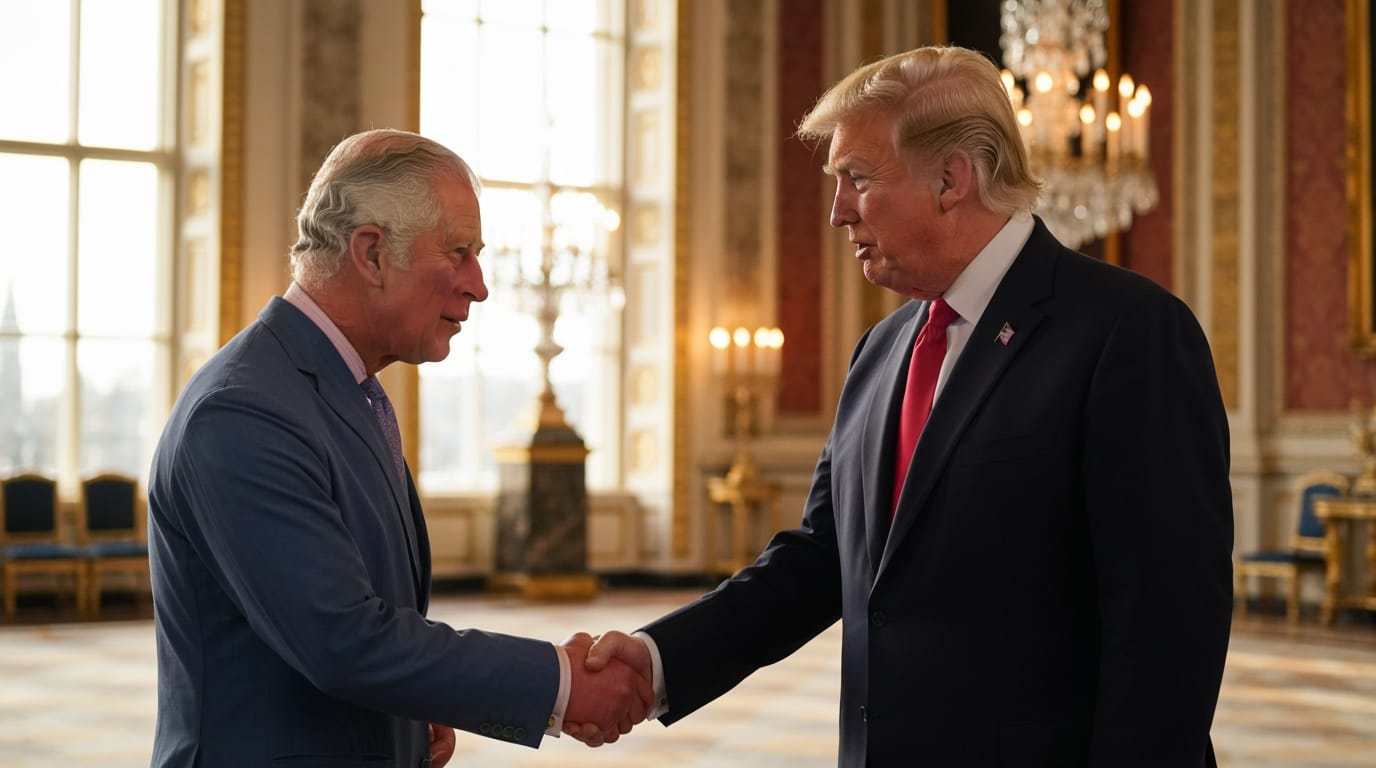
Washington D.C. — King Charles III is set to commence a pivotal four-day state visit to the United States from April 27 to April 30, 2026, marking his first such journey as monarch and unfolding against a backdrop of deep diplomatic tension between London and Washington. The visit, undertaken at the request of the UK government and US President Donald Trump, aims to harness the monarchy's unique "soft power" in an attempt to mend a "special relationship" increasingly frayed by geopolitical disagreements, particularly the ongoing US war in Iran, and the shadow of the "Epstein scandal".
The Diplomatic Tightrope: A Monarch's Mission
The meticulously planned itinerary for King Charles III and Queen Camilla includes a White House state banquet, a private tea with President Trump and First Lady Melania Trump, and a rare royal garden party in Washington D.C., alongside stops in New York City and Virginia. The official purpose of the trip is to commemorate the 250th anniversary of American independence, a symbolic gesture intended to reinforce the enduring historical bonds between the two nations. However, behind the pageantry lies a complex diplomatic mission for the British monarch, as the visit is widely acknowledged by British diplomats and palace officials as the "most risky diplomatic trip" of King Charles's reign so far.
The timing of the visit is fraught with challenges. The US decision to initiate military action against Iran alongside Israel in late February 2026, and the UK's subsequent refusal to support offensive operations, has created a significant wedge in the transatlantic alliance. Prime Minister Keir Starmer's government publicly stated its belief in a "negotiated settlement" for the region, distancing itself from the American offensive. Compounding these geopolitical strains is the looming "Epstein scandal," which has reportedly entangled UK-US relations, partly due to the appointment of Labour grandee Peter Mandelson as the UK ambassador to Washington, an individual known to have associated with the late US sex offender.
Political Discord and Trump's Scathing Remarks
The political landscape surrounding the visit is further complicated by the palpable animosity between President Trump and UK Prime Minister Keir Starmer. Trump has repeatedly lambasted Starmer, criticizing his government's stance on the Iran war, immigration policies, and energy strategy. In a particularly pointed remark in March, Trump asserted that Starmer was "no Winston Churchill," adding that the "special relationship" was "not like it used to be." The American leader has also openly mocked the perceived state of Britain's armed forces, of which King Charles is the commander-in-chief.
Despite these public criticisms, Prime Minister Starmer has staunchly defended the King's visit, emphasizing the monarchy's unique capacity for "soft power" to transcend political differences and "reach through the decades." Public sentiment in the UK, however, appears divided, with an early April YouGov poll indicating that nearly half of Britons (48%) supported cancelling the state visit amidst the controversies. Democratic congressman Brendan Boyle from Pennsylvania highlighted the delicacy of the situation, noting that the King is attempting to balance the monarchy's traditional soft power while navigating the President's frequent verbal attacks on British leadership.
Strategic Imperatives: Beyond the Personal
The British government's decision to press ahead with the state visit underscores the enduring, albeit strained, importance of the UK-US "special relationship." This partnership is historically rooted in deep intelligence, defense, and security cooperation, and London views it as its "most important bilateral partnership." Facing a second Trump presidency, the UK has prioritized fostering links with his administration to protect its strategic interests, which include mitigating threatened tariffs, securing trade agreements, and collaborating on critical areas like nuclear energy and technology.
Previous interactions between Charles (then Prince of Wales) and Trump offer a nuanced perspective on their personal dynamic. Reports from Trump's 2019 state visit to the UK indicated initial friction, with discussions largely dominated by Charles's long-standing advocacy for climate change. However, subsequent meetings reportedly saw an improvement in their rapport, with Trump expressing admiration for the royal family and speaking warmly of Charles. This personal respect is a key element the British government hopes to leverage, viewing the King as a stable figure capable of maintaining continuity in the relationship despite political shifts. The UK's approach is increasingly pragmatic, aiming to demonstrate clear value to Washington in an era where the US-UK relationship is perceived as more transactional and interest-based.
The Monarchy as a Bridge in Turbulent Waters
In an environment where transatlantic ties are demonstrably tested, the monarchy is being deployed as a crucial diplomatic instrument. King Charles's visit is intended to project stability and warmth during a volatile period, celebrating shared history while subtly navigating present-day tensions. The King's role is particularly significant as President Trump has, at various times, questioned core tenets of British foreign policy, including the value of NATO and support for Ukraine. By focusing on the historical and cultural ties that bind the two nations, the state visit seeks to underscore that the relationship extends far beyond the personalities of current political leaders.
The King's ability to engage with Trump, who has openly admired the ceremonial aspects of the monarchy and British tradition, provides a unique channel for communication. This approach reflects a broader British strategy to "rebalance" its relationship with the US, maintaining collaboration where interests align but also hedging against unpredictability. Through this high-profile visit, the UK government is signaling its commitment to maintaining this vital alliance, even if it requires a delicate diplomatic dance between the sovereign and the US President.
The upcoming state visit by King Charles III to the United States represents a critical diplomatic gambit. Faced with unprecedented strains in the "special relationship" driven by contentious geopolitical issues and sharp political differences, the UK government is strategically deploying the monarchy's soft power to preserve and recalibrate its most important bilateral partnership. While the success of this charm offensive remains to be seen, the stakes are undeniably high for both nations as they seek to navigate an increasingly complex global landscape.


