Pripyat: Forty Years On, A Ghost City Endures Amidst Nature's Reclamation and Renewed Threats
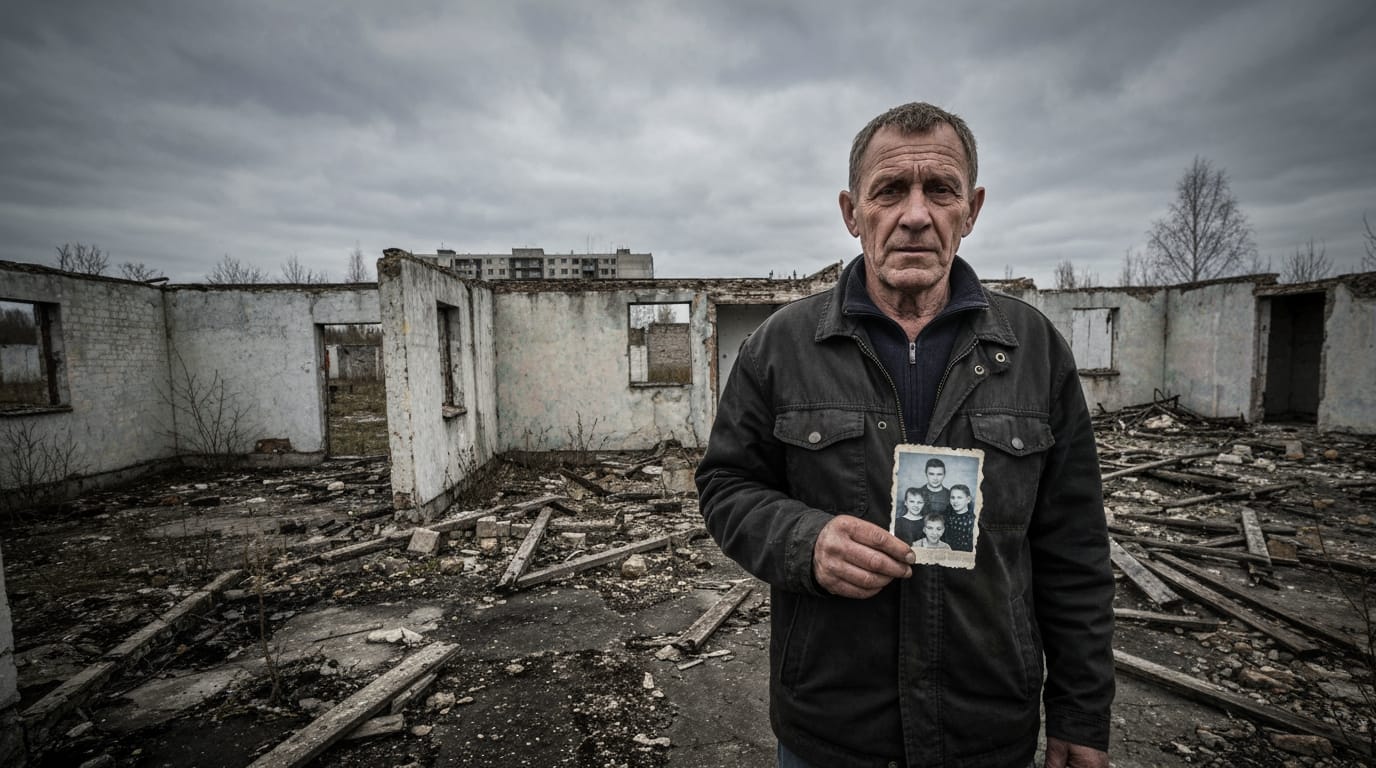
April 26, 2026, marks four decades since the catastrophic explosion at the Chernobyl Nuclear Power Plant, an event that reshaped the global understanding of nuclear safety and left an indelible scar on the landscape of northern Ukraine. At the heart of this legacy lies Pripyat, once a vibrant Soviet city of nearly 50,000, now a haunting testament to sudden abandonment. What was envisioned as a workers' paradise, home to the power plant's personnel, has transformed into a spectral urban wilderness, where the passage of time is marked not by human activity, but by the relentless march of nature and the unsettling echoes of geopolitical conflict.
The Silent City: A Time Capsule Frozen in Ash and Ivy
Founded on February 4, 1970, Pripyat was the ninth "nuclear city" built by the Soviet Union, designed to epitomize socialist modernity and provide a high standard of living for the Chernobyl power plant's workforce. Its population had grown to approximately 49,360 by 1986, boasting amenities like schools, cinemas, a palace of culture, and even an amusement park scheduled to open for May Day celebrations. However, this future was brutally interrupted. Just 36 hours after the Reactor No. 4 explosion on April 26, 1986, residents were told to pack only essentials for a temporary three-day evacuation that became permanent. Today, Pripyat remains an abandoned, desolate city, its empty, decaying buildings serving as a poignant time capsule of the Soviet era. The iconic rusted Ferris wheel, never fully operational for its intended public, stands as a creaking symbol of the disaster, frozen in time. Nature has steadily reclaimed the city, with trees piercing abandoned buildings, roads dissolving into forest, and dense undergrowth obscuring former thoroughfares.
Nature's Paradoxical Embrace: A Thriving, Unnatural Reserve
Despite the lingering radioactive contamination, the absence of human activity has allowed the Chernobyl Exclusion Zone (CEZ), encompassing Pripyat and surrounding areas, to become an unexpected haven for wildlife. Scientists and ecologists observe a remarkable resurgence of animal populations, creating what some describe as a "totally unnatural reserve". Large mammals, often the first to disappear in environmental disasters, are flourishing. Wolf populations are reportedly seven times higher than in uncontaminated reserves, while brown bears have reappeared after more than a century's absence. Elk, roe deer, wild boar, and lynx roam freely, and beavers have recolonized rivers and canals. Notably, the endangered Przewalski's horses, reintroduced in 1998, now number over 150 animals in the zone, their adaptation considered a "small miracle" by local scientists. Birdsong, once eerily absent, now fills the forests, with warblers, cuckoos, and nightingales present, and the globally endangered greater spotted eagle has returned.
The CEZ has become an invaluable natural laboratory for studying the genetic and ecological effects of chronic radiation exposure, demonstrating how ecosystems can recover when human pressure is removed. While some studies document long-term genetic damage in certain species, the overall trend points to nature's resilience. Adaptations have been observed, such as black frogs with darker pigmentation for radiation protection and melanin-rich fungi thriving in high-radiation environments within the ruined reactor buildings. This flourishing biodiversity presents a complex paradox: a landscape made uninhabitable for humans, yet teeming with a diverse and adapting animal kingdom.
A New Layer of Vulnerability: War and the Integrity of Containment
The 40th anniversary finds Chernobyl and its surrounding zone facing a new, grave threat: the ongoing war in Ukraine. What was already one of the world's most complex nuclear cleanup operations has been further complicated by military conflict. The immense, arch-like New Safe Confinement (NSC), completed in 2016 at a cost of $2.1-2.3 billion, was designed to seal the damaged Reactor No. 4 and its deadly debris for a century. However, this critical structure has come under direct assault. On February 14, 2025, a Russian drone strike caused a fire and damaged the outer layers of the NSC, including its insulation. While initial radiation levels remained stable, International Atomic Energy Agency (IAEA) inspectors concluded that the facility lost key elements of its confinement function, narrowing its safety margin. Repairs, estimated to cost around €500 million and take three to four years, are now a pressing concern, made difficult by the wartime conditions.
Beyond direct strikes, the war has severely strained Chernobyl's safety systems, disrupting continuous monitoring, stable electricity supplies, and controlled access. Russian forces' initial occupation of the zone in 2022 resulted in looting, destruction of monitoring equipment, and even the digging of trenches in highly contaminated areas like the Red Forest, causing brief spikes in radiation levels. The Exclusion Zone, once a site primarily for scientific research and controlled tourism, has become a "heavily monitored military corridor," with anti-aircraft positions appearing among Pripyat's abandoned apartment blocks and soldiers outnumbering scientists. This new reality underscores a terrifying category of risk: civilian nuclear infrastructure exposed to sustained military pressure.
The Enduring Legacy: Uninhabitable Future, Emerging Possibilities
The long-term prognosis for human habitation in the Chernobyl Exclusion Zone remains unchanged: it is projected to be unsafe for tens of thousands of years, with some isotopes like plutonium posing a threat for millennia. The IAEA estimates that people will not be able to safely live there for at least 24,000 years. However, even within this bleak reality, new ideas for the zone's future are emerging. Ukraine is exploring the possibility of using parts of the exclusion zone for renewable energy projects, such as solar power plants, and even as a potential location for future small modular reactors (SMRs). The zone is also cemented as a primary site for nuclear waste management, with a centralized storage facility for spent nuclear fuel launched in 2022 to operate for the next 100 years.
Prior to the full-scale war, the Exclusion Zone had become a unique destination for "dark tourism," attracting visitors eager to witness the ghost city and the site of humanity's worst nuclear disaster. However, due to the war and the extensive demining efforts required, tourism is currently suspended, with no clear timeline for its resumption. A small number of "self-settlers"—mostly elderly former residents who illegally returned to their homes—continue to live within the zone, their resilience a testament to their deep connection to the land despite the risks. Their dwindling numbers mark the last vestiges of a human presence that once defined this now-abandoned landscape.
Forty years after the disaster, Pripyat stands as a complex symbol: a stark warning of technological hubris, a testament to nature's tenacious recovery, and now, a poignant reminder of renewed geopolitical instability. Its silent streets and encroaching forests tell a story of abandonment and unexpected rebirth, while the damaged New Safe Confinement underscores the ongoing fragility of managing a radioactive legacy in a world still grappling with conflict. The ghost city, once frozen in time, continues to evolve, a living, breathing, yet deeply scarred monument to the enduring impact of a single, catastrophic moment.


