Kosovo Grapples with Persistent Political Instability as Nation Heads to Third Election in 16 Months
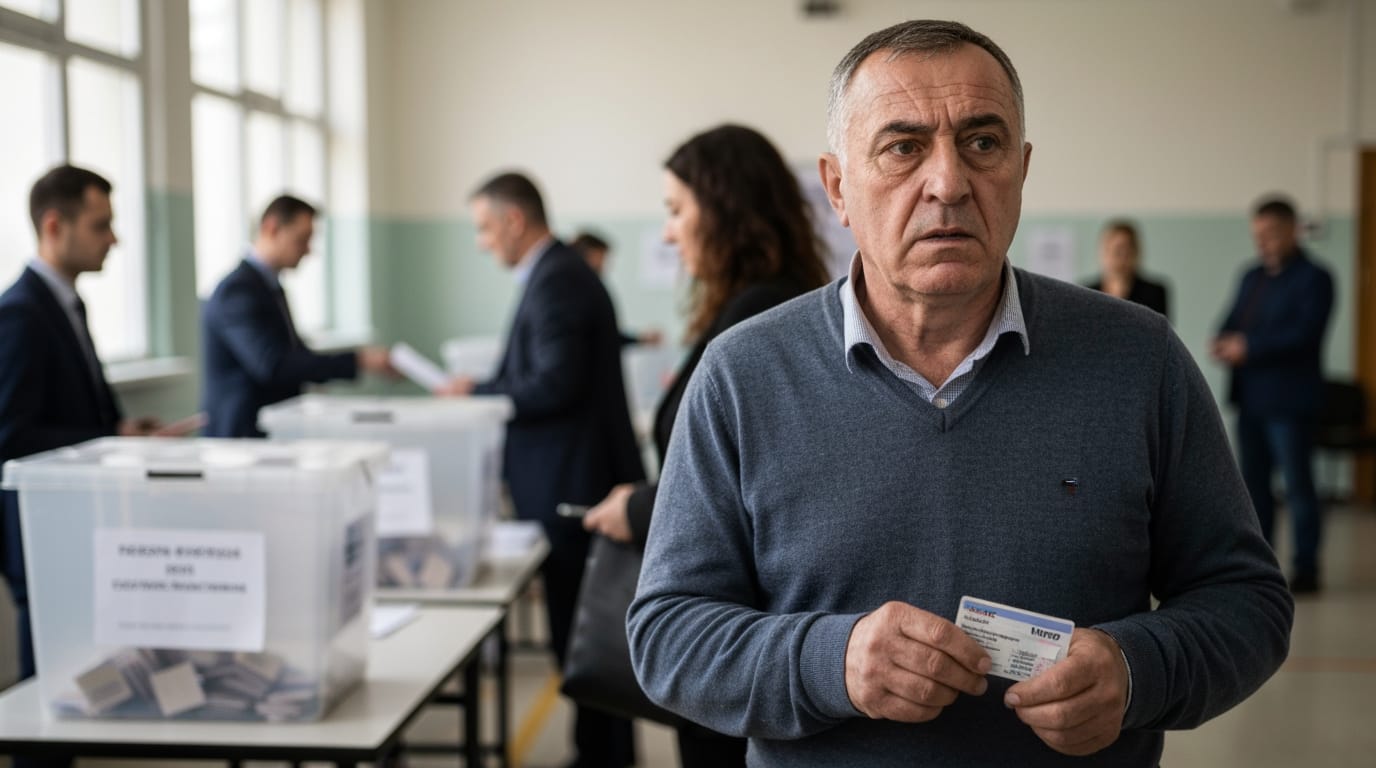
Pristina, Kosovo — Kosovo is once again at a critical political juncture, with citizens heading to the polls on June 7, 2026, for the third snap parliamentary election in just over 16 months. This relentless cycle of elections underscores a deep-seated institutional instability plaguing the young Balkan nation, hindering its progress, stifling economic development, and casting a long shadow over its aspirations for European integration. The repeated electoral contests highlight a profound political deadlock rooted in an inability to forge sustainable coalitions and achieve critical constitutional consensus.
A Relentless Electoral Carousel
The current political turmoil commenced in February 2025, when parliamentary elections were held, resulting in the left-wing Vetëvendosje (LVV) party, led by Albin Kurti, securing 42.3% of the vote and 48 seats in the 120-member Assembly. However, this fell short of the 61-seat majority required to form a government independently, leading to protracted negotiations and institutional paralysis. The failure to form a stable government ultimately triggered a second snap election in December 2025.
In a significant electoral shift, Vetëvendosje achieved a landslide victory in the December 2025 vote, increasing its share to 49.3% and securing a clear parliamentary majority. This outcome raised hopes for an end to the political stalemate, and Albin Kurti's third cabinet was approved in February 2026. However, this stability proved fleeting. The subsequent challenge arose from the constitutional requirement to elect a new President, a process demanding the support of at least 80 lawmakers in the 120-seat Assembly. Opposition parties, including the Democratic Party of Kosovo (PDK) and the Democratic League of Kosovo (LDK), boycotted the crucial parliamentary sessions, preventing the necessary quorum from being met.
The inability of parliament to elect a new head of state by the constitutional deadline of March 2026 led to the dissolution of the Assembly in April 2026, paving the way for the third parliamentary election. This rapid succession of votes, necessitated by repeated failures to form functional governing bodies or elect a president, has transformed elections from a mechanism for resolving crises into a recurring symptom of the nation's political dysfunction.
The Deep Roots of Parliamentary Paralysis
Kosovo's persistent institutional instability stems from a complex interplay of factors, including a fragmented political landscape, a pronounced lack of compromise among political actors, and the constitutional architecture itself. The requirement for a two-thirds majority to elect a president, for instance, frequently provides opposition parties with leverage to block proceedings and force early elections, even if the government holds a parliamentary majority.
Political polarization has become a hallmark of Kosovo's democratic process. Instead of fostering consensus, political competition often devolves into an entrenched "blame game," with parties prioritizing short-term political calculations over long-term state interests. The upcoming June 7 election features over ten political parties vying for influence, further complicating the prospect of forming stable, long-lasting coalitions. Critics accuse Prime Minister Kurti of seeking to consolidate control over all state institutions, while opposition parties are criticized for obstructing crucial processes, such as the presidential election, without offering viable alternatives. Former President Vjosa Osmani, whose term expiration triggered the latest crisis, is now running on an opposition party list, indicative of the intense political rivalries at play.
Economic Fallout and Mounting Public Discontent
The prolonged political uncertainty has exacted a heavy toll on Kosovo's economy, which is already among the poorest in Europe. Economists warn that the ongoing crisis has had "drastic consequences," suffocating economic activity and deterring much-needed foreign direct investment. The failure to establish a stable government and parliament has resulted in significant financial losses, with estimates suggesting direct losses of €300 million over recent months and an additional €600 million in lost potential international funding.
Access to vital international financing, including €60 million from the EU Growth Plan and €90 million from the World Bank, remains frozen due to the non-functioning of parliament. The absence of a fully empowered government also jeopardizes the adoption of a formal state budget, raising concerns about the payment of public sector salaries and the continuity of essential services. Political instability acts as a "tax on Kosovo's economy," increasing transaction costs for businesses, diverting governmental focus from crucial reforms, and weakening overall investor confidence.
The human cost of this instability is equally significant. Citizens express deep disappointment and frustration, with many feeling that politicians are indifferent to their daily struggles. Public funds have been used for "Inflation Relief Packages" — one-off payments and subsidies — ahead of elections, drawing criticism that such measures serve as pre-election campaigns rather than sustainable economic solutions. Voters, estimated at around 2 million, are increasingly eager for their leaders to prioritize the economy and improve living standards over perpetual political wrangling.
Stalled Progress and International Aspirations
The incessant political instability severely impedes Kosovo's ambition for closer integration with the European Union and its standing in the international community. EU officials and analysts consistently emphasize that the repeated elections and governmental paralysis disrupt Kosovo's path to EU candidate status and undermine its capacity to implement necessary reforms and utilize available EU funds.
The unresolved political status of Kosovo, with its independence still not recognized by Serbia and several EU member states, further complicates its international engagement and creates persistent uncertainty for potential investors. While dialogue between Pristina and Belgrade is crucial for regional stability and EU accession, this process has largely stalled amidst Kosovo's internal political strife. International actors, including the EU and the US, have urged Kosovo's political class to resolve the stalemate and build stable institutions capable of addressing the country's multifaceted challenges.
The Imperative for Stability
Kosovo's latest parliamentary election on June 7, 2026, marks another critical juncture for the young nation. The recurring electoral cycles have laid bare a systemic challenge: how to transition from a state of "permanent political semi-crisis" to one of institutional consolidation and functional governance. Without a significant shift towards political compromise and a more collaborative culture, the country risks being trapped in a perpetual cycle where elections, rather than resolving crises, merely reproduce them.
The path forward demands that Kosovo's political leadership transcend partisan divisions and prioritize the long-term interests of the state and its citizens. Establishing stable institutions is paramount not only for addressing pressing economic and social issues but also for advancing Kosovo's crucial integration into European structures and ensuring its sustained development. The international community continues to watch, hopeful that this election will finally usher in an era of much-needed stability for Kosovo.


