Kristallnacht: The Night That Shattered a Nation and Foreshadowed Genocide
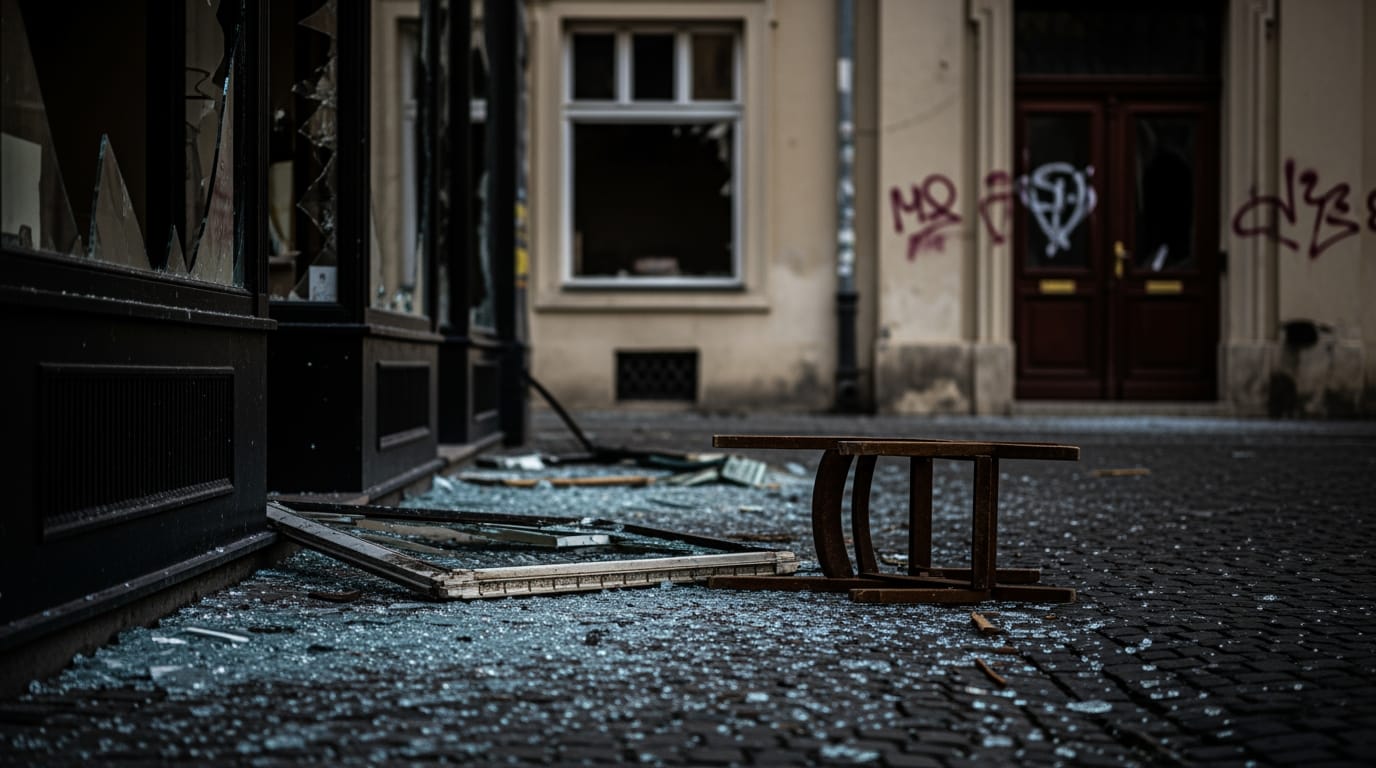
BERLIN, Germany – On the crisp, cold nights of November 9 and 10, 1938, a wave of orchestrated violence swept across Nazi Germany, its annexed territories of Austria, and the Sudetenland. This brutal assault, euphemistically dubbed "Kristallnacht" or the "Night of Broken Glass," marked a terrifying escalation in the persecution of Jewish communities and served as an undeniable precursor to the systematic horrors of the Holocaust. The shattered windows of Jewish-owned shops and synagogues that littered the streets were not merely symbols of destruction, but grim warnings of the industrial-scale brutality that awaited Europe's Jews.
For five years, Adolf Hitler's regime had incrementally stripped German Jews of their rights, subjected them to dehumanizing propaganda, and gradually excluded them from public life. Yet, Kristallnacht represented a dramatic shift from discriminatory legislation and sporadic violence to widespread, state-sponsored physical destruction and mass incarceration, making it a pivotal moment in the trajectory toward genocide.
The Spark Ignites the Inferno: A Pretext for Violence
The immediate catalyst for the pogroms was the assassination of German diplomat Ernst vom Rath in Paris on November 7, 1938. Vom Rath was shot by Herschel Grynszpan, a 17-year-old Polish Jew, who was desperate and enraged by the recent expulsion of his family, along with 17,000 other Polish Jews living in Germany, to the German-Polish border. Grynszpan hoped his desperate act would draw international attention to the plight of Europe's Jews.
Upon vom Rath's death on November 9, Nazi Propaganda Minister Joseph Goebbels, with the explicit approval of Hitler, seized the opportunity. During an annual gathering of Nazi leaders in Munich commemorating the failed 1923 Beer Hall Putsch, Goebbels delivered an inflammatory speech, urging attendees to take to the streets. The Nazis deliberately portrayed the subsequent violence as a spontaneous outburst of public anger, but it was anything but. The events were meticulously orchestrated and coordinated by the Nazi Party's paramilitary forces, including the Sturmabteilung (SA) and Schutzstaffel (SS), often with the participation of the Hitler Youth and even some German civilians.
A Night of Unprecedented Destruction
Across Germany, Austria, and the Sudetenland, Jewish communities endured a night of terror. Rioters systematically destroyed or damaged over 1,400 synagogues and prayer rooms, many of which were centuries old. Fires raged through these houses of worship, often with local firefighters instructed to only prevent flames from spreading to "Aryan" properties, leaving Jewish buildings to burn to the ground. More than 7,000 Jewish businesses were vandalized, looted, or outright destroyed, their shattered shop windows giving the pogrom its infamous name. Jewish homes, hospitals, and schools were ransacked, and cemeteries desecrated.
The human cost was equally devastating. Estimates of direct fatalities range from 91 Jews killed during the attacks to hundreds, and potentially as many as 1,000 to 2,000 deaths when including those who died from post-arrest mistreatment or subsequent suicides. In an unprecedented move, approximately 30,000 Jewish men were rounded up and arrested solely because they were Jewish. They were then transported to concentration camps like Dachau, Buchenwald, and Sachsenhausen, marking the first time Jews were incarcerated on such a large scale purely based on their ethnicity and religion. Hundreds of these detainees perished from the brutal conditions and mistreatment they endured in the camps.
The Stifling Aftermath: Economic Ruin and Accelerated Exodus
In the immediate aftermath, the Nazi regime further intensified its persecution. The Jewish community was subjected to a punitive fine of one billion Reichsmarks, purportedly to cover the damage caused during the pogroms, despite being the victims. Additionally, insurance payments for damaged Jewish properties were confiscated by the state. New anti-Jewish laws were rapidly enacted, further excluding Jews from German economic life, public education, cinemas, theaters, and sports, cementing their isolation.
Kristallnacht sent an unequivocal message: Jews were no longer safe in Germany. The invasion of private homes and destruction of personal possessions demonstrated that no place was secure for Jews within the Reich. This drastic escalation spurred a mass exodus; in the ten months following Kristallnacht, more than 115,000 Jews emigrated from Germany, seeking refuge in other European countries, the United States, Mandatory Palestine, and even Shanghai. The Nazis, in turn, seized the properties left behind by these émigrés.
A World Watches: Outrage Without Action
Kristallnacht sparked international outrage and widespread condemnation. Newspapers across democratic nations carried detailed reports, documenting the atrocities and shocking the world. Leaders in Britain, France, and other countries expressed horror. U.S. President Franklin D. Roosevelt publicly condemned the pogroms and recalled the American ambassador from Germany for "consultations," a rare diplomatic protest.
However, despite the verbal condemnations, concrete actions remained largely limited. The international community had already demonstrated a reluctance to accept Jewish refugees months earlier at the Évian Conference in July 1938, where most countries refused to relax their strict immigration policies. This muted response, signaling to Hitler that further violence against Jews would face minimal international resistance, effectively greenlit the escalating brutality. The British government did respond by approving the Kindertransport program, which rescued 10,000 Jewish children, but broader immigration quotas remained largely unchanged.
The Unmistakable Harbinger of the Holocaust
Historians widely regard Kristallnacht as a critical turning point and a direct precursor to the "Final Solution." The events demonstrated the Nazi regime's capacity for state-organized mass violence and its intent to eliminate Jewish presence from German society entirely. The systematic arrests and incarceration in concentration camps were a grim rehearsal for the mass deportations and extermination that would follow.
The night of November 9, 1938, irrevocably altered the fate of Jews in Germany, making it clear that their lives were no longer safe and their future lay outside their homeland. The "Night of Broken Glass" was not merely an outburst of violence; it was a calculated act of terror that tore through the fabric of Jewish life and unequivocally signaled the coming, unspeakable brutality of the Nazi regime. It stands as a chilling reminder of how unchecked hatred and systematic persecution can rapidly descend into genocide.