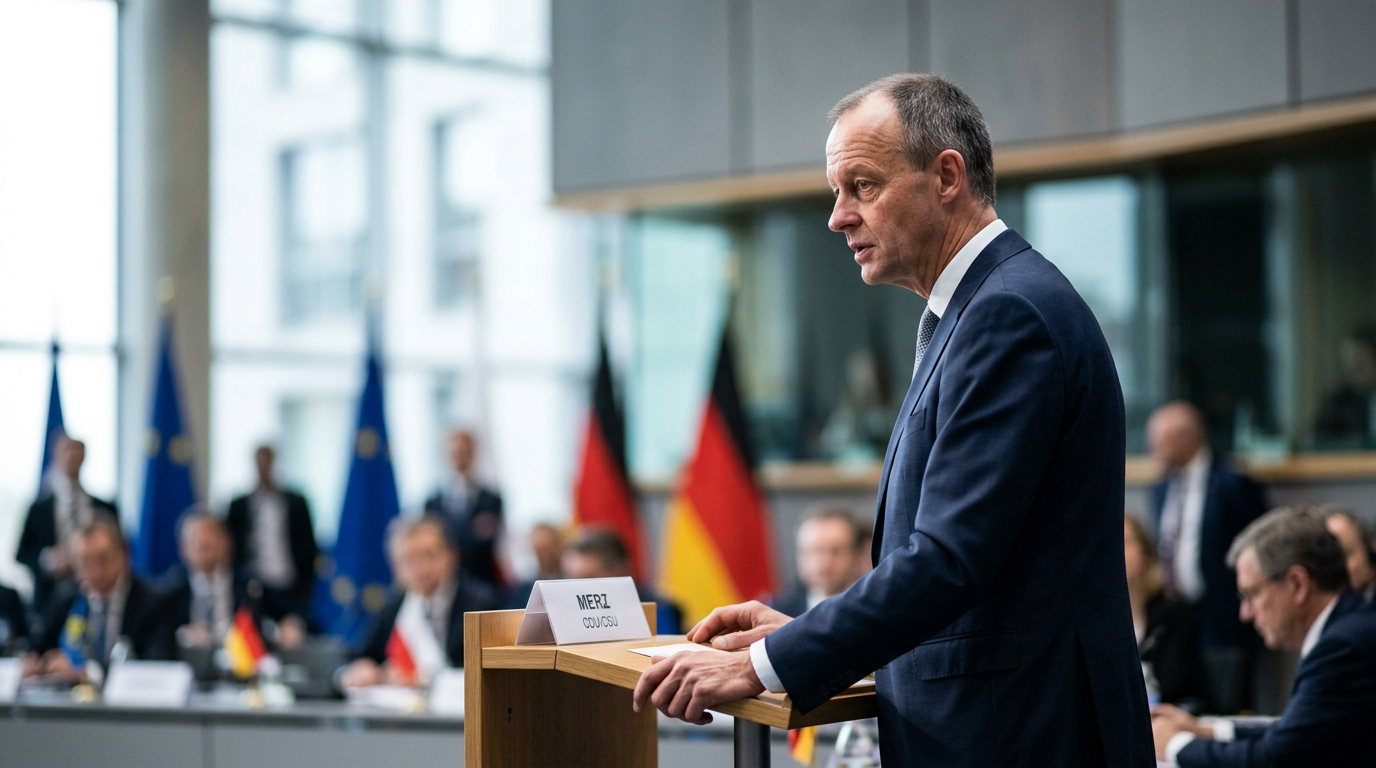
Kushner Unveils Ambitious "Master Plan" for Postwar Gaza, Proposing $25 Billion Economic Transformation

Davos, Switzerland – Jared Kushner, former Senior Advisor to the President, has unveiled a sweeping "master plan" for the postwar reconstruction and economic revitalization of the Gaza Strip, proposing an ambitious vision to transform the war-torn enclave into a regional economic powerhouse by 2035. Presented at the World Economic Forum in Davos, the multi-billion-dollar initiative aims to reshape Gaza's landscape with modern infrastructure, booming industries, and a dramatic improvement in living standards, contingent on a complete demilitarization of the territory.
A Vision for "New Gaza" Emerges in Davos
During a presentation at the prestigious global summit, Kushner detailed a phased blueprint for what he termed "New Gaza," a future urban hub reminiscent of rapidly developing cities like Dubai or Singapore. The plan, linked to former President Donald Trump's "Board of Peace" initiative, estimates a need for over $25 billion to develop critical utilities and public services. This significant investment is projected to raise Gaza's Gross Domestic Product (GDP) to more than $10 billion and elevate the average annual household income to over $13,000 by 2035. The overarching goal is to generate more than 500,000 new jobs across sectors such as construction, agriculture, manufacturing, and digital industries.
The proposed infrastructural overhaul is extensive. It includes the construction of a new seaport and airport, a trilateral crossing at Rafah, a freight rail line with a dedicated logistics corridor, and a comprehensive network of ring and main roads designed to connect Gaza's urban centers. Kushner's vision also earmarks large sections of Gaza's coastline for tourism and mixed-use development, featuring up to 180 towers. Inland areas are designated for new residential neighborhoods and industrial districts, which are intended to house data centers and advanced manufacturing facilities, fostering a market-based economy. An additional $3 billion investment fund is proposed to bolster commercial zones, business districts, and microgrants aimed at stimulating local entrepreneurship, alongside $1.5 billion allocated for vocational training programs to upskill the workforce.
Conditions and Governance: The Path to Demilitarization
A core tenet of the "New Gaza" plan is the explicit prerequisite of complete demilitarization of the Gaza Strip, particularly concerning Hamas. Kushner emphasized that reconstruction efforts would only proceed in areas where Hamas has been demilitarized. The plan suggests that some Hamas members who agree to lay down their arms could be offered amnesty and potentially integrated into a new, vetted Palestinian police force. This critical condition underscores the security-first approach central to the initiative, with assurances from Kushner that "nobody's going to make investments" without this foundation.
The blueprint outlines a phased withdrawal of the Israeli army from Gaza territory, based on agreed-upon standards. To manage the transition and rebuild governance structures, the plan proposes the creation of a National Committee for the Administration of Gaza (NCAG). This committee, authorized by UN Security Council Resolution 2803 and Trump's 20-point plan, would be tasked with restoring essential services like electricity, water, healthcare, and education, aiming to foster a society "rooted in peace, democracy, and justice." The initiative envisions transitional governance led by Palestinian technocrats under international supervision. Immediate humanitarian aid is also a central component, with claims that Gaza's basic food needs have been 100% met since 2023 due to a significant increase in aid delivery.
Mounting Skepticism and Critical Reception
Despite the ambitious scope and detailed economic projections, Kushner's "master plan" has been met with considerable skepticism and outright criticism from various quarters. Critics argue that the plan largely ignores the devastating human cost of ongoing conflicts and the immediate humanitarian crisis on the ground, presenting what some have derided as a "real estate pitch" rather than a genuine solution to the complex political and social realities of Gaza. Concerns have been raised about the perceived lack of Palestinian input in the plan's formulation, leading to accusations that it disregards the property rights of generations of displaced Palestinians.
Observers also question the feasibility of implementing such a grand vision amid persistent instability and the significant political hurdles. The "Board of Peace," which underpins the initiative, has faced challenges in securing broad international buy-in, with several European nations declining to participate. Furthermore, there is considerable doubt regarding the willingness of both the Israeli government to fully withdraw its forces and Hamas to completely disarm, two critical preconditions for the plan's success. Critics have pointed to previous statements by Kushner regarding the "real estate value" of the devastated Gaza coast, intensifying concerns that economic opportunism overshadows genuine peace efforts. The plan's resolute stance of having "no plan B" highlights its singular, all-or-nothing approach to Gaza's future.
An Ambitious Blueprint Amidst Complex Realities
Jared Kushner's "master plan" for postwar Gaza presents an undeniably bold and economically focused vision for the territory's future. It lays out a detailed roadmap for transforming Gaza into a thriving economic hub with modern amenities and widespread employment opportunities, backed by substantial financial commitments. However, the path to realizing this future is fraught with immense political, security, and humanitarian challenges. The plan's success hinges on overcoming deep-seated skepticism, securing genuine buy-in from all stakeholders, and navigating the intricate geopolitical landscape of the Middle East. As the international community grapples with the immediate aftermath of conflict and the urgent need for stability in Gaza, this ambitious blueprint serves as a stark reminder of the long and arduous journey toward lasting peace and prosperity in the region.
Related Articles

Ratko Mladić, "Butcher of Bosnia" and Convicted War Criminal, Dies at 84
THE HAGUE, Netherlands – Ratko Mladić, the former Bosnian Serb military commander known as the "Butcher of Bosnia" and convicted of genocide, war crimes, and crimes against humanity, has died at the age of 84. Serbian...


Long-Awaited 9/11 Mastermind Trial Set for 2028, Decades After Attacks
GUANTANAMO BAY, Cuba – Nearly a quarter-century after the devastating terror attacks of September 11, 2001, a military judge has finally set a trial date for Khalid Sheikh Mohammed, the alleged mastermind behind the...