Lab-Grown "T-Rex Leather": A Luxury Material More Chicken Than Cretaceous?
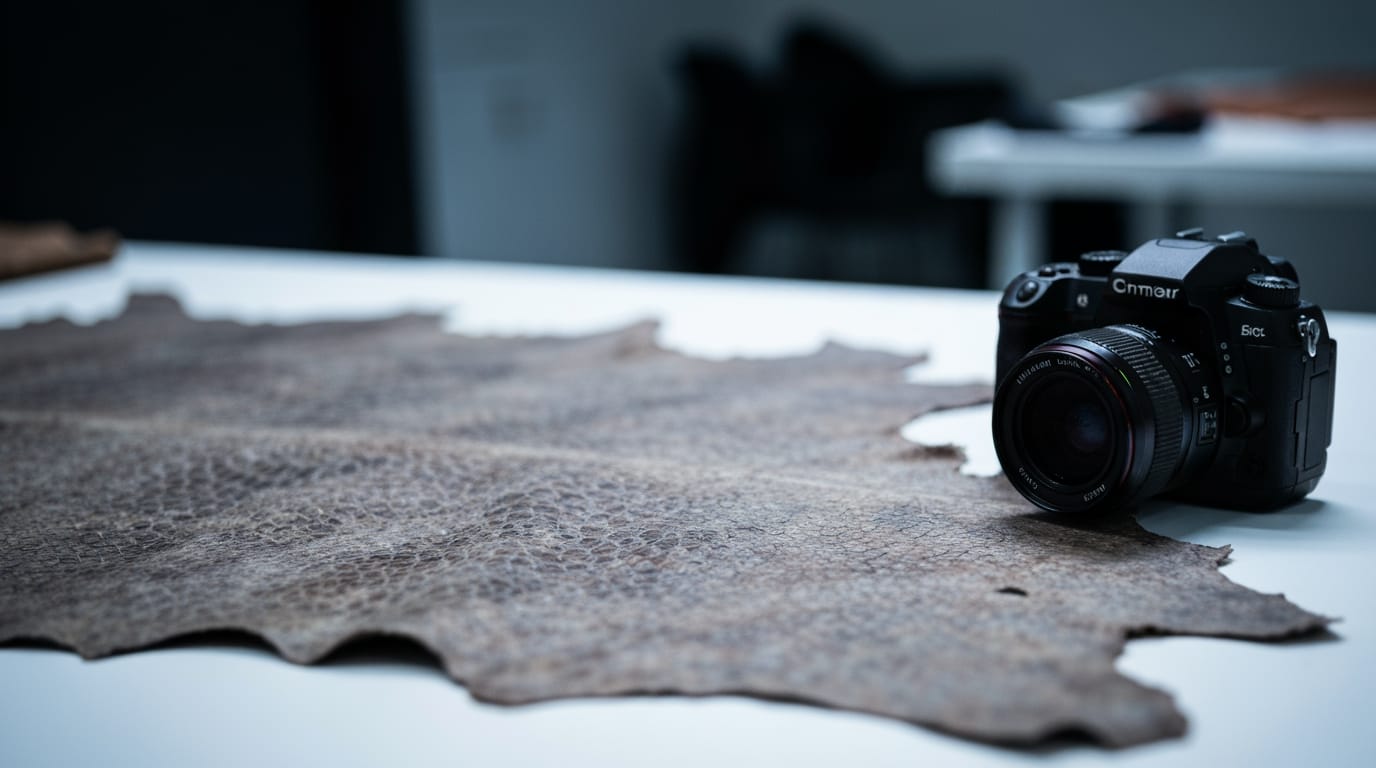
A groundbreaking announcement from a consortium of biotechnology and creative firms has ignited both excitement and skepticism within scientific and luxury circles. The Organoid Company, Lab-Grown Leather, and creative agency VML recently unveiled plans for "T-Rex Leather," a lab-cultivated material purportedly derived from the formidable Tyrannosaurus rex, aiming to revolutionize the luxury goods market with "cruelty-free" and sustainable alternatives. However, many paleontologists and geneticists are questioning the scientific basis of these claims, suggesting that the material, if successful, might bear a closer resemblance to common animal proteins than to the skin of the iconic dinosaur.
The Allure of the Prehistoric Purse
The ambitious project, which recently saw the unveiling of a luxury handbag crafted from the alleged T-Rex Leather™ in Amsterdam, positions itself at the intersection of cutting-edge genomic engineering and sustainable material science. The companies involved, including genomic engineering outfit The Organoid Company, biotechnology group Lab-Grown Leather, and marketing agency VML, assert that this innovative material offers a solution to the environmental and ethical challenges associated with traditional leather production.
According to press releases, the method involves using fossilized T-Rex collagen as a "blueprint" to engineer cells with synthetic DNA. Thomas Mitchell, CEO of The Organoid Company, stated the process reconstructs and optimizes ancient protein sequences to design T-Rex leather, cloning it into a custom-engineered cell line. Lab-Grown Leather's "scaffold-free" advanced tissue engineering platform allows cells to develop their own natural structure, aiming for a material structurally identical to traditional leather but produced without animal slaughter, deforestation, or harsh chemical tanning. The resulting material is touted for its natural durability, repairability, and tactility, making it suitable for high-end luxury goods. The first unique handbag made from this material, designed by Enfin Levé, is set to be auctioned, with plans for the T-Rex leather to become commercially available for brands and designers in the future.
A Scientific Reality Check: Beyond the Dinosaur Dream
Despite the bold claims and the promise of sustainable innovation, the scientific community has met the T-Rex leather announcement with considerable skepticism. The primary contention revolves around the fundamental impossibility of obtaining viable T-Rex DNA. Paleontologists and geneticists universally agree that DNA, a fragile molecule, cannot survive for the 66 million years since the last Tyrannosaurus rex roamed the Earth. The oldest DNA fragments ever successfully recovered, originating from Siberian mammoth molars, are approximately 1.6 million years old—a mere fraction of the time elapsed since the Mesozoic era.
Experts such as Thomas Holtz Jr., a vertebrate paleontologist at the University of Maryland, and Tom Ellis, a professor of synthetic genome engineering at Imperial College London, have dismissed the project's claims as "fantasy" and "very far-fetched." They point out that without actual T-Rex DNA, any synthetic DNA engineered would be speculative at best, and certainly not a direct genetic blueprint from the extinct predator.
Furthermore, the project's reliance on fossilized collagen as a "blueprint" also faces scrutiny. Collagen is the most abundant structural protein found across the entire animal kingdom, forming the basis of skin, bones, and tissues. While T-Rex fossils may contain remnants of collagen, its molecular structure is highly conserved, meaning that T-Rex collagen would likely be almost indistinguishable from that of a modern animal, such as a cow, or even a chicken. There is also limited detailed knowledge about the internal tissue structure of T-Rex skin, beyond surface impressions, making it challenging to recreate its specific properties. This makes the prospect of engineering a truly unique "T-Rex leather" based solely on collagen a considerable scientific hurdle, bordering on the impossible, in the absence of original genetic material.
Echoes of De-Extinction and "Dino-Chickens"
The discussion surrounding T-Rex leather also touches upon the broader, often controversial, field of de-extinction. Companies like Colossal Biosciences are actively pursuing the resurrection of species such as the woolly mammoth, Tasmanian tiger, and dodo, utilizing advanced gene-editing technologies to modify DNA from closely related living species. However, even these high-profile initiatives acknowledge that they are creating genetically engineered proxies or hybrids, not identical reproductions of extinct animals. Critics argue that these efforts often produce "genetically engineered poor copies" rather than true de-extinction, raising ethical questions about scientific integrity and consumer perception.
The "more chicken than dinosaur" aspect of the T-Rex leather claim finds an interesting, albeit indirect, parallel in the field of evolutionary biology. Scientists have conducted experiments manipulating chicken embryos to express ancestral dinosaur-like traits. Researchers have successfully grown dinosaur-like snouts on chicken embryos instead of beaks, and have also induced the growth of longer fibulae, a leg bone that was more prominent in dinosaurs. These "dino-chicken" experiments are not aimed at bringing dinosaurs back to life or creating commercial products. Instead, they are invaluable scientific endeavors designed to understand the molecular mechanisms of evolution and the genetic links between birds and their dinosaur ancestors.
This research underscores the deep evolutionary connection between modern birds and dinosaurs, highlighting that chickens indeed carry a genetic heritage tracing back to their ancient reptilian forebears. While fascinating, these scientific explorations are distinct from the commercial claims of creating "T-Rex leather," which appears to leverage the public's fascination with dinosaurs more for marketing than for genuine biological re-creation.
A Fusion of Innovation and Imagination
The "T-Rex Leather" project represents a fascinating intersection of biotechnological ambition, luxury market innovation, and public fascination with prehistoric life. While the drive for sustainable and cruelty-free materials is laudable, the scientific claims underpinning the T-Rex leather specifically face considerable challenges. The absence of viable dinosaur DNA means that any "T-Rex" characteristics in the material would be based on highly reconstructed or synthesized proteins, potentially making it functionally more akin to generic animal collagen, prevalent in organisms from chickens to cows, rather than a unique expression of Tyrannosaurus rex biology.
Ultimately, while the development of lab-grown materials offers a promising future for ethical and sustainable production, the "T-Rex Leather" initiative appears to walk a fine line between scientific inspiration and marketing spectacle. It prompts important questions about what constitutes "authenticity" in biomaterials and how the public interprets claims at the bleeding edge of biotechnology. The allure of holding a piece of a legendary dinosaur may be compelling, but from a purely scientific standpoint, its biological essence is likely to be far more mundane, perhaps revealing more about the common genetic threads connecting all animal life, including the humble chicken, than about the majestic Tyrannosaurus rex.