Udo Lindenberg at 80: The Ever-Panicking Rocker, Painter, and Political Conscience of Germany
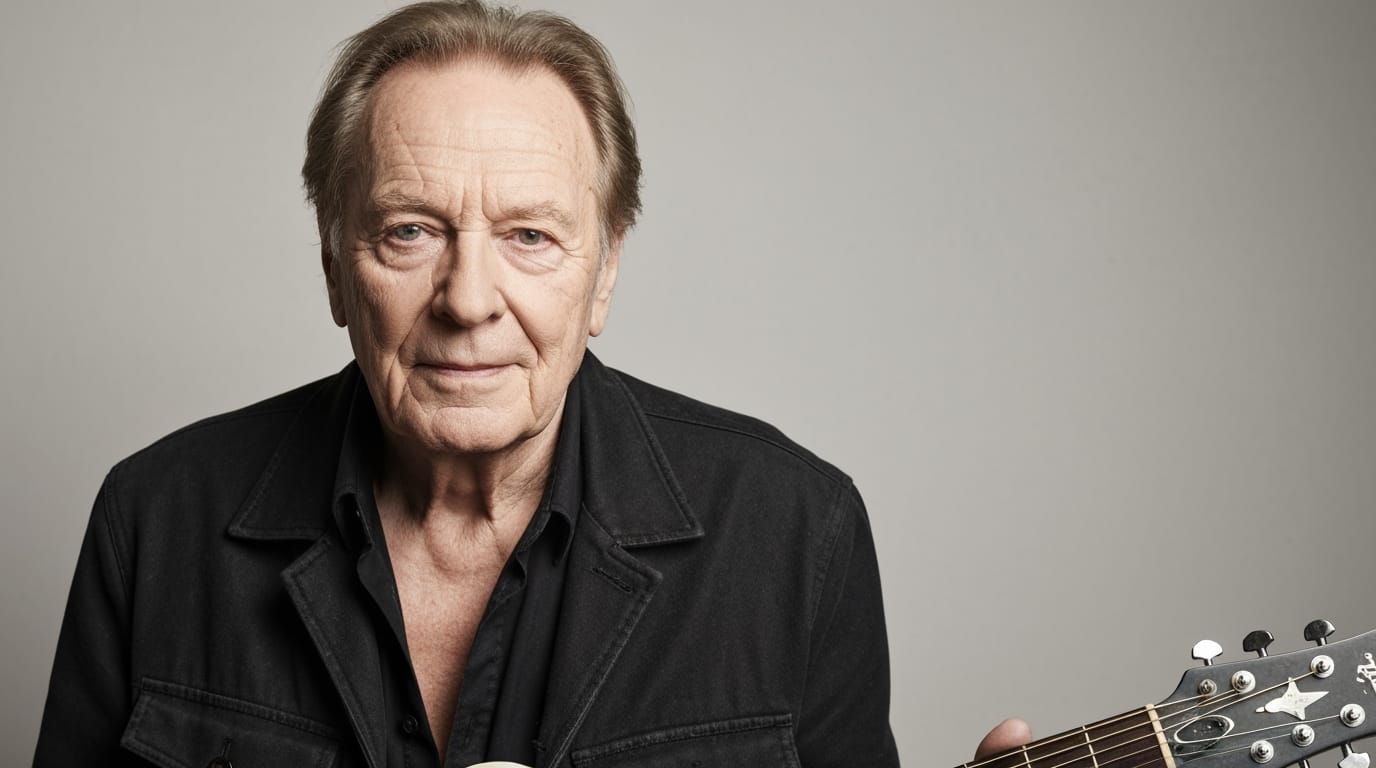
As he approaches his 80th birthday on May 17, 2026, Udo Lindenberg remains an indelible and distinctive force in German culture, a figure who not only helped shape the landscape of German rock music but also emerged as an unexpected political voice. With his signature hat, sunglasses, and inimitable "mumbling speech," Lindenberg has transcended mere celebrity, evolving into a multifaceted artist whose influence spans generations and artistic disciplines. His journey from an aspiring drummer to a national icon is a testament to his persistent creativity, rebellious spirit, and an unwavering commitment to his unique artistic vision.
From Drummer to Deutschrock Pioneer
Born Udo Gerhard Lindenberg on May 17, 1946, in Gronau, Westphalia, his early aspirations were rooted in rhythm, beginning his musical career as a drummer. He honed his skills in various jazz and rock formations, including founding his first band, Free Orbit, in 1969, and collaborating with notable jazz saxophonist Klaus Doldinger in 1970. Lindenberg also contributed as a drummer to the iconic theme music for the German TV series Tatort. His initial forays into recording, including an English-language LP titled Lindenberg in 1971, did not achieve significant commercial success.
The pivotal shift came with his embrace of German-language rock. In 1972, his first German LP, Daumen im Wind, featured the radio hit "Hoch im Norden." However, 1973 marked his true breakthrough with the album Andrea Doria, featuring popular tracks like "Alles klar auf der Andrea Doria" and "Cello." This success led to the largest record deal for any German-language musician at the time, selling over 100,000 copies. Lindenberg's innovative approach – characterized by a "brash style, everyday subject matter, and feel for language" – revolutionized German-language rock, known as Deutschrock, elevating it beyond the confines of politically charged protest bands to reach a wider audience. It was also in 1973 that he established his enduring backing band, the "Panikorchester" (Panic Orchestra), a name that would become synonymous with his artistic identity.
The "Sonderzug" to Political Commentary
Beyond his musical innovations, Lindenberg carved out a reputation as a cultural figure with a distinct political conscience, particularly concerning the division of Germany. His signature look, featuring a low-brimmed hat and dark sunglasses, became instantly recognizable across the country. In 1983, Lindenberg’s track "Sonderzug nach Pankow" (Special Train to Pankow) became a symbol of defiance. The song was a direct appeal to then-East German leader Erich Honecker, expressing Lindenberg's desire to perform in the German Democratic Republic (GDR) after being repeatedly denied entry. This provocative piece, forbidden in the GDR, ultimately contributed to a significant moment in Cold War cultural diplomacy.
On October 25, 1983, Lindenberg was finally permitted to perform a 15-minute set in the Palace of the Republic in East Berlin, an event closely monitored by the Stasi, East Germany's state security service. While constrained by the authorities, his presence alone was a powerful statement to East German youth, with his irreverent rock music fostering political fermentation. Four years later, his symbolic exchange of gifts with Honecker—Lindenberg sent a leather jacket, receiving a schalmei (shawm) in return—further highlighted his unique role in bridging the East-West divide through cultural means. His activism extended to the broader peace movement, advocating against the deployment of nuclear missiles in both German states.
A Continual Resurgence and Enduring Iconography
Udo Lindenberg’s career has been marked by remarkable longevity and multiple resurgences, proving his enduring appeal. In 2011, his MTV Unplugged album marked a significant comeback, becoming his second No. 1 album and producing his highest-charting single, a renewed version of "Cello" which reached No. 4. This achievement underscored his ability to connect with new audiences while retaining his core following.
Even as he approached his late seventies, Lindenberg continued to achieve commercial success, breaking new ground in 2023 when his collaboration with rapper Apache 207, "Komet," became his first No. 1 single in the German charts. This success, at 76 years old, demonstrated his ongoing relevance and willingness to innovate. His distinctive, gravelly voice, which he attributes to his long-standing affinity for whisky and cigars, has become a trademark, embodying the raw authenticity of his persona.
Beyond music, Lindenberg has also gained recognition as a painter since the 1990s. His vibrant, sketch-like works have been featured in numerous exhibitions, with some even finding their way into prestigious locations like the German Chancellery. In 2010, the German Ministry of Finance issued two postage stamps designed by Lindenberg, further cementing his status as a cultural icon. His contributions to German culture have been recognized with various accolades, including the Federal Order of Merit, and he holds honorary citizenship in his hometown of Gronau and in Hamburg, where he has resided at the Hotel Atlantic since 1995.
The Man Who Refuses to Slow Down
As Udo Lindenberg celebrates his 80th birthday, he does so with characteristic vibrancy and an outlook that defies conventional notions of aging. When asked about this milestone, he famously quipped that the number "isn't that sexy," quickly adding, "It's not just the young who are wild – you can be old and wild, too. I remain curious and on the lookout.” This sentiment perfectly encapsulates the spirit of a man who has navigated a long and often turbulent career, including surviving a heart attack in 1989.
His 80th birthday is being marked by various celebrations across Germany, including exhibitions and documentaries reflecting on his extensive career and impact. Even traditional civic honors are adapting to his unconventional lifestyle; the city of Hamburg, where he is an honorary citizen, is reportedly adjusting its plans for a celebratory breakfast to accommodate the rock star's late-rising habits. Lindenberg’s influence extends to other artists, who often cite him as an inspiration, and his unique blend of humor, critique, and deeply personal storytelling has shaped generations of German musicians and listeners.
Udo Lindenberg stands as more than just a musician; he is a chronicler of German history, a provocateur, and a beloved "Gesamtkunstwerk" – a total work of art. His journey from the jazz clubs of the 1960s to stadium-filling performances and chart-topping hits in his late seventies showcases an extraordinary resilience and an unyielding artistic drive. As he enters his ninth decade, Lindenberg continues to embody a spirit of perpetual motion, forever exploring new creative territories and challenging expectations, ensuring his legacy as a true German cultural phenomenon.