Landmark Trial Opens in Damascus, Signaling New Era of Accountability for Syria
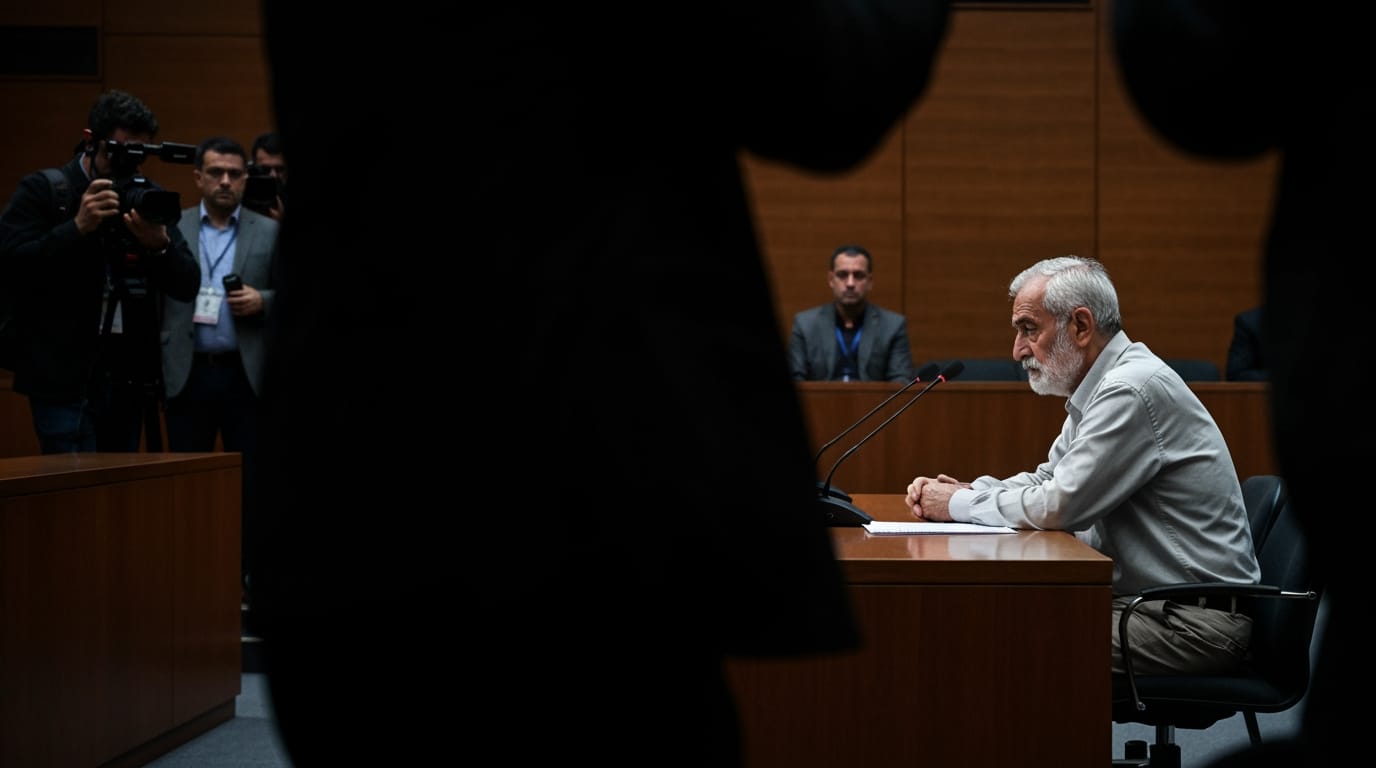
DAMASCUS, Syria – In a moment of profound historical significance for a nation ravaged by over a decade of conflict, the first public trial of former officials linked to the ousted regime of Bashar al-Assad commenced Sunday in Damascus. The proceedings, which saw a cousin of the former president appear in court, represent a pivotal step in Syria's long and arduous quest for justice and accountability after years of widespread atrocities. This development unfolds amid a complex period of transition following Assad's ouster in late 2024, raising hopes for victims and survivors who have long sought redress for grave crimes.
The Charges and the Architects of Repression
The central figure present in Sunday's preparatory session at the Palace of Justice was Atef Najib, a former brigadier general in the Syrian army and the ex-head of the Political Security Branch in the southern province of Daraa. Najib, also a cousin of the former president, faces charges related to "crimes against the Syrian people." His alleged role in the 2011 arrest and torture of teenagers who defaced a school wall with anti-government graffiti in Daraa is particularly salient, as this incident is widely credited with catalyzing the mass protests that escalated into Syria's devastating 14-year civil war. The public nature of these trials, and the focus on individuals directly implicated in the initial crackdown, underscores a commitment by the interim government to address the foundational grievances that ignited the conflict.
Significantly, the scope of the indictments extends beyond Najib. Former President Bashar al-Assad himself, along with his brother Maher al-Assad, who commanded the Syrian military's elite 4th Armored Division, have been charged in absentia. Syrian opposition activists have consistently accused Maher al-Assad's division of egregious offenses, including killings, torture, extortion, and drug trafficking, as well as operating its own detention centers where severe human rights abuses allegedly occurred. Several other high-ranking security officials from the former regime are also among those charged in absentia, reflecting the extensive nature of the alleged network of complicity. The fact that Najib was the sole defendant present underscores the challenge of bringing all alleged perpetrators to justice, particularly those who fled the country.
A Nation's Arduous Quest for Justice
Syria has been grappling with the profound scars of a civil war that claimed an estimated half a million lives, displaced millions more, and left the country’s infrastructure in ruins. For years, victims and their families have voiced urgent calls for accountability, with many feeling that justice had remained elusive as the conflict raged and the Assad regime maintained its grip on power. The current proceedings mark a distinct shift, signaling the new authorities' determination to confront the legacy of the past.
The interim government, led by President Ahmad al-Sharaa, has faced prior criticism regarding delays in establishing a promised transitional justice process. However, recent actions indicate a more aggressive pursuit of accountability for individuals associated with the Assad era. The Justice Minister, Mazhar al-Wais, publicly stated that the Damascus criminal court is fully prepared for these public trials, portraying them as a moment victims have long awaited. He emphasized that these proceedings form a crucial component of the country's broader transitional justice framework, aiming to deliver justice and rebuild public trust in state institutions. Outside the courthouse in Damascus, crowds gathered to celebrate the commencement of the trials, a poignant demonstration of the public's desire for an end to impunity.
Broadening the Scope: More Cases Emerge
The trial of Atef Najib is not an isolated incident but rather part of a broader push by the interim Syrian authorities to address a spectrum of alleged crimes committed under the previous regime. Just days before Najib’s trial opened, Syrian authorities announced the arrest of Amjad Yousef, a former intelligence officer. Yousef gained notoriety after a video, leaked four years ago, purportedly showed him and his comrades executing dozens of blindfolded and shackled prisoners in the Damascus suburb of Tadamon during the civil war. This arrest underscores the government's intent to pursue accountability for various high-profile atrocities.
Upcoming trials are also expected to target other significant figures, including Wassim al-Assad, another cousin of Bashar al-Assad, who is accused of heading death squads and militias during the war and involvement in large-scale drug trafficking operations. Pilots allegedly responsible for aerial bombardments on civilian areas during the conflict are also expected to face charges. This multi-faceted approach suggests a comprehensive effort to dismantle the structures of impunity that characterized the Assad era.
These domestic trials in Damascus stand in contrast to the numerous efforts undertaken outside Syria to hold regime officials accountable. For years, international legal bodies and European courts, leveraging the principle of universal jurisdiction, have pursued cases against Syrian officials for war crimes and crimes against humanity. Countries like Germany and France have initiated investigations, issued arrest warrants, and even conducted trials in absentia for high-ranking Syrian figures, including Bashar al-Assad himself, for alleged crimes such as the use of chemical weapons. While these international efforts have been vital in documenting atrocities and providing some measure of justice, the trials unfolding within Syria itself carry a unique weight, representing an internal reckoning with the past.
Implications and the Path Forward
The opening of these trials carries immense implications for Syria's future. For the countless victims of the conflict, it represents a glimmer of hope that justice, however belated, might finally be served. The proceedings are intended to shed light on the crimes committed against the Syrian people, fostering a sense of closure and potentially aiding in national reconciliation. The presence of relatives of victims, as well as international observers and media, signals a commitment to transparency and the importance placed on these proceedings.
However, the path to comprehensive transitional justice remains fraught with challenges. Legal experts have noted that while the trials are a positive step, it would have been preferable for a dedicated transitional justice law to be established first, providing a clear and comprehensive legal framework for the process. Such a framework would ideally define the various tracks of accountability, including mechanisms for restitution to victims and promotion of non-recurrence. Furthermore, many former high-ranking officials and those implicated in widespread abuses have fled Syria, including Bashar al-Assad who reportedly sought refuge in Russia. Bringing these individuals to justice will require sustained international cooperation and potentially complex extradition processes.
Despite these challenges, the commencement of trials in Damascus marks a significant and symbolic departure from the previous era of authoritarian rule. It signals a new chapter for Syria, where the pursuit of accountability for past atrocities is becoming a cornerstone of its post-conflict identity. The world watches as Syria embarks on this critical journey towards justice, reconciliation, and rebuilding its institutions on foundations of law and human rights.


