Landmark US-Taiwan Trade Deal Slashes Tariffs, Fuels Semiconductor Investment
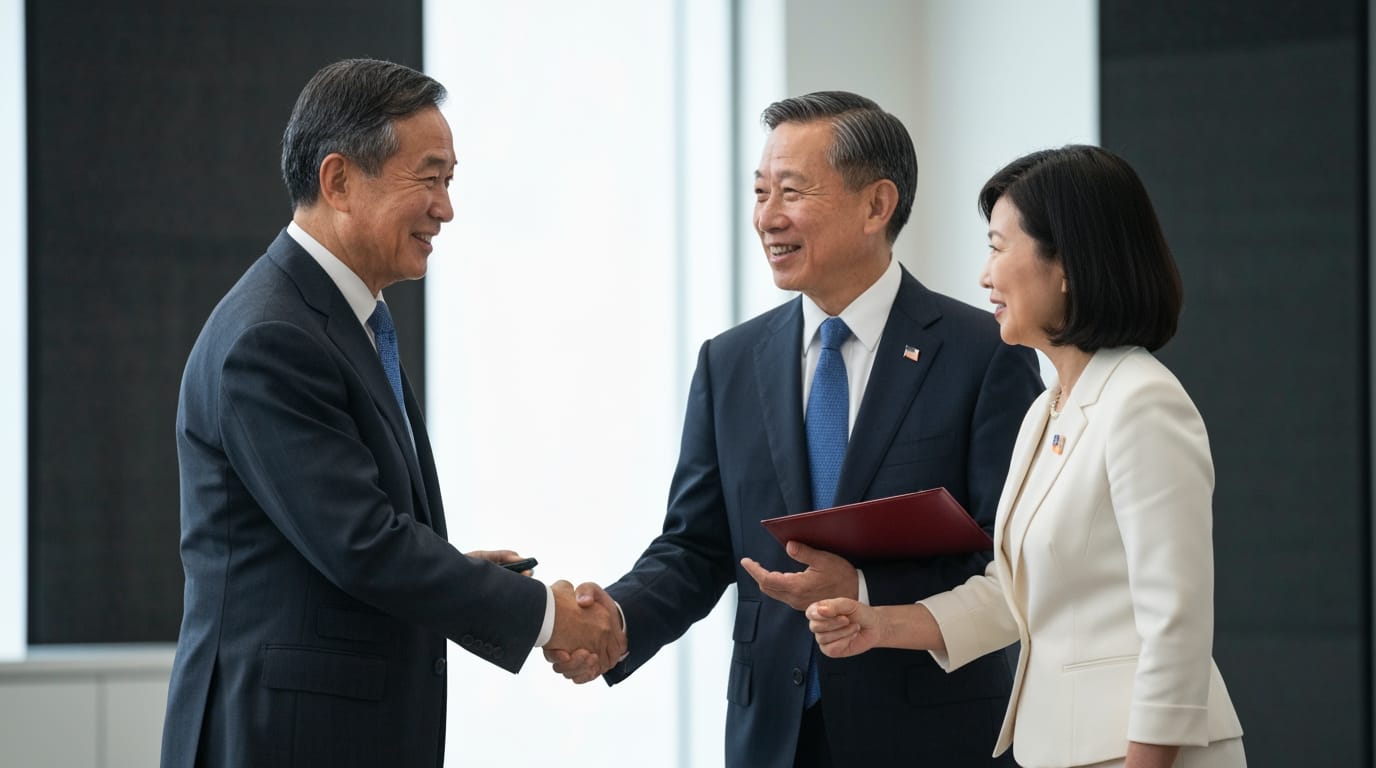
WASHINGTON D.C. – In a significant recalibration of economic ties, the United States and Taiwan formally cemented a new trade agreement on January 15, 2026, marking a pivotal moment for global supply chains and geopolitical alliances. The comprehensive deal primarily aims to reduce American tariffs on a broad range of Taiwanese goods while securing substantial Taiwanese investment in the U.S. semiconductor, artificial intelligence, and energy sectors, signaling a strategic move towards bolstering American domestic manufacturing capabilities and supply chain resilience.
This agreement, forged after months of negotiations, underscores a deepening economic partnership between Washington and Taipei, driven by shared strategic interests and a desire to diversify critical technology production. The Commerce Department hailed the deal as a catalyst for a "massive reshoring of America's semiconductor sector," a critical component of the nation's economic security and technological leadership.
Tariff Reductions and Market Access
Under the newly signed accord, the United States will lower its "reciprocal" tariffs on most Taiwanese imports from 20% to 15%. This adjustment places Taiwan on par with key regional competitors like Japan and South Korea, which previously secured similar tariff rates with the U.S. Beyond a general reduction, the agreement specifies that generic pharmaceuticals, aircraft components, and certain "unavailable natural resources" from Taiwan will now face a 0% tariff. Additionally, sector-specific duties on Taiwanese auto parts, timber, lumber, and wood products will be capped at 15%.
Taiwanese officials had actively sought these tariff reductions to enhance the competitiveness of their exports and mitigate the impact of existing U.S. duties, which had been in place at 20% since August 2025. A primary concern for local industries regarding the potential "stacking" of new tariffs on existing duties was also addressed, with assurances that the new tariff structure would not impose additional burdens beyond the set rates. This streamlined tariff regime is expected to foster increased trade volumes and benefit American consumers through potentially lower costs for a variety of goods.
A Semiconductor Powerhouse Invests in America
A cornerstone of the agreement is Taiwan's commitment to substantial investments in the United States, particularly within the critical semiconductor industry. Taiwanese semiconductor and technology firms are slated to make new, direct investments totaling at least $250 billion to expand capacity in advanced semiconductors, artificial intelligence, and energy infrastructure across the U.S. Furthermore, Taiwan will provide credit guarantees of at least an additional $250 billion to facilitate further investments by its enterprises into the American semiconductor supply chain, bringing the total financial commitment to an impressive $500 billion.
Taiwan Semiconductor Manufacturing Company (TSMC), a global leader in chip manufacturing, is expected to be a central player in these investments. Reports indicate that TSMC plans to significantly expand its operations in Arizona, potentially constructing as many as five additional manufacturing plants. This builds upon TSMC's prior commitments to establish facilities in the state, with existing fabs already under construction or operational.
The agreement also introduces favorable conditions for Taiwanese companies establishing new chip production in the U.S. These firms will be permitted to import up to 2.5 times their planned capacity of semiconductors free of sectoral duties during the construction phase. Once projects are completed, this quota will adjust to 1.5 times their new U.S. production capacity. This incentive structure is designed to accelerate the establishment of a robust domestic semiconductor ecosystem, a key objective for the U.S. to achieve self-sufficiency in critical chip production. U.S. Commerce Secretary Howard Lutnick articulated the ambitious goal of bringing 40% of Taiwan's entire semiconductor supply chain and production to the U.S. during the current administration's term.
Geopolitical Undercurrents and Strategic Implications
Beyond economic considerations, this trade deal carries profound geopolitical weight, further solidifying the strategic alignment between the United States and Taiwan. The agreement deepens ties at a critical juncture, particularly in the context of persistent tensions between Beijing and Taipei. While the U.S. does not formally recognize Taiwan as an independent nation, it maintains robust unofficial relations and remains Taiwan's primary arms supplier. This trade pact can be seen as another dimension of Washington's strategy to counterbalance China's growing influence in the Indo-Pacific region and reinforce Taiwan's economic resilience against potential coercion.
The deal represents a strategic push by the U.S. to localize critical manufacturing, driven by lessons learned from recent supply chain disruptions and a desire to reduce reliance on foreign production, particularly from regions with geopolitical sensitivities. Commerce Secretary Lutnick reportedly conveyed to Taiwan the importance of maintaining favorable relations with the U.S. administration, linking economic engagement with strategic protection.
This agreement builds on the "U.S.-Taiwan Initiative on 21st Century Trade," which saw its first agreement signed in June 2023. While previous phases focused on regulatory practices, customs procedures, and small business support without direct tariff changes, this latest iteration introduces significant tariff reductions alongside substantial investment pledges, marking a more comprehensive approach to economic integration.
Economic Impact and Future Outlook
The deal is poised to have a multifaceted economic impact on both sides. For Taiwan, the lower tariffs are expected to boost export competitiveness to the U.S., particularly in key sectors like technology, where information and communications technology products, including semiconductors, constitute over half of its exports to the American market. Taiwan's trade surplus with the U.S. stood at approximately $74 billion in 2024, highlighting the significance of their trade relationship.
For the United States, the influx of Taiwanese investment, particularly in semiconductor manufacturing, is projected to create high-paying jobs, enhance technological capabilities, and strengthen national security by diversifying critical supply chains. The drive towards domestic chip production aims to mitigate future vulnerabilities and ensure a steady supply of essential components for various industries, from consumer electronics to defense.
The agreement reflects a strategic pivot in global trade, emphasizing resilience and security alongside economic efficiency. As the world navigates complex geopolitical landscapes and technological competition, the U.S.-Taiwan trade deal underscores a commitment to fortifying partnerships and reshaping critical industrial ecosystems for the challenges ahead. The implementation and long-term effects of this landmark agreement will undoubtedly be closely watched by global economic and political observers.


