Lebanese Journalist Killed in Alleged Israeli Airstrike, Igniting Outcry Over Press Freedom
BEIRUT, Lebanon – A Lebanese journalist, Amal Khalil, was killed Wednesday in an Israeli airstrike in southern Lebanon, drawing immediate condemnation from Beirut, which accused Israel of targeting media professionals and obstructing rescue efforts. The incident, occurring amidst a fragile ceasefire, has intensified global scrutiny on the dangers faced by journalists covering the protracted conflict in the region and follows a series of similar killings since late 2023.
A Deadly Assignment in Al-Tiri
Amal Khalil, a veteran correspondent for the Lebanese daily Al-Akhbar newspaper, was reporting near the village of al-Tiri in southern Lebanon, a flashpoint in the ongoing hostilities between Israel and Hezbollah. According to Lebanon's Ministry of Health, Khalil and freelance photographer Zeinab Faraj were caught in an initial Israeli strike that hit a vehicle ahead of them, killing two other individuals. Seeking refuge, the two journalists took cover in a nearby house, which was subsequently targeted by a second Israeli airstrike.
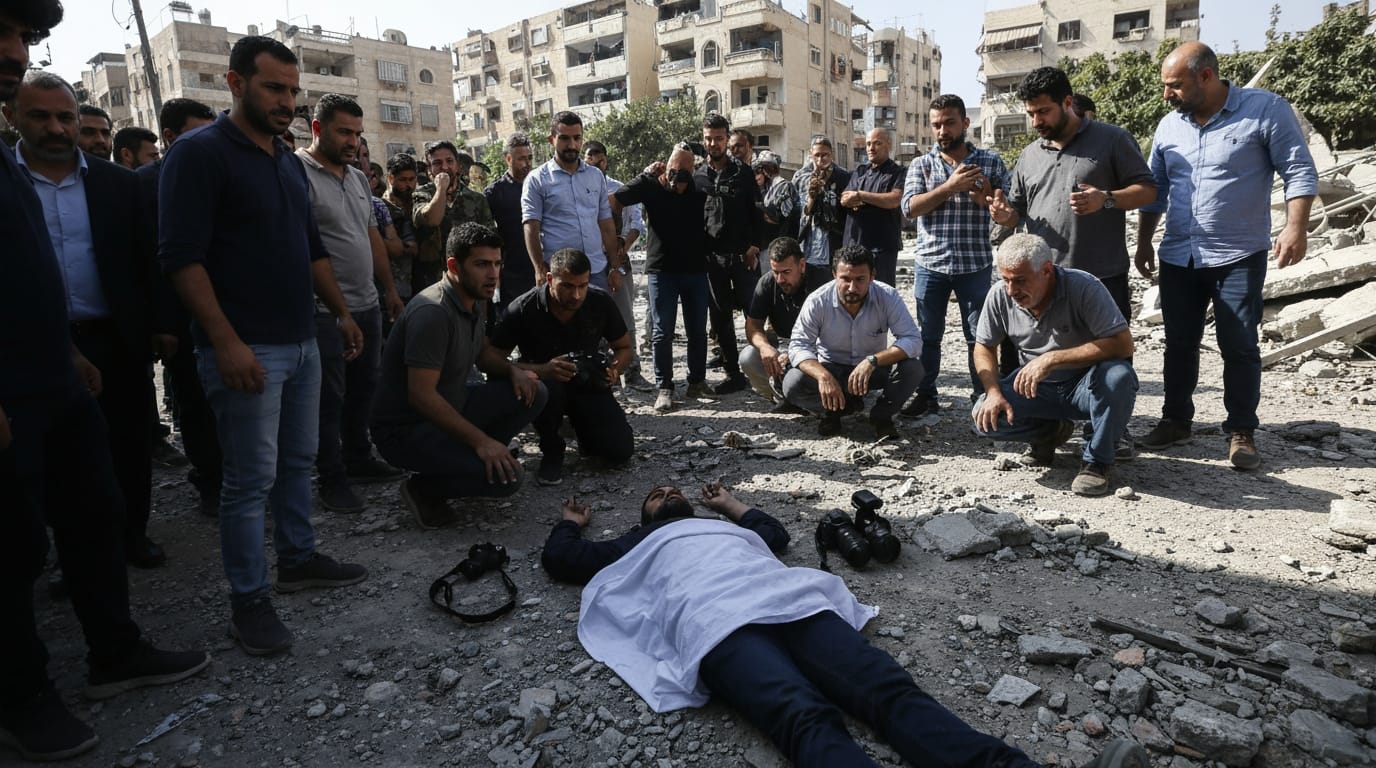
Rescue workers initially managed to reach Faraj, who sustained a serious head wound and was evacuated to a hospital. However, attempts to retrieve Khalil from under the rubble were reportedly obstructed by Israeli forces, who allegedly fired a sound grenade and live ammunition at ambulances, preventing access to the damaged building. Khalil remained trapped for hours before her body was finally recovered by the Lebanese Red Cross, civil defense, and army personnel shortly before midnight, at least six hours after the strike. Her death brought the day's total fatalities from Israeli strikes to five, despite a 10-day ceasefire that had been in effect since April 16.
Lebanese Outcry and Israeli Denial
Lebanese officials swiftly denounced Khalil's killing as a deliberate act and a grave violation of international law. Lebanon's Information Minister, Paul Morcos, declared that targeting journalists constitutes a "criminal act and a flagrant violation of international humanitarian law," urging the international community to act to prevent its recurrence. Prime Minister Nawaf Salam echoed these sentiments, stating that the targeting of journalists and the obstruction of relief efforts amounted to "war crimes" and affirmed Lebanon's commitment to pursuing these crimes before relevant international bodies.
In response, the Israeli military stated it had identified two vehicles departing from a structure used by Hezbollah in the al-Tiri area. They claimed the individuals "violated the ceasefire understandings" and posed an "immediate threat," leading to a strike on one of the vehicles and subsequently the building from which the individuals had fled. While acknowledging reports of injured journalists, Israel denied intentionally targeting them or preventing rescue operations, stating the incident was under review.
A Disturbing Pattern of Casualties
Khalil's death is not an isolated incident but rather the latest in a troubling series of journalist fatalities in Lebanon since the escalation of the conflict between Israel and Hamas in October 2023, which subsequently drew in Hezbollah. Just weeks prior, on March 28, three other Lebanese journalists—Ali Shoeib, a correspondent for Hezbollah's Al-Manar TV; Fatima Ftouni, a reporter for Al-Mayadeen TV; and her brother Mohammed Ftouni, a video journalist—were killed in a separate Israeli airstrike in southern Lebanon.
Earlier in the conflict, in October 2023, Reuters videographer Issam Abdallah was killed, and six other journalists were injured, when an Israeli shell struck their gathering while they were covering border clashes in Alma al-Shaab. Reports from organizations like Reporters Without Borders (RSF) and UN experts have indicated that these incidents were not accidental, with RSF’s initial investigation suggesting Abdallah’s crew was hit by a "targeted" strike despite being clearly identifiable as press.
United Nations experts have repeatedly called for international investigations into the killings of journalists in Lebanon, emphasizing that media professionals are civilians who must not be targeted in armed conflicts. They have strongly condemned what they describe as a "standard, dangerous practice" of Israel to target journalists and then claim, often "without providing any credible evidence," that they were involved with armed groups. The experts argue that working for a media outlet linked to an armed group does not, in itself, constitute direct participation in hostilities under international humanitarian law. Since 2023, at least 14 journalists have been killed in Lebanon and over 210 in Gaza by Israeli forces, according to UN experts and the Committee to Protect Journalists (CPJ).
Erosion of Press Freedom and Calls for Accountability
The escalating number of journalist casualties underscores the increasingly perilous environment for media workers in conflict zones, particularly in the Middle East. Press freedom organizations and human rights groups have voiced grave concerns, highlighting that these attacks constitute egregious violations of international conventions that guarantee the protection of journalists. The deliberate targeting of journalists, if proven, represents a severe blow to press freedom, hindering the ability to report independently and impartially on events on the ground.
The ongoing conflict between Israel and Hezbollah, alongside the broader regional tensions, has created a complex and dangerous landscape for reporters. Despite existing ceasefires and international calls for de-escalation, the incidents continue to mount, leading to a significant decline in Lebanon's press freedom ranking. There are growing demands for an end to impunity for those responsible for attacks on journalists and for international accountability mechanisms to ensure justice and prevent future atrocities. The ability of the press to operate freely and safely is crucial for informing the world about conflicts and holding power accountable, a right increasingly under threat in Lebanon and the wider region.