Lebanon and Israel: Can Peace Talks Transcend a 'No-Win' Reality?

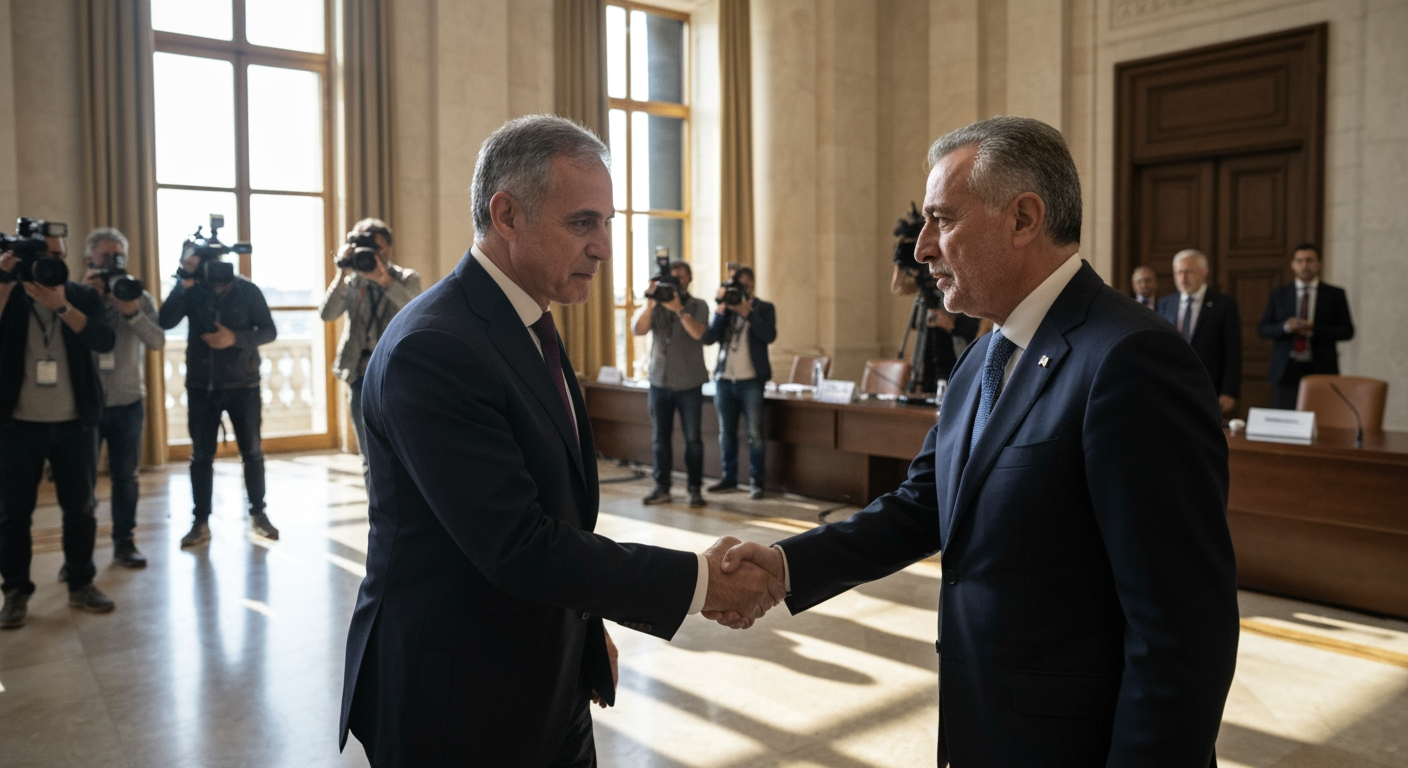
Washington D.C. – Decades of hostility and unresolved territorial disputes between Lebanon and Israel have repeatedly brought the two nations, technically still at war, to the negotiating table. While a landmark 2022 agreement successfully demarcated their maritime border, recent U.S.-mediated talks aimed at a broader, lasting peace, particularly in the wake of escalating cross-border violence in 2026, confront an arguably more formidable challenge, prompting questions as to whether a true "win" can be achieved for either side. The current diplomatic efforts are grappling with deeply entrenched positions, particularly regarding the future of Hezbollah, painting a complex and often contradictory picture of progress and peril.
A Legacy of Undefined Borders and Persistent Conflict
The modern history between Lebanon and Israel has been characterized by a lack of clearly defined borders and intermittent, often intense, conflict. Since Israel's establishment in 1948, the two countries have maintained a state of war, with an 81-kilometer (50-mile) land border that remains officially undemarcated. The existing provisional land boundary, known as the "Blue Line," was drawn by the United Nations in 2000 after Israel's withdrawal from southern Lebanon. This historical context underscores the fragility of any peace initiative, as deep-seated distrust and security concerns continuously overshadow diplomatic overtures.
Prior to the current focus on land disputes, a significant breakthrough occurred in 2022 regarding the nations' maritime frontier. The dispute, which had lingered since 2010 following the discovery of substantial natural gas deposits off the Israeli coast, centered on competing claims over areas containing the Qana and Karish gas fields. Lebanon had submitted its border claims to the United Nations in 2011, and the issue gained urgency with the potential for vast economic benefits from offshore hydrocarbon exploration.
The 2022 Maritime Agreement: A Glimmer of Shared Interest
After nearly two years of U.S.-mediated indirect negotiations, an agreement resolving the maritime border dispute was signed on October 27, 2022. This deal was hailed as a historic achievement, marking the first maritime boundary agreement between two states without formal diplomatic relations. U.S. President Joe Biden described it as a "historic breakthrough," with Israeli Prime Minister Yair Lapid calling it a "historic achievement" that would strengthen Israel's security and inject billions into its economy.
Under the terms of the agreement, Israel retained full control over the Karish gas field, while Lebanon gained full rights to the Qana field. A crucial element allowed Israel to receive royalties for any gas extracted from the Israeli side of the Qana field through a side agreement with TotalEnergies, the French company licensed by Lebanon for exploration in Block 9, which encompasses Qana. This arrangement provided both nations with economic incentives and was seen as a "win-win" situation, opening the door for each to exploit natural resources. For Lebanon, grappling with a severe economic crisis, the Qana field represented a potential lifeline worth billions. For Israel, the agreement offered enhanced security along its northern border and an increase in energy security and export capabilities. The agreement's success demonstrated that, even in the absence of full diplomatic ties, shared economic interests and diligent U.S. mediation could yield concrete, albeit limited, resolutions.
Renewed Conflict and the Fraught 2026 Peace Talks
The relative calm achieved by the maritime agreement proved temporary. Following the October 7 attacks in southern Israel, Hezbollah, a powerful Lebanese Shia movement backed by Iran, opened a parallel front along Israel's northern border, leading to sustained exchanges of fire. This escalation prompted further U.S. mediation efforts, culminating in a ceasefire agreement in November 2024, after months of fighting which included Israeli attacks that significantly diminished Hezbollah's military capabilities and leadership.
Despite the ceasefire, tensions remained high, with both sides continuing to accuse each other of violations. In April 2026, under the auspices of the Trump administration, Israel and Lebanon initiated a new round of direct ambassadorial talks in Washington. These discussions aim to address a broader array of contentious issues beyond the maritime boundary, including the release of Lebanese prisoners, remaining points of contention along the Blue Line, and the status of Israeli forces in southern Lebanon. The ultimate goal, as expressed by the U.S., is a comprehensive agreement ensuring lasting security and stability, potentially even leading to a full peace agreement and the disarmament of Hezbollah.
The 'No-Win' Conundrum: Hezbollah's Obstruction and Irreconcilable Demands
The current 2026 talks, however, face considerably steeper hurdles than their maritime predecessors, casting a long shadow of a "no-win situation" over their prospects. The primary obstacle remains Hezbollah, which has vehemently rejected direct negotiations with Israel and adamantly refuses to surrender its weapons. Hezbollah leader Sheikh Naim Qassem has called the idea of negotiating with Israel a "grave sin" and asserted that the party's fighters will never tolerate Israeli violations. This stance is rooted in Hezbollah's "resistance" narrative, which has been revitalized by recent conflicts, making it even more challenging for the Lebanese government to assert control over its arsenal.
Israel, for its part, has made Hezbollah's disarmament a central demand for any lasting peace agreement and security guarantees for its northern border. The Israeli position reflects a long-standing desire to neutralize the threat posed by the Iran-backed group, which has accumulated a significant arsenal of rockets and missiles. This fundamental divergence – Hezbollah's insistence on maintaining its arms versus Israel's demand for their disarmament – appears to create an almost unbridgeable chasm, pushing the negotiations into a difficult impasse.
Lebanon itself is deeply divided on the issue. While President Joseph Aoun has supported ambassador-level talks with Israel to secure a ceasefire and address demands like Israeli withdrawal and the return of displaced people, powerful figures like Parliament Speaker Nabih Berri, a close ally of Hezbollah, have stated there can be no negotiations without a complete halt to the war and Israeli attacks. Many Lebanese also oppose recognizing Israel, with some polling indicating nearly 90 percent public opposition, further complicating any move towards normalization. Critics within Lebanon argue that the current talks, under the present terms, risk amounting to a surrender of Lebanese sovereignty rather than a path to genuine peace.
A Precarious Path Forward
The "historic" label applied to the 2026 talks is tempered by the stark reality of the ongoing conflict and the deep-seated political divisions. While the 2022 maritime agreement showcased the potential for pragmatic, interest-driven resolutions, the current peace talks touch upon core security and sovereignty issues that are far more resistant to compromise. The fragility of the ceasefire, continued military actions by both sides, and Hezbollah's unyielding position on disarmament suggest that while dialogue may continue, achieving a comprehensive, mutually beneficial peace agreement remains an extraordinarily difficult, if not a "no-win," proposition under current circumstances. The U.S. continues its mediation efforts, aiming to stabilize the truce and prevent a wider regional confrontation, but the path to a lasting solution remains fraught with significant challenges and uncertainties.
Related Articles


Mounting Frustration Grips Russia as Economic Hardship and War's Toll Deepen
Moscow, Russia – A palpable shift in public sentiment is emerging across Russia, with growing frustration among citizens fueled by a confluence of economic pressures, increasing internet restrictions, and the undeniable...

Germany's Strategic Calculus: Ukraine Aid is an Investment in European Security, Not Charity
Berlin – The ongoing provision of substantial aid to Ukraine by Germany and its allies is increasingly being framed not as an act of altruism, but as a crucial investment in European security and stability. This...