Myanmar's Junta Transfers Suu Kyi to House Arrest Amid Skepticism and Geopolitical Maneuvering
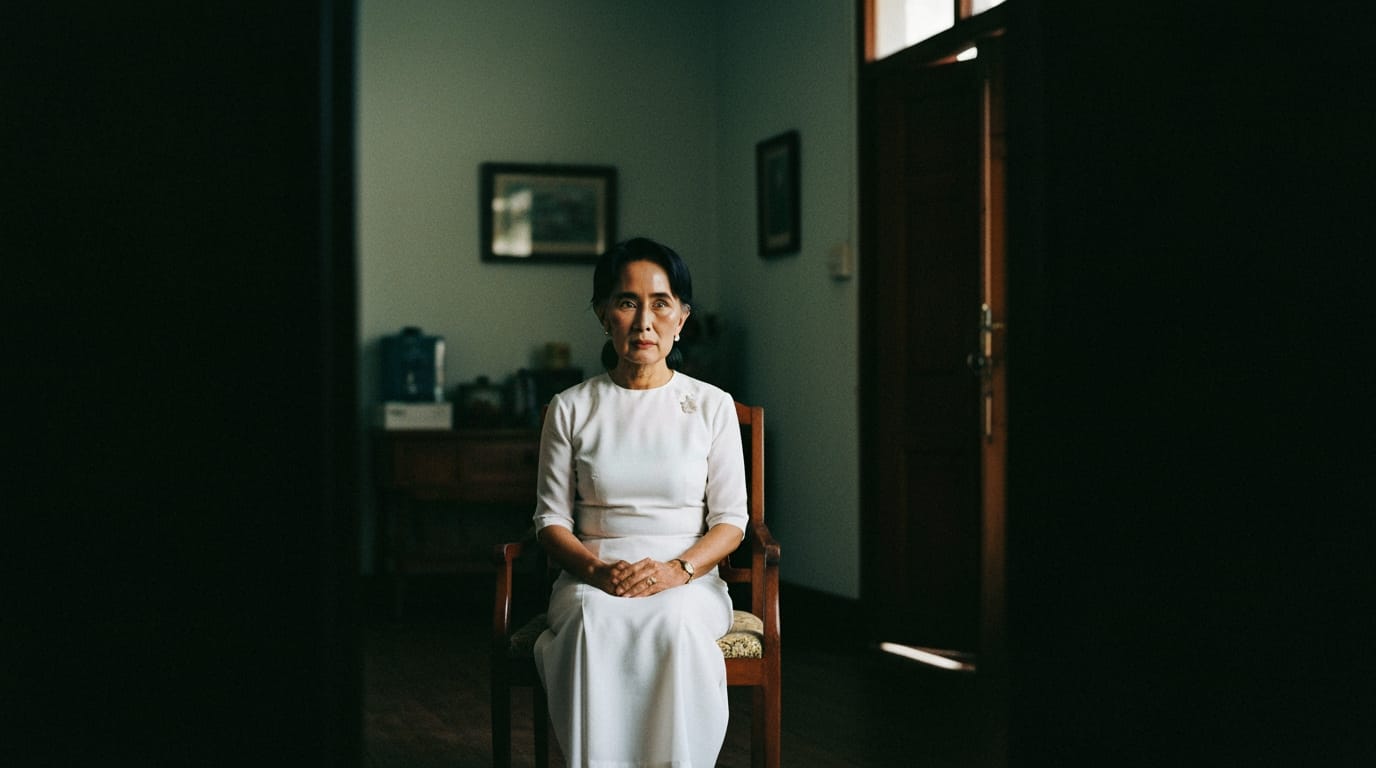
NAYPYIDAW – Myanmar's military junta has transferred Nobel laureate Aung San Suu Kyi from prison to house arrest, a move announced late Thursday, April 30, 2026, that the ruling military council framed as an act of humanitarian concern and state kindness. The decision, coming more than five years after the military seized power in a coup and detained the then-80-year-old leader, has been met with a mix of cautious international acknowledgment and deep skepticism from her supporters, who view it as a calculated gesture rather than a step toward genuine freedom or reconciliation.
The transfer marks a significant shift in Suu Kyi's detention conditions, though her exact location remains undisclosed, and questions persist regarding her health, access to legal counsel, and future political role. While the junta presented the move as part of a broader prisoner amnesty coinciding with Buddha Day, critics argue it is a strategic maneuver to ease external pressure and project a facade of reform amidst ongoing internal conflict and international isolation.
The Transfer and the Official Narrative
State television and the military's information team confirmed the transfer of Aung San Suu Kyi from a Naypyidaw prison to house arrest on Thursday night. The official announcement stated that the action was taken to commemorate Buddha Day, "to show humanitarian concern, and to demonstrate the kindness of the state." The military also released a photograph purporting to show Suu Kyi, dressed in a traditional white blouse and skirt, sitting on a wooden bench with two uniformed men. However, the authenticity and timing of this image have been questioned, with her son suggesting it may be several years old.
The move follows a series of sentence reductions for Suu Kyi. Her initial 33-year prison sentence, handed down in late 2022 on various charges, had already been reduced to 27 years in August 2023. An amnesty on April 17, 2026, further cut her term by more than four years, reducing it to 18 years. The latest decision means she will serve the remainder of this commuted sentence at a "specific home instead of in prison," though details about this residence and any restrictions on her communication or movement were not immediately provided.
A History of Detention and Political Charges
Aung San Suu Kyi has been a central figure in Myanmar's complex political landscape for decades. Her current period of detention began on February 1, 2021, when the military launched a coup, overthrowing her democratically elected government. The military's justification for the takeover was unsubstantiated claims of widespread fraud in the November 2020 general election, which her National League for Democracy (NLD) party won decisively.
Following the coup, Suu Kyi faced a series of closed-door trials on a multitude of charges, including corruption, electoral fraud, and violations of telecommunications laws. These charges were widely condemned by her supporters, human rights organizations, and international observers as politically motivated attempts to discredit her, legitimize the military's seizure of power, and permanently sideline her from Myanmar politics.
This is not the first time Suu Kyi has been placed under house arrest. As the daughter of Myanmar's independence hero General Aung San, she spent nearly 15 years as a political prisoner under house arrest between 1989 and 2010, becoming an international symbol of nonviolent struggle for democracy and earning the Nobel Peace Prize in 1991.
Health Concerns and Skepticism from Allies
Concerns over Aung San Suu Kyi's health have mounted throughout her prolonged incarceration. Reports in 2024 and 2025 indicated declining health, including low blood pressure, dizziness, and heart problems, although these claims could not be independently verified due to the tight control over information regarding her condition. Her legal team had been barred from meeting her in person since December 2022, further isolating her from outside contact.
Her son, Kim Aris, has been particularly vocal in his skepticism regarding the military's latest move. He described the transfer as a "calculated gesture" and stressed that "moving her from a prison to a secret location does not mean freedom." Aris has repeatedly called for "verified information that my mother is alive" and "the ability to communicate with her, and to see her free," asserting that she remains a "hostage, completely cut off from the world." Aid organizations and democracy activists echo this sentiment, emphasizing that while house arrest may offer slightly better conditions than prison, it remains a form of detention that severely restricts her freedom, access to independent medical care, and contact with the outside world.
Geopolitical Implications and International Response
The timing of Suu Kyi's transfer has drawn considerable attention, occurring shortly after Chinese Foreign Minister Wang Yi visited Myanmar and reportedly discussed her situation. Analysts suggest that China's influence may have played a role, given Beijing's significant investments in Myanmar and its desire for stability in the region.
Furthermore, the move coincides with the junta's broader efforts to improve its tarnished international image and regain some legitimacy on the global stage. Senior General Min Aung Hlaing, who led the 2021 coup and transitioned to the role of "civilian president" in April, has been pushing to restore Myanmar's status within regional blocs like ASEAN and resume diplomatic engagement. The transfer of Suu Kyi to house arrest, along with other recent amnesties, is seen by some as an attempt to project a more lenient stance and ease international pressure.
The international community's response has been cautiously optimistic but firm. UN Secretary-General António Guterres welcomed the transfer as a "meaningful step towards conditions conducive to a credible political process." However, he reiterated the UN's call for the swift release of all political prisoners in Myanmar, stressing that this is a fundamental step toward an inclusive dialogue and a lasting political solution based on an immediate cessation of violence. Conversely, human rights groups like Burma Campaign UK and the National Unity Government (the parallel civilian administration) have dismissed the junta's actions as a "public relations stunt" designed to deflect criticism and legitimize military rule, rather than signaling any genuine shift in policy or a move towards democracy.
An Uncertain Future
While the transfer to house arrest offers Aung San Suu Kyi some relief from the harsh conditions of prison, it does not fundamentally alter the political landscape in Myanmar. She remains a detained figure, stripped of her political power, and under the strict control of the military junta that ousted her. The move is widely interpreted as a tactical adjustment by the military, aimed at managing international perception and domestic dissent, rather than a genuine concession towards democratic rule or national reconciliation. The future of Myanmar, and indeed the fate of its most prominent political figure, remains deeply uncertain, entangled in an ongoing struggle between military control and aspirations for democracy.


