Long-Lost Bach Organ Masterpieces Resurface After Three Centuries
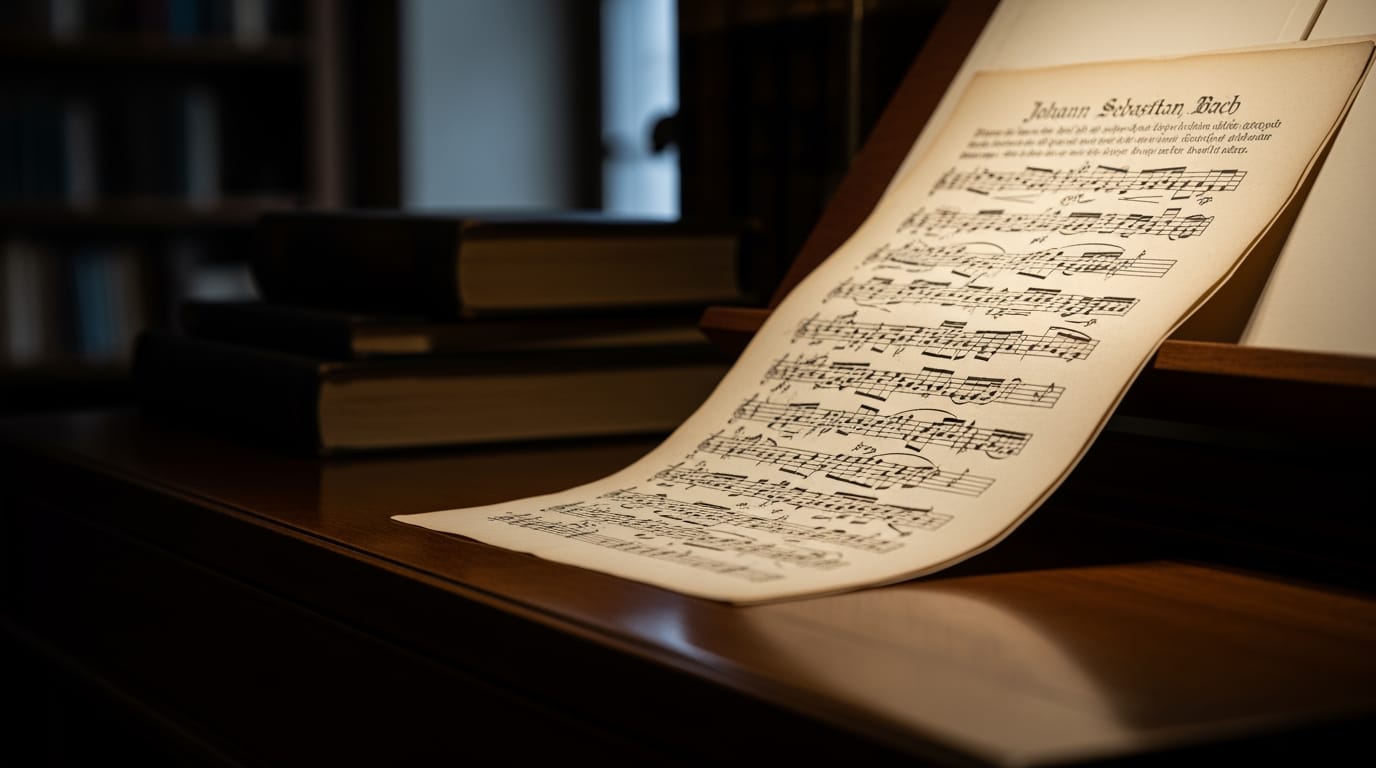
LEIPZIG, GERMANY – The classical music world is reverberating with excitement following the official unveiling and historic first public performance of two previously unknown organ compositions by Johann Sebastian Bach. More than three centuries after their composition, the "Chaconne in D minor" (BWV 1178) and "Chaconne in G minor" (BWV 1179) were brought to life on Monday, November 17, 2025, at the revered St. Thomas Church in Leipzig, the very edifice where Bach served as cantor for nearly three decades and now rests. This monumental discovery, the culmination of over 30 years of meticulous musicological detective work, offers an extraordinary window into the formative genius of one of history's most celebrated composers, significantly enriching the official catalogue of his works.
Decades in the Making: The Unveiling of Lost Masterworks
The journey to this groundbreaking moment began quietly in 1992, within the hallowed halls of the Royal Library of Belgium. It was there that Peter Wollny, then a diligent researcher and now the esteemed director of the Bach Archive in Leipzig, first encountered the anonymous and undated manuscripts. Despite their lack of clear attribution, the stylistic hallmarks embedded within the scores hinted strongly at the hand of a young Bach. Wollny’s initial intuition set in motion a decades-long quest for definitive proof, a challenge that underscored the complexities inherent in authenticating historical musical documents.
The critical breakthrough arrived only recently, hinging on the precise identification of the copyist. Through painstaking archival research, Wollny and his co-researcher, Bernd Koska, pinpointed the handwriting as belonging to Salomon Günther John. John was one of Bach’s pupils during the composer's early tenure as an organ teacher in Arnstadt, Thuringia. A letter from 1729, discovered by Koska, provided the crucial link, and further examination of John's earlier court documents corroborated the match. This conclusive identification allowed researchers to confidently date the copies to around 1705, placing their composition firmly within Bach's youthful period, when he was approximately 18 to 20 years old. "I searched for a long time for the missing piece of the puzzle to identify the compositions — now the whole picture is clear," Wollny stated at the official presentation. He expressed a "99.99% certainty" regarding Bach's authorship, a testament to the rigorous authentication process. This certainty led to the pieces being formally added to the Bach-Werke-Verzeichnis (BWV), the authoritative catalogue of Bach's compositions, as BWV 1178 and BWV 1179.
The Sound of Young Genius: A Glimpse into Early Bach
The newly authenticated works are both chaconnes, a baroque musical form characterized by a series of variations built upon a repeating harmonic progression or bass line. These particular chaconnes are described as "highly individual" and "complex," showcasing a remarkable command of compositional technique for a composer of Bach's age. Experts note the presence of intricate fugal sections, skillfully woven into the variational structure, a compositional tool that was singularly characteristic of Bach's innovative approach at the time.
Musicologists have also identified echoes of Georg Böhm, a prominent North German organist and composer who served as a significant influence on the young Bach. The stylistic blend of variation, ostinato, and extended fugue found in these pieces demonstrates Bach's early mastery and his unique synthesis of contemporary musical trends. Canadian pianist and Bach specialist Angela Hewitt remarked that the pieces were "quite identifiable with Bach's early style, in which the contrapuntal writing is not yet what it would become, but the imagination, grandeur, and sheer joy in playing are all there in abundance." The inherent quality of these compositions challenges any notion that Bach's genius matured later in life, proving that his exceptional talent was evident even in his teenage years. The two works are substantial in length and musical depth, promising a significant addition to the organist's repertoire.
Global Impact and the Bach Legacy
The reverberations of this discovery extend far beyond academic circles, impacting performers, scholars, and classical music enthusiasts worldwide. Germany's federal minister for culture and media, Wolfram Weimer, aptly described the finding as a "great moment for the world of music" and a "global sensation," adding that it was "more than just musical research... it is magic." The world premiere performance by renowned Dutch organist and conductor Ton Koopman, also president of the Leipzig Bach Archive, added a profound historical resonance to the event. Koopman, who became the first to perform these works in over 300 years, expressed his belief that musicians would embrace these "lively, virtuosic new repertoire" pieces, performing them regularly in the future.
This discovery not only expands the known canon of Bach's works but also offers invaluable insights into his development as a composer. It allows for a more complete understanding of his early influences, his teaching methods, and the evolution of his unparalleled style. The meticulous scholarship involved in authenticating these pieces also highlights the ongoing vibrancy of musicological research and the potential for new revelations about even the most extensively studied figures in classical music. The Leipzig-based publishing house Breitkopf & Härtel, which has a historic connection to Bach, is publishing the newly identified scores, making them accessible to organists and scholars globally.
Echoes of a Timeless Master
The revelation of these two organ chaconnes serves as a powerful reminder of the enduring allure and profound depth of Johann Sebastian Bach’s musical legacy. Even centuries after his death, his work continues to inspire new generations of musicians and scholars, with latent treasures occasionally emerging from the archives to captivate audiences anew. Such discoveries reinforce the idea that the artistic landscape of the past is never fully charted, always holding the promise of fresh insights and deeper appreciation. The "Chaconne in D minor" and "Chaconne in G minor" are not merely historical curiosities; they are vibrant, intricate compositions that speak to the boundless creativity of a young master, ensuring that the echoes of his genius will continue to resonate for centuries to come.