Macron Concludes China Visit Amid Complex Discussions on Ukraine and Trade Imbalance
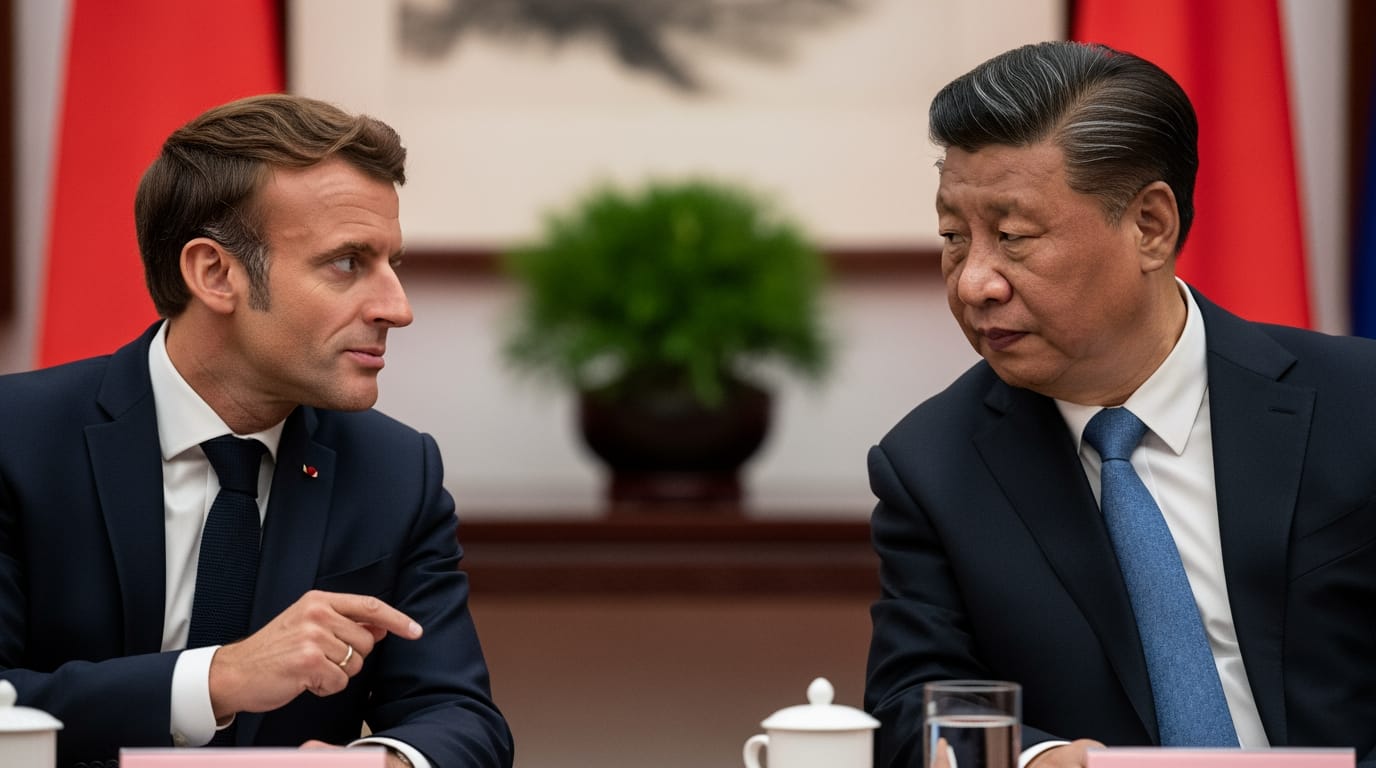
Beijing, China – French President Emmanuel Macron concluded a high-stakes three-day state visit to China this week, engaging in extensive discussions with President Xi Jinping on the pressing issues of the ongoing conflict in Ukraine and the persistent trade imbalances between Europe and China. The diplomatic endeavor, Macron's fourth state visit to the Asian powerhouse, underscored France's concerted effort to leverage China's influence on global affairs while simultaneously advancing European economic interests. With a substantial delegation of French ministers and business leaders in tow, Macron sought to navigate a delicate balance between strategic dialogue and assertive advocacy, aiming to shape Beijing's approach to two of the world's most critical challenges.
Diplomatic Pressure on the Ukraine Front
At the forefront of President Macron's agenda was the urgent appeal for China to utilize its considerable influence with Russia to facilitate a ceasefire in Ukraine. French officials explicitly stated Paris's hope that Beijing "could convince Russia to put an end to the war and to engage in negotiations that respect Ukraine's fundamental rights and allow us to achieve peace and security on the European continent." Macron pressed President Xi to ensure that China would "refrain from providing any means, by any means, to Russia to continue the war." This push came amidst growing concerns in Western capitals regarding China's alleged provision of economic support and military components to Russia, an accusation Beijing consistently denies. Human Rights Watch also urged Macron to address Russia's use of commercial drones produced by China-based companies in attacks on civilians in Ukraine.
President Xi Jinping, for his part, reiterated China's consistent position, stating that Beijing "supports all efforts that are conducive to peace and will continue to play a constructive role in the political settlement of the crisis in its own way." While China regularly calls for peace talks and respect for territorial integrity, it has notably refrained from condemning Russia's 2022 invasion. Diplomatic observers noted that despite the cordial reception, Paris held "no great illusions about [Macron's] ability to influence Beijing's position on Ukraine and on trade," reflecting the entrenched nature of China's stance. Chinese Foreign Minister Wang Yi's statement earlier in July 2025, indicating Beijing did not wish to see Russia defeated, provided further context to China's steadfast position.
Navigating Complex Trade Waters
Beyond the geopolitical entreaties, a significant component of Macron's visit focused on addressing the substantial economic imbalances and fostering fairer trade relations. The European Union faces a considerable trade deficit with China, estimated at approximately $357 billion. Macron advocated for a rebalancing of economic ties, urging China "to consume more and export less," while emphasizing the need for France to attract more Chinese investment and ensure reciprocal market access for French exports.
The French delegation, which included nearly 40 chief executives from diverse sectors such as energy and aviation, aimed to secure new commercial opportunities. Following their talks, Presidents Xi and Macron oversaw the signing of multiple cooperation documents covering critical areas including nuclear energy, agri-food, education, and ecological environment. President Xi expressed China's willingness to import more quality French products and welcomed further French company operations in China, while also calling on France to provide a level-playing field and stable expectations for Chinese enterprises. These discussions unfolded against a backdrop of rising trade tensions, including EU probes into Chinese electric vehicle subsidies and China's retaliatory investigations into European brandy, pork, and dairy products.
Strategic Autonomy and Bilateral Dynamics
Macron's trip also served as a platform to underscore the concept of European "strategic autonomy," a doctrine he has long championed, advocating for Europe to assert its independence from both the United States and China in key strategic areas. During his discussions, Macron asserted that "Europe and China should uphold dialogue and cooperation, and Europe should achieve strategic autonomy." This visit marked a notable departure from recent tradition, as European Commission President Ursula von der Leyen did not accompany Macron, making this a strictly bilateral French initiative, albeit with broader European implications.
Both leaders emphasized the importance of their respective nations acting as independent and responsible major powers, contributing to a multipolar world. President Xi highlighted that "no matter how the external environment may evolve, China and France should always demonstrate the strategic vision and independence of a major country," and offer mutual understanding on core interests. France's commitment to the "one-China policy" was reaffirmed by Macron, serving as a political bedrock for bilateral relations. The talks underscored the mutual desire to deepen the comprehensive strategic partnership between the two countries, particularly as they embark on a new 60-year cycle of diplomatic relations.
The Symbolism of Statecraft
The visit was marked by considerable diplomatic pomp and significant gestures, highlighting the importance both nations placed on the engagement. Macron received a grand welcome, including a guard of honor, a 21-gun salute in Tiananmen Square, and a welcome banquet at the Great Hall of the People. In a rare display of hospitality, President Xi accompanied Macron on a visit to Chengdu, the capital of Sichuan province, a gesture considered "quite exceptional in Chinese protocol." This included a tour of the centuries-old Dujiangyan Dam, a UNESCO World Heritage site, and an engagement with cultural elements like pandas and table tennis stars. Such symbolic acts aimed to foster goodwill and demonstrate a desire for close ties despite the underlying complexities of the discussions.
Conclusion: Dialogue Amidst Divergence
President Macron's visit to China, while characterized by warmth and extensive dialogue, ultimately underscored the deep-seated divergences on critical international issues and economic relations. While both leaders affirmed the importance of their strategic partnership and commitment to multilateralism, tangible shifts in China's stance on the Ukraine conflict remained elusive. On trade, the signing of cooperation agreements signaled a desire for closer economic ties, yet the fundamental challenges of market access and the trade deficit persist. The diplomatic exchange served as a crucial reaffirmation of high-level engagement between two significant global players. However, the path forward for Europe and China, particularly concerning the war in Ukraine and the quest for a truly balanced economic relationship, remains fraught with challenges, requiring continued dialogue and a pragmatic approach from both sides.


