Macron Proposes Expanded G7 Summit with Russia Amidst Escalating Greenland Tensions
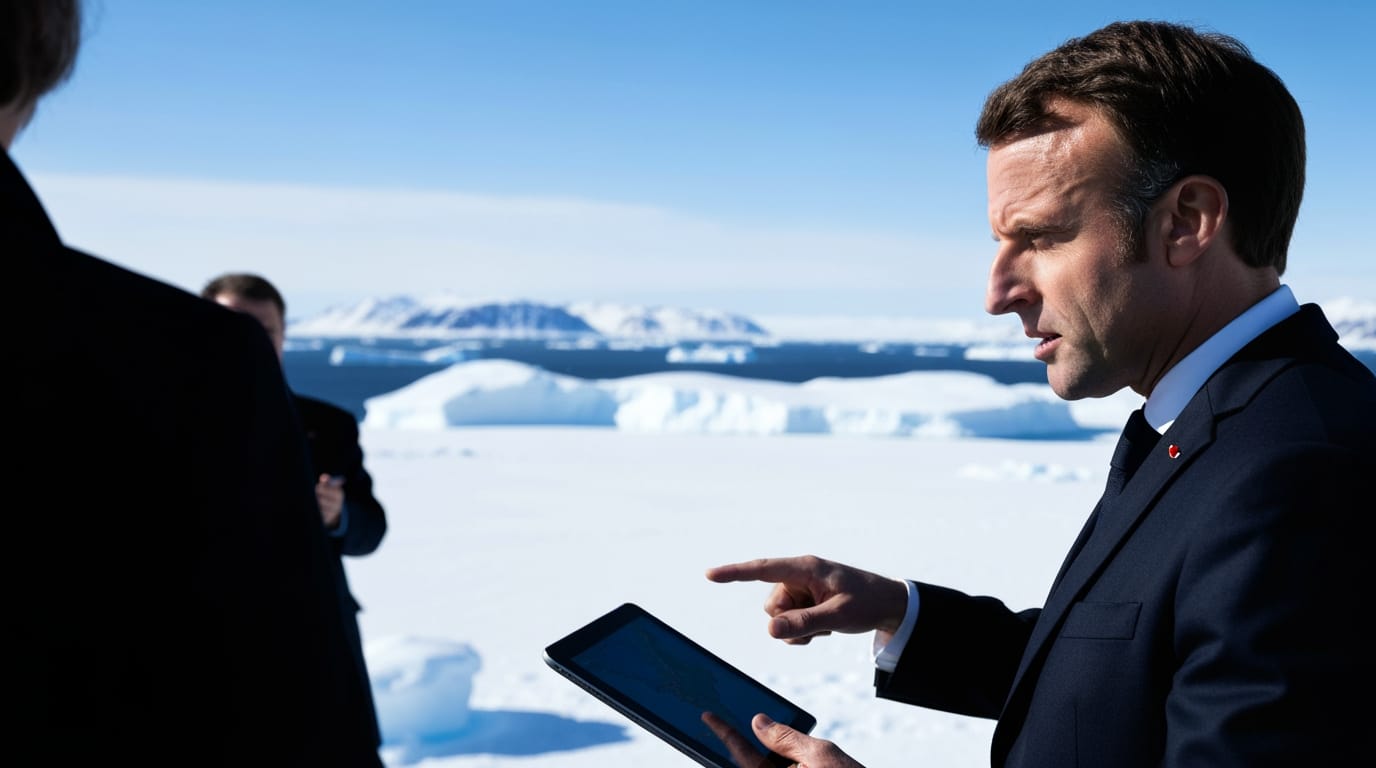
Paris, France – French President Emmanuel Macron has reportedly proposed an expanded Group of Seven (G7) summit to include Russia, Ukraine, Denmark, and Syria, aiming to address mounting international disagreements, particularly concerning the geopolitical status of Greenland. The unconventional diplomatic overture comes amidst heightened tensions following renewed assertions by the United States regarding its interests in the autonomous Danish territory and subsequent retaliatory economic threats.
The proposal, conveyed in a private text message from Macron to then-U.S. President Donald Trump, sought to convene a meeting in Paris after the Davos summit. Macron's message explicitly stated, "I do not understand what you are doing in Greenland," while also proposing discussions on issues in Syria and Iran. This initiative underscores a significant diplomatic push by France to navigate a complex web of international disputes and de-escalate burgeoning frictions between traditional allies.
Greenland: An Arctic Crucible of Geopolitical Ambition
Greenland, the world's largest island, has emerged as a critical flashpoint in contemporary geopolitics, far exceeding its modest population size. Long a remote Arctic frontier, its strategic importance has surged due to its vast untapped mineral wealth, pivotal maritime location, and the accelerating impact of climate change.
The island is endowed with an abundance of critical resources, including rare earth elements, oil, and natural gas, essential for global energy markets and high-tech industries. Experts indicate that Greenland holds globally significant reserves of rare earth elements, with estimates suggesting approximately 1.5 million tons of rare earth oxides in known reserves, ranking it among the world's top holders. The accessibility of these resources, facilitated by receding Arctic ice, makes Greenland a strategic asset eagerly eyed by global powers seeking to secure critical mineral supply chains and reduce dependence on dominant producers like China.
Beyond its natural riches, Greenland's geographical position as a bridge between North America and Europe places it at the heart of potentially transformative maritime routes, such as the Northwest Passage and the Northern Sea Route. These routes are becoming increasingly navigable, promising significant reductions in shipping times and costs. This strategic location also renders Greenland crucial for military and security planners, serving as a linchpin for North American defense, missile early warning systems, and monitoring Russian naval and air activity in the North Atlantic. The U.S. maintains a significant military presence at Pituffik Space Base (formerly Thule Air Base), integral to missile defense and space surveillance.
The recent surge in attention to Greenland stems partly from former U.S. President Donald Trump's repeated expressions of interest in acquiring the island. These suggestions have been met with strong resistance from Denmark and Greenland itself, with Macron echoing the sentiment that "Greenland is not to be sold, not to be taken." This underscores a growing international concern over the island's sovereignty and the potential for unilateral actions in the Arctic region.
A Diplomatic Gambit Amidst Transatlantic Strain
Macron's proposal for an inclusive G7 summit, notably extending invitations to Russia, Ukraine, and Denmark, appears to be a calculated move to address the multifaceted challenges stemming from the Greenland situation and broader geopolitical instability. The French President's entourage confirmed the authenticity of the messages, indicating Macron's intent to foster dialogue and cooperation.
The inclusion of Russia, which was expelled from the then-G8 after the annexation of Crimea in 2014, marks a significant departure from established diplomatic norms. Macron's willingness to invite Moscow, even "on the sidelines," suggests an effort to engage all relevant parties in resolving complex international issues, including Russia's ongoing conflict with Ukraine, and to prevent further polarization.
However, the initiative has been met with a contentious response. Trump, upon receiving Macron's message, publicly revealed the private communication and subsequently escalated tensions by threatening 200% tariffs on French wines and champagne if France refused to join his proposed "Board of Peace." This "Board of Peace," described as a new international body, has been championed by Trump as an alternative to existing international peacekeeping mechanisms.
The tariff threats and Trump's comments questioning Macron's political standing illustrate the fragile state of transatlantic relations and the challenges of forging a unified diplomatic front. European leaders have called for calm dialogue and unity in handling strategic issues, preparing for emergency meetings to discuss potential retaliatory actions against U.S. tariff threats.
Broader Implications for Global Order
The unfolding diplomatic exchange highlights the increasing geopolitical stakes in the Arctic and the evolving dynamics of international cooperation. Greenland's future is inextricably linked to global power competition, climate change, and the pursuit of economic advantage. As Arctic ice recedes, the region's strategic importance will only continue to grow, attracting further military and economic engagement from global powers like the United States, China, and Russia.
Macron's attempt to bring Russia back to the G7 discussion table, even indirectly, signals a potential desire among some European leaders to explore new avenues for de-escalation and engagement, particularly in a period marked by profound global instability. However, the strong reaction from the U.S. underscores the deep divisions that persist regarding international strategy and the role of various actors on the global stage. The episode reveals a complex interplay of national interests, diplomatic maneuvers, and economic pressures, setting the stage for continued negotiations and potential shifts in international alliances. The outcome of these discussions will undoubtedly have lasting implications for Arctic governance, transatlantic relations, and the broader global order.


