Major Oil Spill Reported in Eastern Germany, Pipeline Feeding Critical Refinery Affected
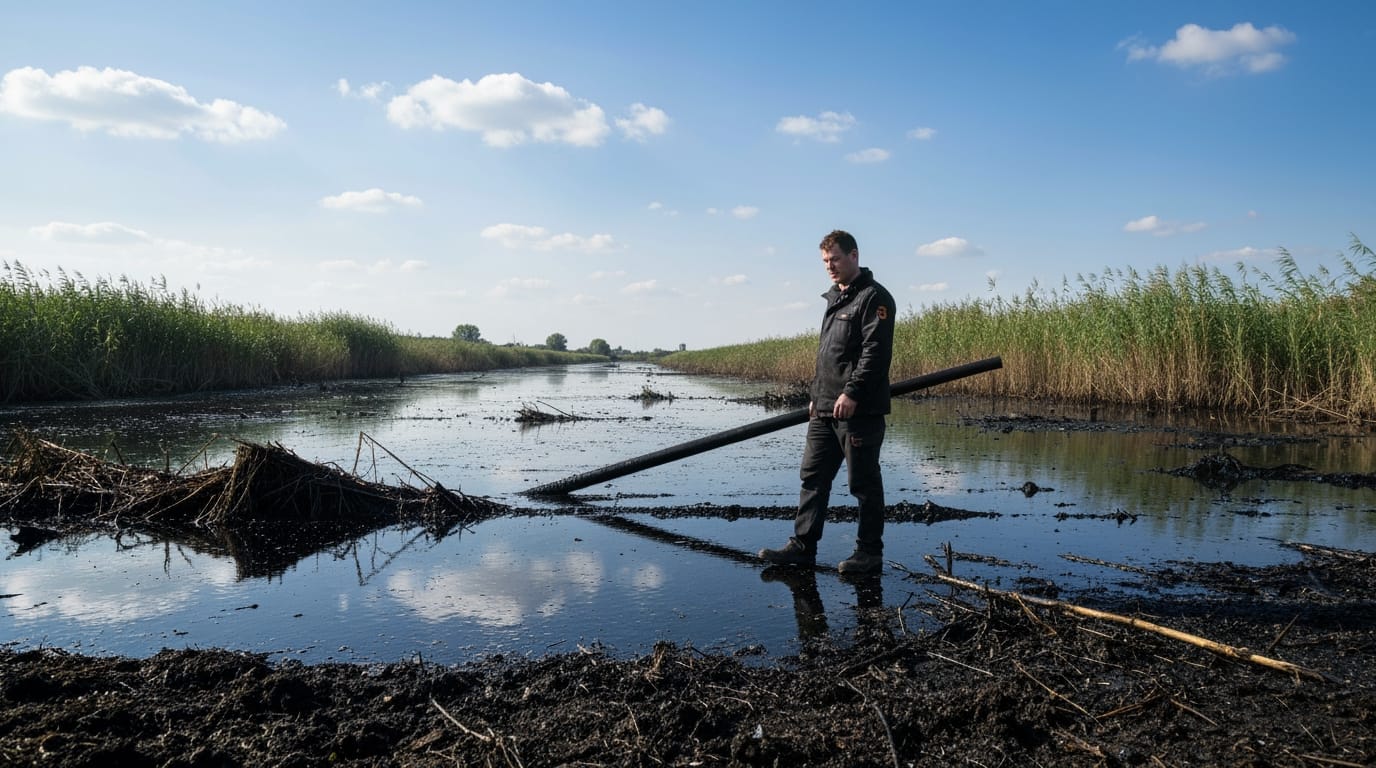
An accident on a pipeline feeding the strategically vital PCK Schwedt refinery has resulted in a major oil spill in the Uckermark region of northeastern Germany today, December 10, 2025. Emergency services were swiftly deployed to the scene following reports of a significant leak, described by some accounts as a "12-meter high 'fountain of oil'" in the Gramzow/Zehnebeck area. While the full extent of the environmental impact and the specific cause of the accident remain under investigation, the incident immediately raises concerns about regional energy supply and the ecological integrity of the affected area, particularly given the refinery's crucial role in eastern Germany's fuel provision.
The Incident Unfolds
The leak was detected in the Uckermark region, a rural area known for its natural landscapes. Initial reports indicate that large quantities of oil were actively escaping from the damaged pipeline. Firefighters and other emergency personnel quickly arrived to begin containment efforts, though details on the volume of oil spilled and the success of immediate containment measures are still emerging. There have been no immediate reports of injuries to personnel or the public, and preliminary assessments suggest no direct impact on the operations of the PCK Schwedt refinery itself, though this could change as the situation develops. The incident has drawn attention to the intricate network of energy infrastructure that sustains industrial operations and everyday life in the region.
The Critical Link: PCK Schwedt and its Lifelines
The affected pipeline is a crucial artery for the PCK Schwedt refinery, one of Germany's largest crude oil processing facilities located near the Polish border. This refinery is particularly significant as it supplies approximately 90% of the fuel consumed in Berlin and the wider Brandenburg region, including the Berlin-Brandenburg international airport. Historically, the refinery has been supplied with Russian crude oil primarily via the northern branch of the Druzhba pipeline, a vast network whose name means "friendship" in Russian.
The dependency on this pipeline has been a recurrent theme in Germany's energy security discussions, especially in light of past disruptions. For instance, in October 2022, a leak in one of the Druzhba pipeline's two lines in central Poland temporarily reduced oil flows to German refineries, including Schwedt and Leuna. While that incident, which saw about 400 cubic meters of oil and water pumped out from a corn field, was deemed accidental, it underscored the vulnerability of Europe's energy infrastructure. Germany's federal network regulator had then affirmed that security of supply was guaranteed, citing increased crude stocks and the operational status of the pipeline's second line, as well as alternative supply routes through the ports of Rostock and Gdansk. Today's incident, however, appears to be a direct pipeline accident within German territory, directly affecting the infrastructure connecting to Schwedt.
Environmental Ramifications and Response Challenges
Oil spills, regardless of their origin, pose significant environmental threats. Crude oil contains various toxic compounds that can contaminate soil, groundwater, and surface water, jeopardizing ecosystems and wildlife. The long-term effects can include damage to flora and fauna, disruptions to local biodiversity, and potential health risks for human populations in affected areas. Cleanup operations are often complex, costly, and can take extended periods, relying on specialized equipment and techniques for containment, recovery, and remediation.
Emergency services are currently focused on containing the spread of the spilled oil to minimize ecological damage. The precise nature of the terrain and proximity to waterways will heavily influence the severity of the environmental impact and the methods required for an effective cleanup. In past incidents in Germany, mechanical recovery of oil remains the priority response strategy, aiming to remove as much oil as possible from the water surface to minimize damage. This incident further highlights the continuous need for robust emergency response protocols and effective environmental protection measures for critical infrastructure.
Geopolitical Undercurrents and Energy Security
This latest pipeline incident occurs amidst a sensitive geopolitical landscape regarding Germany's energy supply. The PCK Schwedt refinery, while physically located in Germany, has a complex ownership structure, with Russia's Rosneft holding a majority stake. Following Russia's full-scale invasion of Ukraine, the German government took control of the refinery through a trusteeship in 2022, aiming to safeguard energy security and reduce reliance on Russian energy imports.
Since the halt of Russian oil deliveries via the Druzhba pipeline at the start of 2023 due to sanctions, Schwedt has been drawing substitute supplies primarily through a pipeline to Rostock and, to a lesser extent, from the Polish port of Gdansk and Kazakhstan. These changes have led to the refinery operating at reduced capacity, impacting its financial performance and prompting ongoing discussions about securing diverse and stable crude oil sources. The incident today, while its cause is yet unknown, underscores the fragility of these alternative supply chains and the persistent challenges Germany faces in ensuring uninterrupted energy flow to its eastern regions as it navigates away from Russian energy dependence.
Conclusion
The oil spill in northeastern Germany represents a significant challenge for both environmental protection and energy security. As emergency crews work tirelessly to contain and clean up the spilled crude, investigations will aim to determine the precise cause of the accident. The incident serves as a stark reminder of the inherent risks associated with extensive energy infrastructure and the critical importance of maintaining vigilance over such systems. For the PCK Schwedt refinery, this disruption adds another layer of complexity to its ongoing efforts to ensure stable operations and a secure energy future for a vital part of Germany. The long-term environmental consequences and the operational adjustments at the refinery will be closely monitored as Germany continues to grapple with its evolving energy landscape.


