Federal Judge Orders Immediate Release of Kilmar Abrego Garcia from ICE Detention
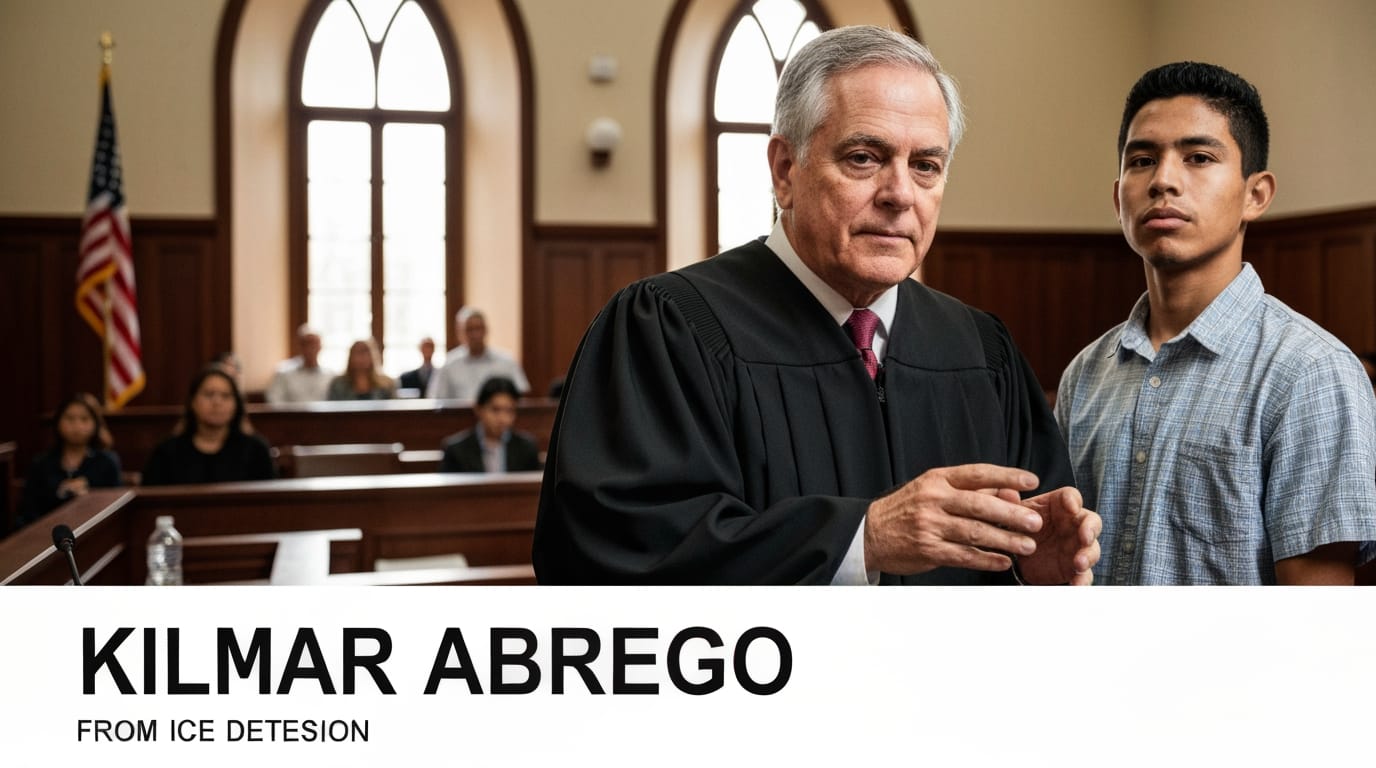
Maryland, USA – December 11, 2025 – In a significant legal victory for immigrant rights advocates, a U.S. District Court judge in Maryland today ordered the immediate release of Kilmar Abrego Garcia from Immigration and Customs Enforcement (ICE) detention. The ruling by Judge Paula Xinis marks a critical development in a high-profile case that has become emblematic of the complex and often contentious landscape of U.S. immigration policy. Judge Xinis found that federal authorities had no legal basis to detain Abrego Garcia following his return to the United States earlier this year, a decision that has been sharply criticized by the Department of Homeland Security (DHS) as "naked judicial activism". Abrego Garcia, a Salvadoran national with an American wife and child residing in Maryland, was freed from custody shortly after the ruling, ending a period of re-detention that began after his controversial and mistaken deportation in March.
A Troubled Journey: From Wrongful Deportation to Re-Detention
Kilmar Abrego Garcia's prolonged legal saga began years ago. He immigrated to the United States illegally as a teenager from El Salvador, seeking refuge from rampant gang violence. For years, he built a life in Maryland with his American wife and child. In 2019, an immigration judge explicitly ruled that Abrego Garcia could not be deported to El Salvador, citing a "well-founded fear" of persecution from gangs that had targeted his family. Despite this clear directive, in March 2025, Abrego Garcia was mistakenly deported to a notorious prison in his native El Salvador by the Trump administration. This incident quickly garnered international attention, transforming his case into a "flashpoint" and "rallying point" for critics of the administration's aggressive immigration enforcement tactics.
Following a court order, Abrego Garcia was eventually returned to the United States in June 2025. However, his reprieve was short-lived. Upon his return, he was charged in Tennessee with human smuggling, allegations he vehemently denies and for which he has pleaded not guilty. After his release from criminal custody in August, Abrego Garcia was immediately re-detained by ICE officials, first in Baltimore, then transferred to the Moshannon Valley Processing Center in Pennsylvania. This subsequent detention became the focus of the recent federal court challenge.
Judicial Scrutiny and the Absence of Legal Authority
Judge Xinis's decision centered on a fundamental question: the legal authority for Abrego Garcia's continued detention. In her ruling, the judge stated unequivocally that ICE had re-detained him "without any legal basis" after his return to the U.S. Crucially, Judge Xinis highlighted the absence of a "final order of removal" to deport Abrego Garcia from the country. This finding directly countered the government's assertions and underscored a critical flaw in the justification for his custody. The judge further noted that Justice Department attorneys had "misled" the court regarding Abrego Garcia's legal options and the reasons for his detention during a previous hearing, an element that significantly impacted her decision. Specifically, she cited reports indicating that information provided about Costa Rica's willingness to accept Abrego Garcia was inaccurate.
Abrego Garcia's legal team, led by attorney Simon Sandoval-Moshenberg, filed a habeas petition, arguing that the government lacked the statutory authority to hold their client indefinitely without a final deportation order. This argument draws on long-established legal principles, including a 2001 Supreme Court case that addressed the government's inability to indefinitely detain individuals if there is no "significant likelihood of removal in the reasonably foreseeable future." Judge Xinis explicitly referenced this precedent, emphasizing that because no final order existed for his removal, his detention could not be considered lawful or consistent with due process.
The Government's Stance and Future Challenges
The Department of Homeland Security immediately voiced strong disapproval of Judge Xinis's ruling. Tricia McLaughlin, Assistant Secretary for DHS, lambasted the decision as "naked judicial activism by an Obama-appointed judge" and vowed that the department would "fight this tooth and nail in the courts." This staunch opposition highlights the ongoing ideological battle over immigration enforcement strategies between the judiciary and the executive branch.
Despite the 2019 ruling prohibiting his deportation to El Salvador, ICE had continued its efforts to remove Abrego Garcia from the U.S. Since El Salvador was off-limits, the agency had explored options to deport him to a series of African nations, including Uganda, Eswatini, Ghana, and Liberia. His federal lawsuit contends that these persistent attempts by the Trump administration to deport him are punitive, an illegal use of the removal process to punish Abrego Garcia for the public embarrassment his mistaken deportation caused the administration.
In addition to the immediate release, Abrego Garcia is actively seeking to reopen his immigration case in a separate court action to pursue asylum in the United States. His current legal challenges also include the human smuggling charges in Tennessee, where he has filed a motion to dismiss, alleging the prosecution is vindictive. A judge has ordered an evidentiary hearing on this motion, noting that some statements by Trump administration officials "raise cause for concern," suggesting the Justice Department's charges might be retaliatory.
Broader Implications for Immigration Policy
Kilmar Abrego Garcia's case has transcended the individual to become a poignant symbol within the larger national debate on immigration. His initial wrongful deportation and subsequent re-detention spotlight fundamental questions of due process, accountability, and the limits of executive power in immigration enforcement. The federal court's intervention underscores the judiciary's role in safeguarding individual liberties against potential governmental overreach.
The ruling is a significant win for those who argue against indefinite detention without a clear path to removal and highlights the complexities faced by individuals caught within the U.S. immigration system. While DHS has indicated its intent to appeal, the immediate release of Abrego Garcia sends a powerful message about judicial oversight and the requirement for legal authority in all government actions, especially those impacting an individual's freedom. The ongoing legal battles surrounding his criminal charges and asylum petition ensure that Kilmar Abrego Garcia's story will continue to influence discussions on human rights and immigration justice for the foreseeable future.


