Thailand Plunges into Early Election Amid Political Turmoil, Border Conflict
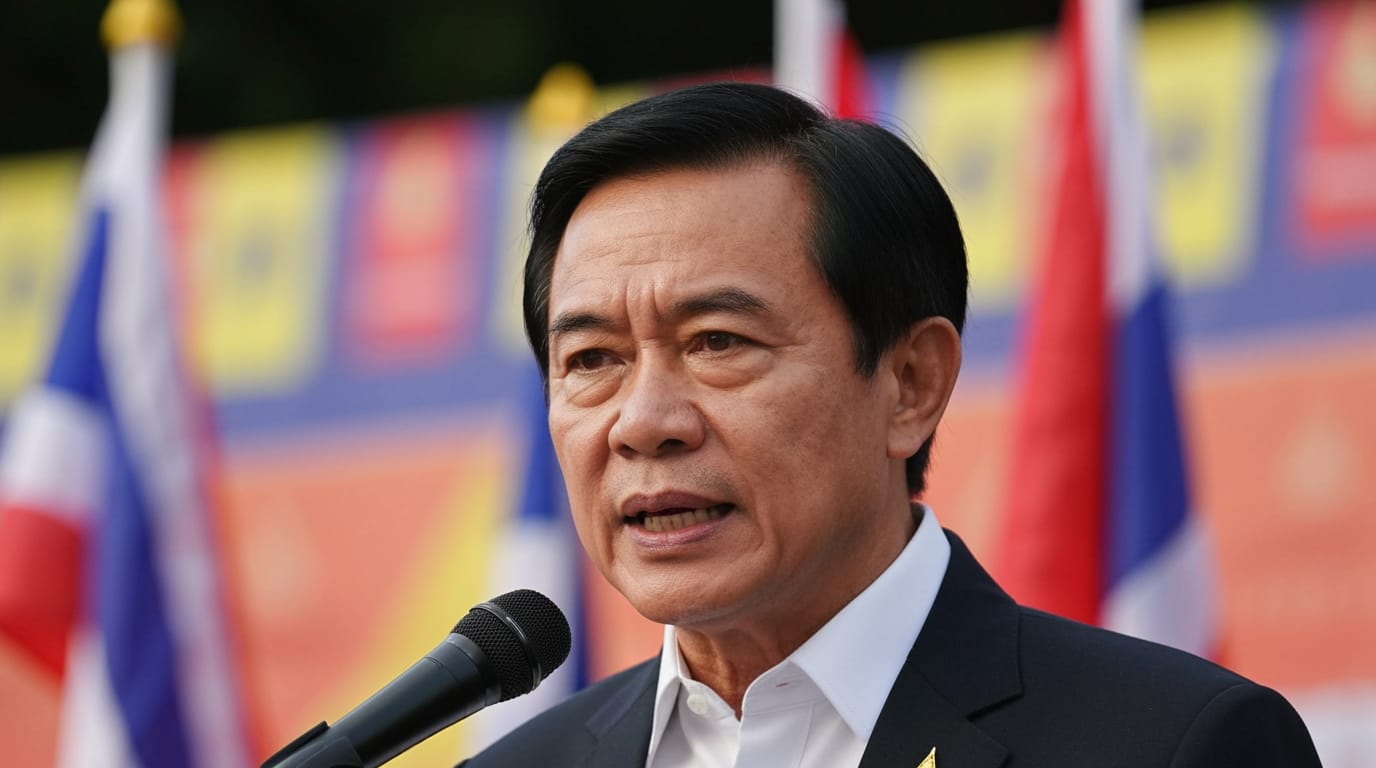
BANGKOK, Thailand – Thailand is bracing for a snap general election early next year after Prime Minister Anutin Charnvirakul officially dissolved parliament today, Friday, December 12, 2025, following royal approval. The move, announced just three months into his premiership, seeks to resolve a mounting political deadlock stemming from his administration's minority status and intense pressure from the opposition. The nation now faces the prospect of heading to the polls within 45 to 60 days, all while grappling with an active border conflict with Cambodia and persistent economic challenges.
A Swift Dissolution and the Path Ahead
Prime Minister Anutin Charnvirakul confirmed the dissolution on Thursday, stating his intention to "return power to the people." His Majesty King Maha Vajiralongkorn Phra Vajiraklaochaoyuhua subsequently endorsed the royal decree, clearing the path for a new general election to be held by late January or early February 2026. The electoral process will determine the 500 members of the House of Representatives through a parallel voting system, with 400 seats filled by single-member constituencies and 100 through proportional representation. During the interim period, Prime Minister Charnvirakul will lead a caretaker government with curtailed authority, notably lacking the power to approve a new national budget. This legal provision ensures governmental continuity but restricts major policy initiatives, making the swift formation of a new government a pressing concern for the country's economic stability.
Roots of Instability: A Fractured Parliament
The official reason cited for the dissolution was the Anutin administration's status as a "minority government" that "failed to command a majority in the House of Representatives." However, underlying this declaration was a significant political rift. The opposition People's Party had threatened a no-confidence motion, accusing Anutin's Bhumjaithai party of reneging on an agreement regarding constitutional amendments. Specifically, the dispute centered on the Bhumjaithai party's vote to retain one-third of the Senate's votes in the constitutional amendment process, a point of contention for reform-minded parties.
This dissolution marks another chapter in Thailand's volatile political landscape. Prime Minister Charnvirakul himself only assumed office three months prior, succeeding Paetongtarn Shinawatra, who served merely a year as prime minister before being dismissed from office by a court ruling in 2025 over ethics violations. Paetongtarn, daughter of former Prime Minister Thaksin Shinawatra, had followed Srettha Thavisin, who was also removed by a court ruling in 2024. Anutin's rise to power in September 2025 was facilitated by support from the People's Party, reportedly in exchange for a commitment to dissolve parliament within four months and organize a referendum on drafting a new constitution by an elected constituent assembly. The recent disagreement over constitutional reform appears to have been the trigger for the early dissolution, as the People's Party viewed the Bhumjaithai's stance as a breach of their understanding.
The Enduring Political Landscape and Key Players
Thailand's political arena remains a complex interplay of various factions. The People's Party, a successor to the dissolved Move Forward Party, continues to champion a progressive, reformist agenda, including amendments to the country's controversial lèse-majesté law and broader constitutional changes aimed at reducing military influence. Polling suggests the People's Party retains significant popularity, particularly among urban youth, despite facing legal pressures and the historical challenges faced by reformist movements in the country.
The Bhumjaithai Party, led by Anutin Charnvirakul, positions itself as a significant political force and a skilled dealmaker, capable of forming coalitions. Meanwhile, the Pheu Thai Party, historically linked to former Prime Minister Thaksin Shinawatra, finds itself in opposition after its recent governmental stint ended in court-ordered dismissals. The influence of traditional power centers, including military and royalist factions, remains a critical factor. The 2017 constitution, drafted under military rule, grants significant power to the military-appointed Senate, which has historically played a crucial role in shaping government formation and policy.
A Nation at a Crossroads: Border Conflict and Economic Pressures
The political instability unfolds against a backdrop of pressing national issues. Thailand is currently engaged in an active and fierce border conflict with neighboring Cambodia, which has reportedly resulted in dozens of casualties and displaced hundreds of thousands of people. Prime Minister Charnvirakul has affirmed that the dissolution of parliament will not impede military operations along the disputed frontier.
Economically, Thailand faces a period of stagnation characterized by low productivity, high household debt, and sluggish growth, with its 10-year average GDP growth significantly lagging behind the ASEAN regional average. This economic climate adds urgency to the need for a stable and effective government capable of addressing these challenges. Business leaders have expressed a welcome for early elections, hoping it will lead to a swifter government formation process and prevent delays in budget preparation that have previously hampered public spending and economic growth.
Adding another layer of complexity, voters will also participate in two referendums alongside the general election. One referendum will address a proposed rewrite of the 2017 Constitution, while the other concerns the scrapping of two Memoranda of Understanding with Cambodia. These referendums underscore the deep-seated constitutional and geopolitical issues at play in Thailand's contemporary political landscape.
The Stakes: Implications for Thailand's Future
The upcoming early election represents a critical juncture for Thailand. The frequent cycles of political upheaval, judicial interventions, and military influence have challenged the country's efforts toward democratic stability for decades. The election will test the strength of the reformist movement, the ability of traditional factions to maintain their sway, and the capacity of any newly formed government to forge consensus amidst deep ideological divides.
The primary challenge for the next administration will be to secure a stable coalition and address the nation's pressing economic woes while navigating the ongoing border conflict. Furthermore, the push for constitutional reform will remain a central theme, highlighting the persistent struggle between calls for greater democracy and the entrenched power structures. The results of this election will undoubtedly shape Thailand's trajectory, determining whether it moves towards greater political stability and democratic maturity or continues to grapple with the cycles of governmental fragility that have marked its recent history.


