Mali Grapples with Uncertainty After Five Years of Military Rule
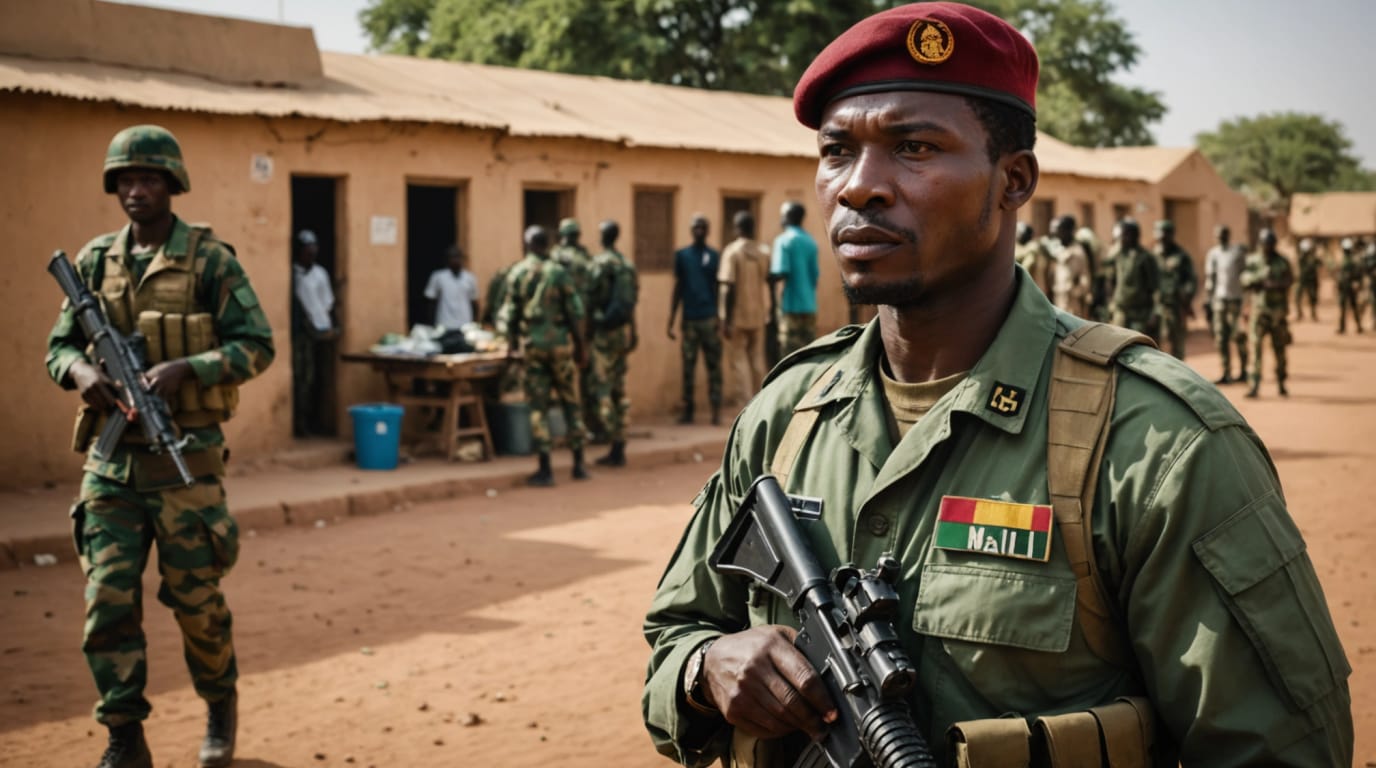
Mali finds itself at a critical juncture in June 2025, five years after the initial military coup that ousted President Ibrahim Boubacar Keita. While the military junta, led by Gen. Assimi Goita, initially promised stability and a return to civilian rule, the nation faces a complex web of security challenges, political restrictions, and economic difficulties, leaving its future uncertain.
Broken Promises and Power Consolidation
When Col. Assimi Goita seized power in 2020, many Malians welcomed the change, hoping for quick solutions to the country's pressing issues, including insecurity and corruption. The junta initially pledged an 18-month transition to civilian rule, with elections scheduled for early 2022. However, these promises have been repeatedly broken. Goita orchestrated a second coup in May 2021, further consolidating his power. Instead of holding elections, the junta extended the transition period and amended the constitution to grant the president greater authority. In May 2025, the government suspended political parties, a move widely seen as an attempt to stifle dissent and maintain control. Then, in June 2025, the National Transitional Council approved a bill that could extend Goita's rule for another five years, until 2030.
Deteriorating Security Situation
One of the primary justifications for the military takeover was to improve Mali's security situation amid a growing number of jihadist attacks. However, violence has only increased and spread. Groups linked to al-Qaeda and the Islamic State continue to launch attacks across the country, including in the capital, Bamako. In early June 2025, an attack on a Malian army camp resulted in at least 30 deaths. The Group for the Support of Islam and Muslims (JNIM), an al-Qaeda affiliate, has intensified its attacks, particularly in the northern and central regions. The military's response, often involving Russian mercenaries, has been criticized for human rights abuses, including extrajudicial killings and targeting of ethnic groups perceived to be supporting armed groups. The violence has led to mass displacement, with over 3.3 million people displaced across Mali, Burkina Faso, and Niger.
Economic Hardships and Uncertainty
Mali's economy faces significant headwinds, including food insecurity, climate shocks, and external financing constraints. While the economy has shown some resilience, with a projected growth of 5.0 percent in 2025, the outlook remains uncertain. The IMF has noted that Mali's economy is grappling with major challenges, including security threats and an uncertain economic outlook. The government's fiscal deficit is forecast to widen, driven in part by spending to mitigate the impact of flooding. Key priorities include strengthening domestic revenue mobilization and improving spending efficiency. The country's dependence on borrowing from the West African Economic and Monetary Union (WAEMU) market has resulted in high borrowing costs. The exit from ECOWAS, if fully implemented, could have devastating impacts on economic activity and poverty eradication.
Restrictions on Political and Civic Space
The military regime has increasingly restricted political and civic space, suppressing dissent and limiting freedoms. The suspension of political parties in May 2025 was a major blow to democracy. Civil society organizations and political opponents have faced harassment, arrests, and intimidation. These actions have drawn criticism from international human rights organizations, which have called on the Malian authorities to respect fundamental freedoms and restore political space. Despite the restrictions, there have been signs of growing resistance, with hundreds of people gathering in Bamako to protest the military government.
International Response and Shifting Alliances
The international community has struggled to respond effectively to the situation in Mali. The initial coup in 2020 was met with widespread condemnation and sanctions from organizations like the African Union (AU) and ECOWAS. However, the response to subsequent coups and the junta's consolidation of power has been less decisive. ECOWAS has suspended Mali, and the AU has also taken similar measures. France ended its military operations in Mali in 2022, and Russian mercenaries have stepped in as a key security partner. Mali, along with Burkina Faso and Niger, has formed the Alliance of Sahel States (AES), further distancing itself from regional bodies like ECOWAS. The UN Security Council has urged mutineers to return to barracks and restore constitutional order. The US has condemned the "mutiny" and called for a return to constitutional government.
A Bleak Outlook
As Mali enters its fifth year under military rule, the prospects for a return to democracy and stability appear bleak. The junta's actions, including the dissolution of political parties and the extension of Goita's term, suggest a desire to maintain power indefinitely. The security situation continues to deteriorate, and the economy faces significant challenges. The restrictions on political and civic space have stifled dissent and undermined fundamental freedoms. While there have been signs of resistance from political parties and civil society, the junta's grip on power remains firm. The international community's response has been inconsistent, and Mali's shifting alliances have further complicated the situation. Unless there is a significant change in course, Mali is likely to remain mired in conflict, instability, and authoritarian rule for the foreseeable future.


