Mexico Grapples with Tragic Discoveries as Authorities Recover Remains of Missing Mine Workers
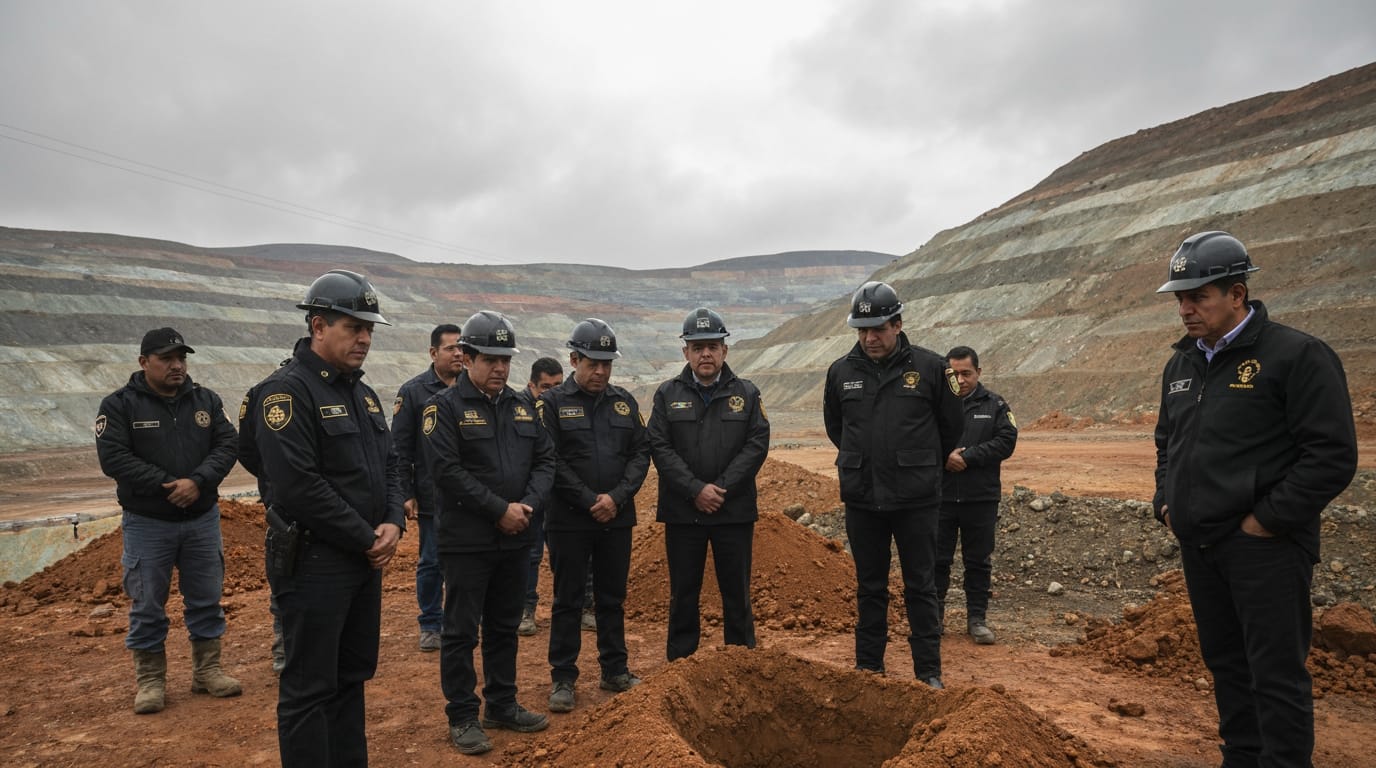
MEXICO CITY – In a series of harrowing developments underscoring the profound dangers and lingering tragedies within Mexico's mining sector, authorities have recently announced the recovery of human remains linked to several long-standing and recent disappearances of mine workers. From the eighteen-year-old trauma of Pasta de Conchos to the more recent, cartel-linked abduction in Sinaloa, these discoveries bring a somber sense of closure, reigniting discussions about safety, accountability, and justice in a nation where mining often comes at a steep human cost.
Sinaloa Abduction Yields Tragic Discovery Amid Cartel Tensions
The most recent and concerning discovery emerged from the northwestern state of Sinaloa, where Mexican authorities confirmed the finding of bodies and human remains in connection with the kidnapping of ten employees from a Canadian mining company. The employees of Vancouver-based Vizsla Silver Corp. were abducted on January 23 from a project site in Concordia, Sinaloa. The Mexican Attorney General's Office announced on Friday, February 7, 2026, that one of the recovered bodies shared characteristics similar to one of the missing individuals, with identification efforts underway. Four individuals have been arrested in connection with the kidnapping.
The incident triggered an urgent and massive response, with Mexico deploying 1,190 military troops, including special forces, air support, and advanced investigation units, into the region of Concordia to search for the missing miners. This significant military presence underscored the gravity of the situation and the suspected involvement of organized crime. Reports indicate that a cell of the Sinaloa cartel, specifically a faction of "Los Chapitos," operates in the area, suggesting a potential link to the abduction. The mountainous region around Concordia has been a battleground for turf wars between rival factions of the Sinaloa cartel for over a year. The company, which operates the Panuco silver and gold mining project, temporarily suspended certain activities following the abduction. The discovery of bodies and remains in this context highlights the increasing threat posed by criminal organizations to industrial operations and their personnel in various parts of Mexico.
Pasta de Conchos: An Eighteen-Year Wait for Remains Ends
Separately, but equally impactful, Mexican authorities confirmed in June 2024 the recovery of human remains belonging to some of the 63 miners who perished in the devastating Pasta de Conchos coal mine disaster eighteen years ago. The tragic accident occurred on February 19, 2006, in the state of Coahuila, trapping 63 miners underground after an explosion. While eight miners survived with severe burns and two bodies were recovered immediately after the incident, the vast majority remained entombed. For nearly two decades, the families of the deceased waged a persistent battle for the recovery of their loved ones, facing repeated governmental decisions that deemed further rescue efforts too dangerous and costly.
The breakthrough came in 2020 when President Andrés Manuel López Obrador pledged to retrieve the bodies, initiating a renewed recovery process. The Federal Electricity Commission (CFE) was tasked with the complex and arduous excavation. In June 2024, the Interior Ministry announced the location of "the first human remains" in one of the mine's chambers, where thirteen miners were working on the day of the accident. This milestone was a significant step toward justice and closure for the grieving families, some of whom had spent nearly two decades fighting for this moment. Genetic testing and identification processes, involving the Coahuila state prosecutor's office, the National Search Commission, and the National Institute of Genomics Medicine, are underway to formally identify the remains and help determine the exact cause of the mine's collapse. As of August 2025, 19 families had been notified of the recovery of their loved ones' remains, with 16 receiving dignified delivery.
El Pinabete and the Broader Landscape of Mining Tragedies
Adding to the grim tally of mining-related casualties, recovery efforts continue at the El Pinabete mine in Coahuila, where ten miners were trapped in August 2022 after a collapse led to flooding. While initial rescue attempts were complicated by debris, poor visibility, and rising water levels, authorities have been working steadily to retrieve the miners. By late 2023, the third body of a trapped miner was recovered, with expectations that the remaining seven could be recovered within weeks in early 2024. These ongoing operations underscore the continuous challenges faced in deep mine recovery and the prolonged agony endured by families awaiting news.
These separate incidents—the targeted abduction in Sinaloa, the decades-long recovery effort at Pasta de Conchos, and the ongoing work at El Pinabete—collectively paint a stark picture of the multifaceted risks associated with mining in Mexico. The country's rich mineral resources drive an active mining industry, but it is one often plagued by safety deficiencies and, increasingly, by external threats from organized crime. Labor organizations and human rights advocates have consistently highlighted poor safety standards, inadequate enforcement, and the vulnerability of workers as contributing factors to such tragedies.
A Persistent Call for Justice and Enhanced Safety
The recovery of these remains, whether from a deep mine shaft or a clandestine grave, represents a poignant moment for the families who have endured years, and in some cases decades, of uncertainty. For the relatives of the Pasta de Conchos victims, the discoveries are a testament to their unwavering persistence in seeking truth and justice. Their advocacy eventually spurred a renewed governmental commitment, proving that sustained pressure can lead to action, even after prolonged official inaction.
However, the Sinaloa abductions introduce a new, alarming dimension to the risks faced by mining personnel: the direct threat of criminal violence and kidnapping. This necessitates a broader approach to security, extending beyond occupational hazards to include protection against organized crime. Across all these cases, there is a consistent, underlying demand for accountability—from mine operators, from regulatory bodies, and from the state itself—to ensure safer working conditions and to guarantee justice for those whose lives are lost in the pursuit of mineral wealth. The recent discoveries in Mexico serve as a powerful reminder of the human cost of mining and the enduring struggle for safety, transparency, and justice in a challenging environment.


