Middle East on Edge as Iran Peace Talks Falter Amid Escalating Threats
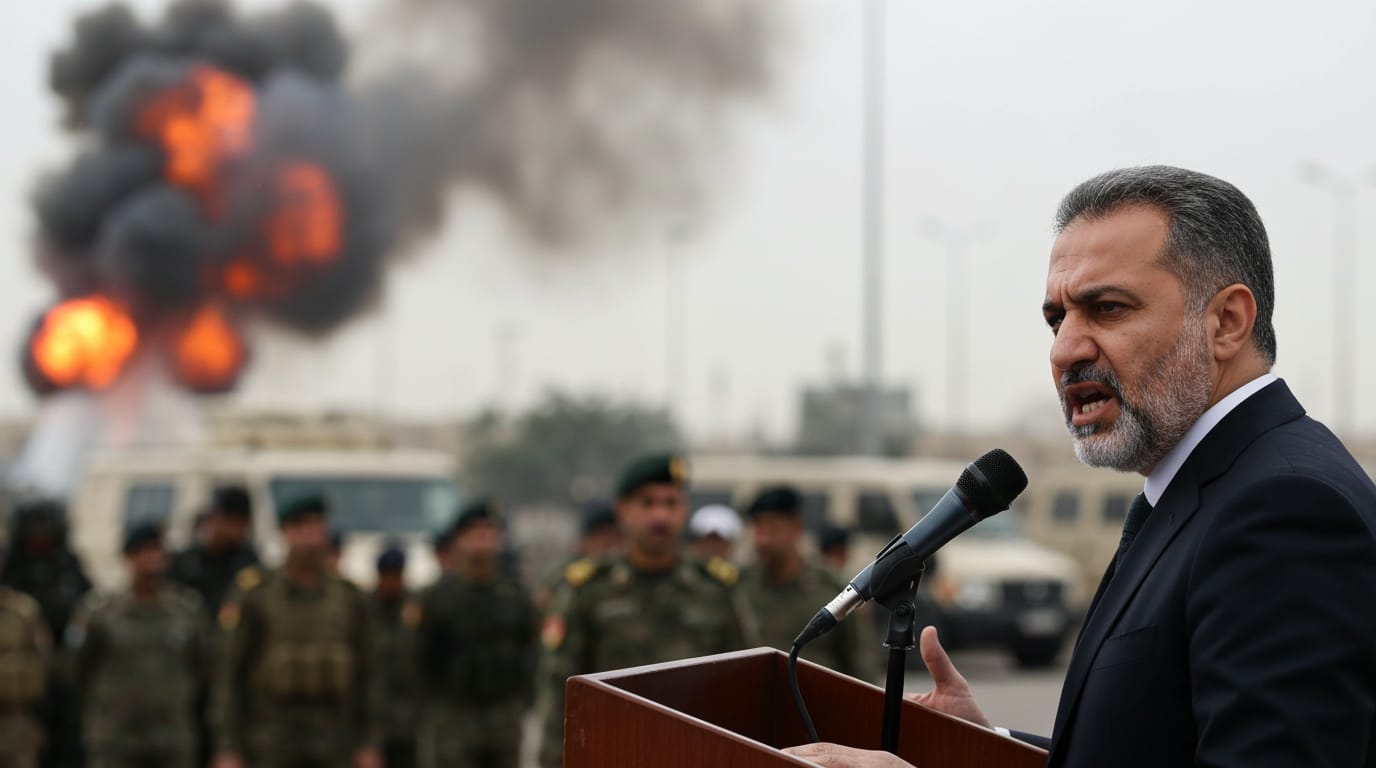
Islamabad, Pakistan – Fragile diplomatic efforts to de-escalate the burgeoning "Iran war" hang by a thread as a critical two-week ceasefire approaches its expiration, overshadowed by a volley of uncompromising threats from both Washington and Tehran. With a fresh round of peace talks in Pakistan facing profound uncertainty, the Middle East, already grappling with a seven-week-old conflict, braces for potentially devastating escalation that could plunge the region into deeper turmoil and reverberate across global energy markets.
Diplomacy on the Brink of Collapse The current crisis stems from a conflict ignited on February 28, 2026, when joint airstrikes by the United States and Israel targeted military and government sites within Iran, including an operation that resulted in the assassination of Supreme Leader Ali Khamenei. Iran swiftly retaliated with missile and drone attacks against Israel, U.S. bases, and allied Arab nations across the Middle East. Following weeks of intense hostilities, a precarious two-week ceasefire, meticulously brokered by Pakistan, was initiated on April 8, 2026. However, as the truce nears its end, scheduled for early Wednesday local time, the path to a lasting peace remains fraught with peril.
A second round of face-to-face negotiations, anticipated to bring U.S. Vice President JD Vance and his delegation to Islamabad this week, is now in serious doubt. Iranian officials have expressed strong reluctance to participate, citing Washington's "excessive demands, unrealistic expectations, [and] constant shifts in stance". Iran's Foreign Ministry spokesman, Esmail Baqaei, confirmed that no decision had been made regarding attendance, stating, "We have no plans for the next round of negotiation, and no decision has been made in this regard". This diplomatic standstill leaves regional and international observers deeply concerned about the immediate future, with many fearing a swift return to full-scale hostilities.
A Cascade of uncompromising Threats The already strained atmosphere has been further poisoned by sharp rhetoric from both sides. U.S. President Donald Trump has issued dire warnings, suggesting that if Iran rejects his "fair deal," it could trigger "widespread destruction of Iranian infrastructure, including power plants and bridges". He previously threatened to conduct "extensive attacks on Iranian energy sites" if Iran did not reopen the Strait of Hormuz by early April, and at one point, pledged to blast Iran "into oblivion... back to the Stone Ages" should diplomacy fail regarding the Strait.
On the Iranian side, leaders have countered with equally firm stances. Iran's Parliament Speaker Mohammad Bagher Ghalibaf publicly declared, "We do not accept negotiations under the shadow of threats," asserting that Tehran is prepared to "reveal new cards on the battlefield". Deputy Foreign Minister Saeed Khatibzadeh rejected the concept of temporary ceasefires, demanding a comprehensive end to the conflict across the entire region, explicitly including an end to Israel's military operations against Hezbollah in Lebanon. These hardline positions underscore the deep chasm that separates the warring parties, making any diplomatic breakthrough increasingly challenging.
The Strait of Hormuz: A Global Chokepoint Central to the ongoing dispute and a critical point of leverage in negotiations is the Strait of Hormuz, a vital maritime chokepoint through which approximately one-third of the world's seaborne oil passes. Iran has repeatedly warned vessels against approaching the strategic waterway, even threatening to target ships that fail to comply, and has actively disrupted maritime traffic, effectively closing the strait for nearly two months. In response, the United States has imposed a counter-blockade of Iranian ports, inflicting significant economic pain on a country already facing severe internal economic challenges.
The international community views the situation in the Strait with alarm. European Union diplomats are reportedly preparing to expand sanctions against Iran to include individuals and entities responsible for obstructing navigation in the Strait of Hormuz, recognizing its profound impact on global energy and commodities markets. While Iranian Foreign Minister Abbas Araghchi briefly announced the Strait was "completely open" on Friday, conditioning passage on Iranian-designated routes, the powerful Islamic Revolutionary Guard Corps (IRGC) quickly criticized his statement, outlining its own conditions for transit that assert Iranian control over the waterway. This internal division within Iran further complicates efforts to secure a stable and verifiable agreement regarding the Strait.
Deep-Rooted Divisions and Regional Fallout Beyond the immediate skirmishes and diplomatic posturing, the core issues fueling the conflict remain unresolved. Iran's nuclear program, its development of ballistic missiles, and its extensive network of regional proxies, including Hezbollah, Hamas, and the Houthis, are significant points of contention with the United States and Israel. Iranian leaders maintain that their enrichment program and ballistic missile capabilities are non-negotiable elements of national security. The current conflict itself follows years of escalating tensions, the collapse of the 2015 Joint Comprehensive Plan of Action (JCPOA) nuclear agreement, and prior limited engagements, such as the 12-Day War in June 2025 between Israel and Iran.
The hostilities have had a profound impact on regional stability. The escalation of the conflict between Hezbollah and Israel in Lebanon, which coincided with the broader Iran-US war, has resulted in thousands of casualties and displaced populations. Meanwhile, earlier protests across Iran in late 2025 and early 2026, driven by economic grievances and a weakened infrastructure, underscore the internal pressures facing the Iranian regime amidst the external conflict.
An Unpredictable Path Forward As the clock ticks down on the current ceasefire, the prospects for a diplomatic resolution appear increasingly bleak. The uncompromising positions, coupled with overt threats from both sides, create an extremely volatile environment. The potential failure of peace talks in Islamabad could usher in a new, more intense phase of the "Iran war," with severe consequences for the stability of the Middle East and significant repercussions for the global economy, particularly concerning energy supplies. Without a clear path to de-escalation, the region remains perched precariously on the brink of wider conflict, its future shrouded in uncertainty.


