Migrant Uprising Rocks Northern Greek Detention Center as Dozens Escape
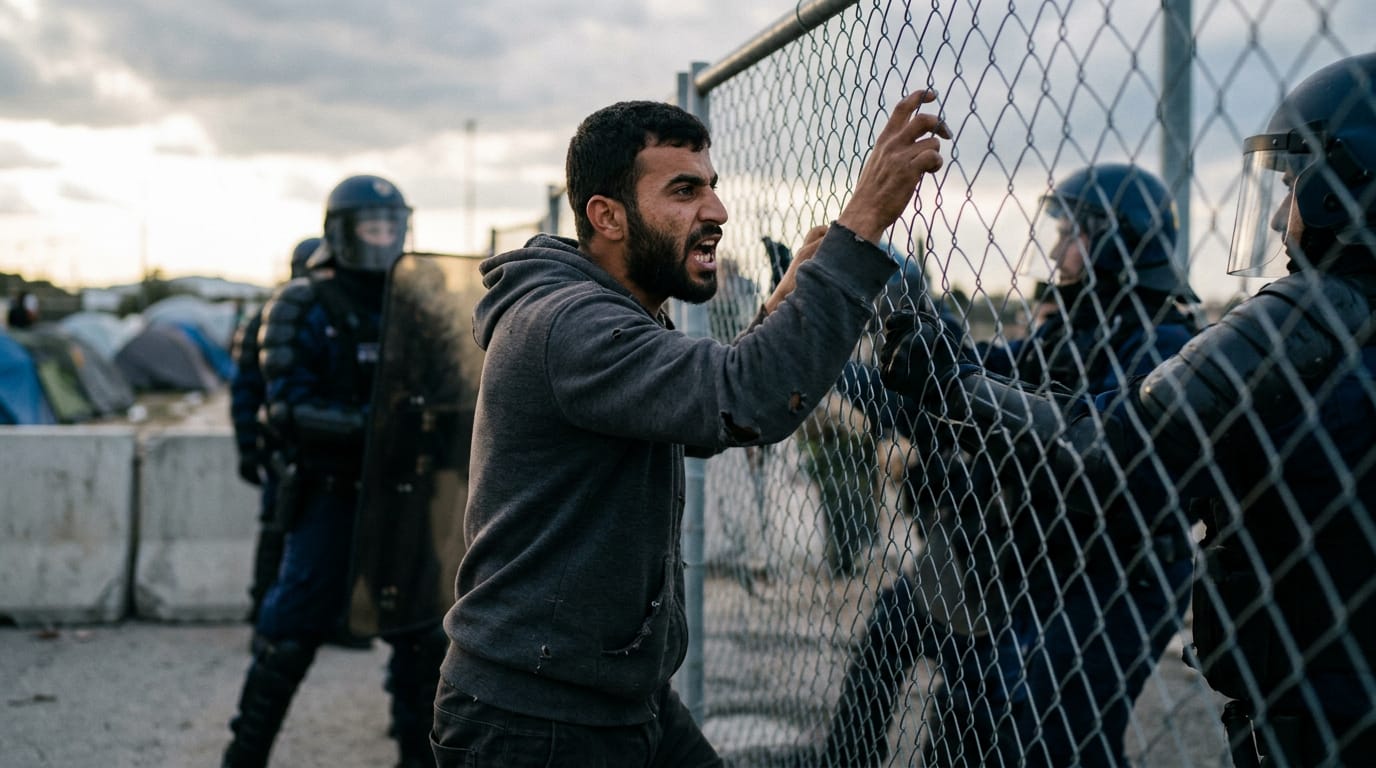
SERRES, Greece – A volatile clash erupted at a migrant detention facility in Kleidi, northern Greece, over the weekend, resulting in the temporary escape of dozens of individuals, injuries, and a significant police response. The incident, which saw migrants throw stones at guards and damage perimeter fences, underscores the escalating tensions within Greece’s overburdened migration system and its increasingly stringent policies. Authorities swiftly moved to contain the situation, recapturing approximately half of the 35 escapees, as the nation grapples with persistent migration pressures and the often-harsh realities faced by those held in detention.
The Kleidi Uprising: A Night of Chaos
The unrest at the closed migrant facility in Kleidi, located in the municipality of Sintiki, Serres, began late Saturday night. Reports indicate that a group of migrants staged an uprising, intent on breaking out of the premises. The situation rapidly escalated as detainees reportedly hurled stones and other objects at police forces deployed to quell the disturbance. During the chaotic events, sections of the facility's wire fence were damaged, allowing 35 individuals to escape. Police special forces responded, utilizing flash grenades in efforts to disperse the crowds, with clashes continuing into early Sunday morning. The violence led to property damage within the facility and at least one migrant was reportedly injured, requiring transportation to Serres General Hospital. By Sunday afternoon, 17 of the escaped migrants had been apprehended, with authorities continuing their search for others.
The Kleidi facility, a closed controlled access center, is one of several such sites across Greece designed to hold asylum seekers and migrants. These centers have faced criticism for their isolated locations and restrictive environments. The incident in Serres follows a history of disturbances at the facility, including significant clashes reported in November 2025.
A Recurring Pattern of Discontent
The weekend's events in Kleidi are not isolated incidents but rather the latest in a series of similar uprisings that have plagued Greece's migrant detention infrastructure for years. In November 2025, a riot broke out at a migrant detention center in northern Greece, a facility then housing approximately 750 migrants of various nationalities. That incident resulted in two police officers sustaining injuries – one struck by a rock, another bitten – and the arrest of 30 migrants. Even further back, in August 2013, more than 50 migrants were arrested following clashes at the Amygdaleza detention center near Athens. In that instance, detainees threw water bottles and stones, set garbage and mattresses on fire, and injured 10 police guards, while 10 migrants managed to escape. These repeated outbreaks of unrest highlight persistent grievances and challenging conditions within the detention system.
Harsh Realities and Isolated Lives in Detention
Underlying these clashes are the often-dire living conditions and prolonged uncertainty experienced by migrants and asylum seekers in Greek detention centers and camps. Reports from human rights organizations consistently detail systematic gaps in shelter and living conditions, insufficient access to essential services, and a severe lack of opportunities for those held within these facilities. Many camps are located in remote, industrial, or agricultural areas, far from urban centers and with limited public transport, severely restricting access to social services, legal support, and healthcare. Issues such as inadequate interpretation services, lack of medical and psychosocial support, and the absence of financial assistance further exacerbate the isolation and despair.
Concerns about overcrowding, poor hygiene, lack of privacy, and exposure to extreme temperatures have been documented in various facilities, contributing to significant psychological suffering among residents. For many, daily life is characterized by constant surveillance and restricted movement, with people waiting months or even years for their cases to be processed, struggling to meet basic human needs or move forward with their lives. These conditions often fall far short of international standards for the protection of physical and mental health of individuals seeking international protection.
Greece's Toughening Stance on Migration
The clashes occur amidst Greece's ongoing efforts to manage a complex migration landscape and implement stricter border control measures. As a primary entry point into Europe for migrants from Asia and Africa, Greece has faced significant pressure, leading its conservative government to toughen its migration policies. Recent legislative changes have introduced one of Europe's most stringent migration regimes, allowing for detention periods of up to 24 months and imposing prison sentences of two to five years for illegal entry or stay. Migrants denied asylum now face mandatory jail sentences.
This hardening stance comes as Greece experiences a recent surge in migrant arrivals, particularly on its southern islands like Crete, with boats often setting off from Libya. More than 10,000 people have reportedly arrived on Crete alone this year. In response, Greek authorities have intensified maritime surveillance and reinforced patrols. While the government argues these measures are necessary to deter smuggling networks and manage overall numbers, critics contend they risk undermining international protection standards and exacerbate humanitarian concerns within detention facilities.
The Ongoing Crisis: A Complex Web of Challenges
The violent incidents at the Kleidi detention center serve as a stark reminder of the deep-seated challenges inherent in Greece's migration management strategy. The recurring clashes, the reports of dire living conditions, and the increasing restrictiveness of policies paint a picture of a system under immense strain. For the migrants and asylum seekers, often fleeing violence and seeking a better life, these facilities frequently represent prolonged limbo and hardship rather than safety. For Greek authorities, the management of these flows presents a significant and contentious issue, balancing humanitarian obligations with national security concerns and European Union pressures. As the search continues for the remaining escapees from Kleidi, the underlying tensions within Greece's detention centers persist, reflecting a complex and unresolved humanitarian and political crisis.