Mines in the Strait of Hormuz: A Lingering Threat to Global Trade and Stability
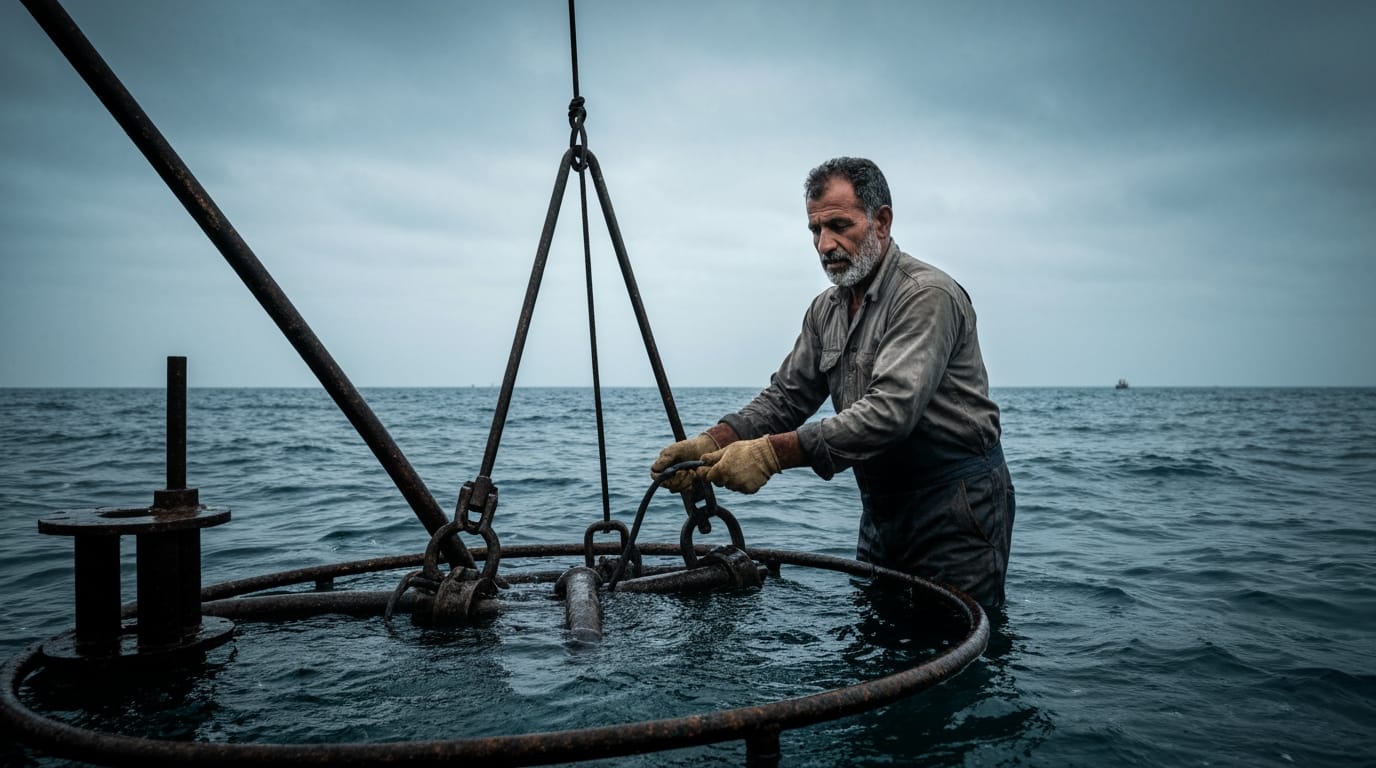
The Strait of Hormuz, a narrow waterway connecting the Persian Gulf to the open ocean, remains a focal point of international tension, with the recent deployment of naval mines raising significant alarms across global energy markets and shipping lanes. As a critical chokepoint through which a substantial portion of the world's oil and liquefied natural gas (LNG) traverses, any disruption in the Strait carries profound economic and geopolitical implications, transforming a regional dispute into a global crisis. The insidious nature of naval mines, coupled with the complexities of their detection and clearance, underscores the persistent danger lurking beneath the surface of this vital maritime artery.
The World's Vital Chokepoint Under Threat
The Strait of Hormuz holds unparalleled strategic importance, serving as the sole sea passage for crude oil, LNG, and other petroleum products from the Persian Gulf to the Gulf of Oman and the Arabian Sea. Annually, approximately 20% of the world's liquefied natural gas and 25% of seaborne oil trade pass through this strait. In 2022, an average of 21 million barrels of oil per day, equivalent to about 21% of global petroleum liquids consumption, transited the waterway. Its narrowest point, ranging from 21 to 52 nautical miles (39 to 97 km) in width, amplifies its vulnerability to disruptions. Historically, the Strait has been a flashpoint, notably during the 1980-1988 Iran-Iraq War, when both sides attacked tankers and Iran resorted to mining, leading to incidents like the damage to an American warship and the subsequent U.S. military response in Operation Praying Mantis in 1988. Threats to close the Strait have been a recurring theme in regional conflicts, often coinciding with spikes in global oil prices.
Recent reports indicate that Iran has deployed a "small number" or "about a dozen" naval mines in the Strait of Hormuz, a move that has sparked renewed international concern. This deployment comes amidst heightened tensions and a broader conflict, with Iran possessing an estimated arsenal of between 2,000 and 6,000 mines, highlighting a significant latent capability. While the exact locations of these newly laid mines are not publicly known, their presence alone is enough to sow uncertainty and significantly impact maritime operations.
The Insidious Nature of Naval Mines
Naval mines are self-contained explosive devices designed to damage or destroy surface ships or submarines. They are often categorized into three main groups: contact, remote, and influence mines. Contact mines detonate upon physical impact, while influence mines are triggered by detecting a vessel's magnetic, acoustic, or pressure signatures without direct contact. These weapons can be moored, anchoring them to the seabed at a specific depth, or bottom-resting, lying directly on the seafloor.
In the current context, intelligence suggests Iran has deployed two specific types of mines: the Maham 3 and the Maham 7. The Maham 3 is an anchored, 300-kilogram mine capable of operating in waters up to 100 meters deep, triggered by acoustic and magnetic sensors. The Maham 7 is a 220-kilogram bottom-resting mine designed for shallower waters, also utilizing magnetic and acoustic sensors, with a conical shape intended to evade sonar detection while resting on the seabed.
What makes naval mines particularly dangerous is not just their destructive power, but their ability to create widespread uncertainty, fear, and strategic paralysis. They are relatively inexpensive to deploy but costly and time-consuming to clear. Even a small number of mines can render an entire waterway unsafe for shipping, compelling commercial vessels and insurers to reroute or delay voyages. This strategy aims not for outright closure of the Strait, but for psychological and economic deterrence, achieving significant disruption with minimal direct confrontation.
Global Economic Tremors and Geopolitical Fallout
The deployment of mines in the Strait of Hormuz sends immediate ripples through the global economy, primarily impacting energy markets. The mere threat of mining operations has already contributed to significant economic volatility. Oil prices, for instance, have shown rapid increases, with Brent crude surging to $82 per barrel and predictions of reaching $100-$120 per barrel if disruptions persist. Such price hikes directly translate into increased maritime insurance premiums, making shipping through the Strait considerably more expensive and risky. This economic pressure can disrupt refinery operations dependent on crude oil from the Persian Gulf and delay crucial LNG shipments to energy-dependent markets in Asia and Europe.
Beyond the immediate energy sector, the cascading effects of sustained oil price increases can impact a multitude of industries. For example, higher energy costs significantly raise operational expenses across the mining industry, with iron ore, copper, and gold production being particularly sensitive to crude price fluctuations. Ammonia exports, a key component for mining explosives, with about one-fifth passing through the Strait, are also directly threatened. Supply chain disruptions extend to agriculture, infrastructure, and defense, all of which rely on stable energy prices and secure transit routes for raw materials and finished goods.
Geopolitically, the use of sea mines is inherently escalatory, raising the risk of a broader regional conflict. Their indiscriminate nature can affect both civilian and military vessels, complicating attribution and potentially drawing in international naval forces into direct engagement. The U.S. Navy has already warned that the level of mine threat in parts of the Strait of Hormuz remains undetermined and has advised commercial vessels to exercise extreme caution and avoid certain areas. The situation necessitates a delicate balance between military responses to ensure freedom of navigation and diplomatic efforts to de-escalate tensions and uphold international maritime law.
The Complexities of Mine Countermeasures
Clearing naval mines is a complex, dangerous, and time-consuming endeavor. Modern mines, particularly influence mines like the Maham 7, are designed to evade detection by blending into the seabed and responding to a vessel's unique magnetic, acoustic, or pressure signatures. This sophistication makes traditional mine-sweeping techniques less effective and requires advanced detection and neutralization capabilities. Even a small number of mines can take days or weeks to neutralize safely, especially in a high-risk environment where further hostilities are possible.
The U.S. and its allies have initiated mine-clearing and maritime security operations to address the threat. The U.S. Navy has deployed guided missile destroyers to "set conditions" for mine clearance. However, crewed minesweepers face significant risks, potentially becoming easy targets in the event of renewed hostilities. Consequently, emphasis has shifted towards advanced technological solutions. These include uncrewed marine mine-hunting vehicles such as the Knifefish undersea mine hunter, a submersible device designed to detect, classify, and identify mines, even buried ones. Airborne mine neutralization systems, like the Archerfish deployed from MH-60S helicopters, offer another method to remotely destroy detected mines. The U.S. Navy also utilizes Avenger-class mine countermeasure ships and Independence-class littoral combat ships, which are equipped with mine countermeasures mission packages and often rely on unmanned surface and underwater vehicles to locate and clear mines from a safe distance. Despite these technological advancements, the process of finding and destroying mines remains labor-intensive and vulnerable to attack, underscoring the ongoing challenges in securing the Strait.
Navigating Uncertainty in a Critical Waterway
The presence of naval mines in the Strait of Hormuz represents a profound and enduring threat to global economic stability and regional security. The Strait's indispensable role as an energy lifeline means that even limited disruption can trigger significant price volatility, strain international supply chains, and increase the likelihood of broader conflict. While international efforts, spearheaded by the U.S. and its allies, are underway to mitigate the danger through sophisticated mine countermeasures, the inherent complexities of mine warfare ensure a slow and perilous clearance process. Conflicting reports regarding the removal of mines and ongoing tensions highlight a landscape of persistent uncertainty for international shipping. The coming weeks will likely reveal the true extent of the challenge and the resolve of international actors to maintain freedom of navigation through one of the world's most strategically vital maritime corridors.


