U.S. Strikes on Suspected Drug Boats Ignite Global Legal Firestorm
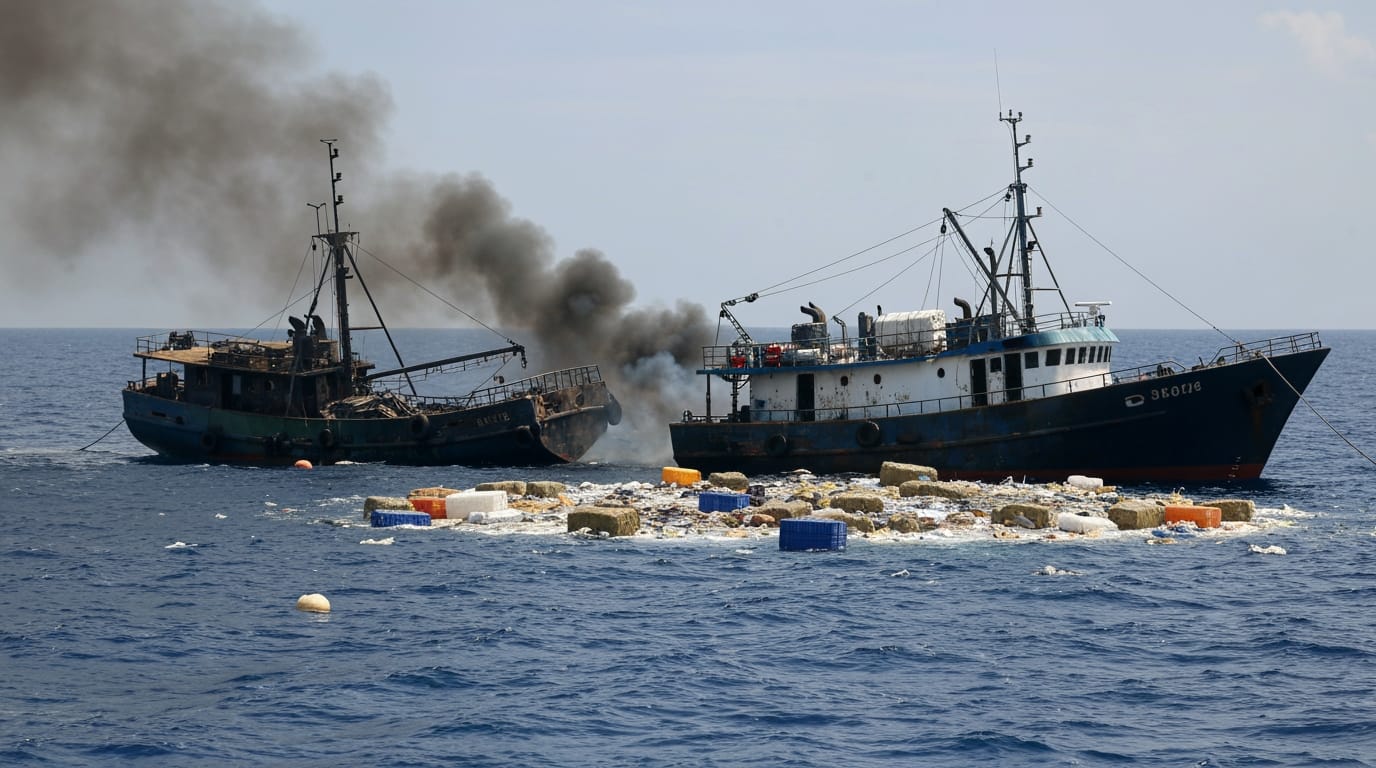
A dramatic escalation in U.S. counter-narcotics operations at sea has triggered a profound international legal and humanitarian controversy, as American forces increasingly employ lethal force against suspected drug trafficking vessels in the Caribbean and Eastern Pacific. This shift from traditional law enforcement interdiction to military-style strikes has resulted in a significant death toll and drawn sharp criticism from human rights advocates, international law experts, and even allied nations, who question the legality and long-term efficacy of these aggressive tactics. Since September 2025, U.S. forces have reportedly carried out dozens of these strikes, killing well over 100 individuals and fundamentally altering the landscape of the global war on drugs.
Escalation on the High Seas: A Shift in US Counter-Narcotics Strategy
For decades, the United States Coast Guard and Navy have played a crucial role in disrupting the flow of illicit drugs across vast oceanic expanses, primarily through interdiction operations involving boarding, searching, and seizing vessels suspected of trafficking. These operations historically aimed to apprehend suspects and contraband, leading to prosecution in U.S. courts under statutes like the Maritime Drug Law Enforcement Act (MDLEA). However, a pronounced shift began in September 2025, spearheaded by the Trump administration, which declared an explicit "non-international armed conflict" against certain drug cartels, notably Venezuela's Tren de Aragua. This recharacterization of drug trafficking from a criminal enterprise to a national security threat has opened the door to the deployment of military assets and the authorization of kinetic force, including airstrikes and missile attacks, against suspected drug boats.
This new approach has been swiftly implemented. By November 2025, reports indicated at least 20 strikes on 21 vessels, resulting in approximately 80 deaths. By December, the number of strikes had reportedly climbed to 25, with 95 fatalities. More recent figures, updated to April 2026, suggest at least 51 vessels attacked and 178 people killed, including specific incidents where multiple individuals were killed in single operations. These operations, often occurring off the coast of Venezuela, have involved the U.S. Navy, Air Force, Marine Corps, and Coast Guard, sometimes with law enforcement detachments aboard Navy ships. The administration asserts these actions are critical to combatting the flow of drugs, which it links to thousands of deaths in the United States, and claims to have "every authorization needed" for the strikes.
The Legal Battleground: International Law Under Scrutiny
The legality of these U.S. strikes has become a focal point of international debate, drawing widespread condemnation from legal scholars, human rights organizations, and international bodies. The primary U.S. justification frames these actions as exercises in national self-defense under Article 51 of the UN Charter, claiming that drug cartels like Tren de Aragua constitute "non-state actors" engaged in an "armed attack" against the United States. This argument is further bolstered by the designation of certain cartels as "foreign terrorist organizations." Another legal rationale invoked is the "unwilling or unable" doctrine, which suggests a state may use military force in another country if the host state is unable or unwilling to prevent non-state actors from launching attacks.
However, critics overwhelmingly challenge these justifications. The UN High Commissioner for Human Rights, Volker Türk, publicly stated that the strikes "violate international human rights law" and urged an immediate halt, emphasizing that countering illicit drug trafficking is a law enforcement matter, not an armed conflict. International law experts contend that drug smuggling, while a serious crime, does not constitute an "armed attack" sufficient to trigger the right of self-defense under Article 51. They argue that the application of a "war" paradigm to criminal networks undermines the foundational distinction between law enforcement and warfare, eroding humanitarian norms and the rule of law.
Furthermore, the strikes raise serious questions regarding sovereignty and due process. International law, particularly the UN Convention on the Law of the Sea (UNCLOS) – to which the U.S. is bound by customary rules despite not being a party – generally prohibits states from interfering with foreign-registered vessels on the high seas without the flag state's consent. While the U.S. uses "shiprider agreements" to gain consent for law enforcement interdictions, critics argue these do not extend to authorizing lethal military strikes. The destruction of vessels and killing of occupants without due process, identification as combatants, or clear evidence of an imminent threat, is viewed by many as extrajudicial killing and a violation of the right to life.
Human Cost and Geopolitical Ripples
The human cost of this aggressive policy is a central point of contention. With estimates of fatalities ranging from 60 to 178 people since September 2025, concerns are mounting over the potential for civilian casualties. Families of those killed have denied their relatives' involvement in drug trafficking, and some reports suggest that fishermen may have been among the deceased. A particularly disturbing allegation involves a "double tap" strike, where survivors of an initial attack were reportedly targeted again, raising further questions about accountability and adherence to international humanitarian law.
The international community has not remained silent. Beyond the UN Human Rights Chief's condemnation, G7 foreign ministers have questioned the legality of the U.S. actions, with France's Foreign Minister criticizing them for potentially destabilizing the region. Colombia and Venezuela have accused the U.S. of extrajudicial murder, while international legal experts and human rights groups warn of a dangerous precedent. The unilateral nature of these strikes, conducted without broad international consensus or public evidence supporting the "armed conflict" designation, risks undermining U.S. credibility and fostering distrust among allies.
The Effectiveness Debate and Future Implications
The strategic effectiveness of these lethal maritime strikes in significantly curbing the drug trade is also under debate. While proponents argue that kinetic force deters smugglers and signals resolve, critics suggest that targeting transporters at the lowest rungs of the criminal hierarchy does little to dismantle the sophisticated networks that fund and arm cartels. History suggests that when pressure is applied primarily to the supply side, black markets tend to evolve and adapt rather than disappear, with cartels readily replacing lost personnel and innovating smuggling techniques, including the increased use of semi-submersibles and low-profile vessels (LPVs) that are difficult to detect.
Drug seizure data provides a complex picture. While the U.S. Coast Guard has historically achieved significant interdictions, with one deployment reportedly seizing 49,000 pounds of cocaine in November 2025 and 150 metric tons in fiscal year 2022, overall cocaine seizures in the coastal/interior region saw a notable decline from August 2025 to January 2026. Experts suggest this reduction in seizures might not indicate a decrease in overall drug flow but rather a "jurisdictional and operational transition" where traditional interdiction efforts by agencies like Customs and Border Protection have been displaced by the military and Coast Guard's new approach. This raises questions about whether the strategy is truly effective in reducing the total volume of drugs entering the U.S. or merely shifting the methods and locations of trafficking.
Balancing Security and Sovereignty in the Global Drug War
The U.S. strikes on suspected drug boats represent a significant and controversial shift in its approach to counter-narcotics, moving towards a militarized response that challenges established norms of international law. The tension between the imperative to combat transnational criminal organizations and the adherence to principles of state sovereignty, human rights, and due process remains at the core of this unfolding legal firestorm. While the U.S. government maintains that its actions are a necessary response to a severe threat, the widespread concerns from international bodies and legal experts highlight the potentially dangerous precedent these strikes could set for the global legal order. The balance between national security objectives and international legal obligations in the complex fight against drug trafficking continues to be a profound challenge, demanding careful scrutiny and a commitment to accountability from all actors involved.


