Minneapolis Grapples with Dual Crises as Federal Immigration Crackdown Intensifies Amidst Evolving Crime Landscape
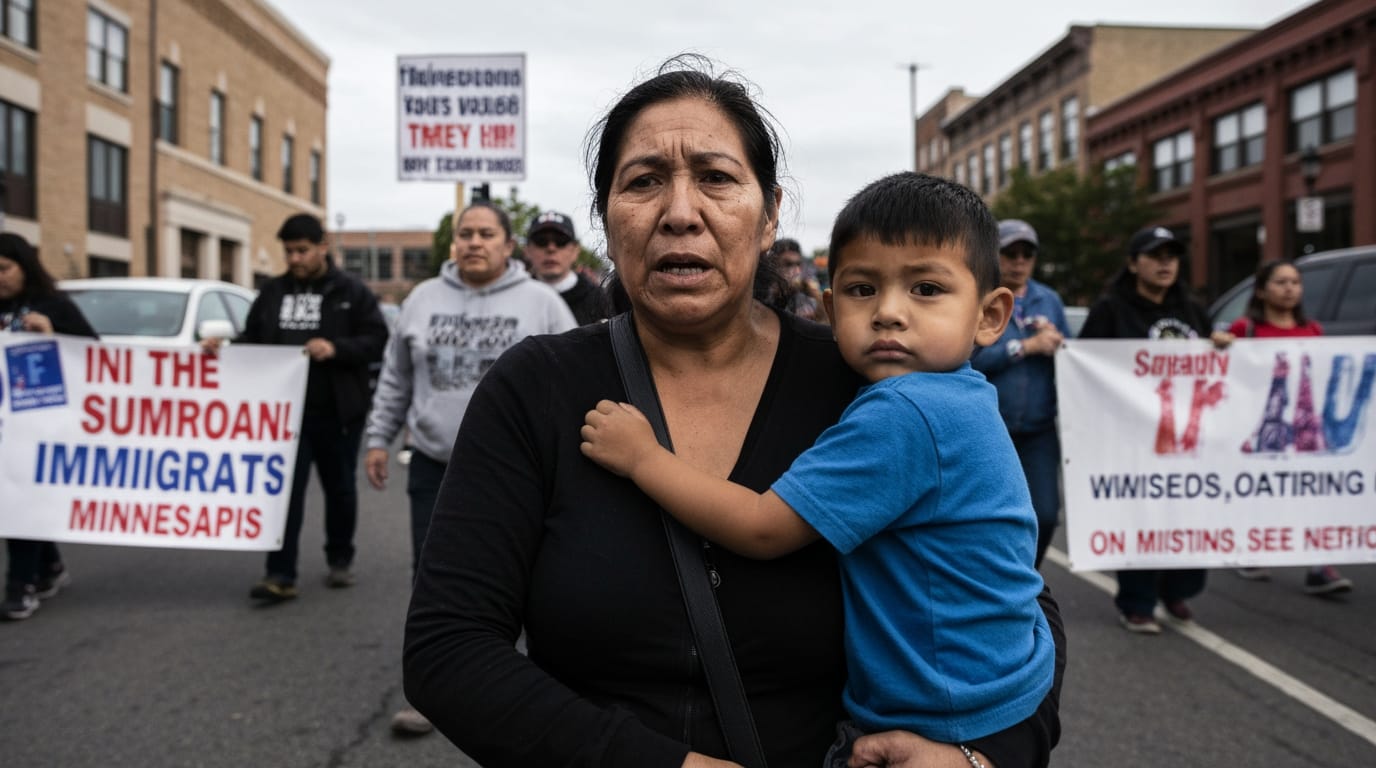
Minneapolis finds itself at the epicenter of a escalating conflict between federal immigration authorities and local governance, complicated by an evolving landscape of crime within the city. A sweeping federal immigration enforcement operation, dubbed "Operation Metro Surge," initiated in December 2025, has introduced thousands of federal agents into the Twin Cities, triggering widespread protests, accusations of excessive force, and a lawsuit from state and city officials. This federal push comes as Minneapolis grapples with its own public safety challenges, presenting a complex and often contradictory picture of security and justice in the urban core.
The highly visible presence of U.S. Immigration and Customs Enforcement (ICE) and Customs and Border Protection (CBP) agents has fundamentally altered the city's social and political climate. Intended to combat alleged fraud, human smuggling, and immigration violations, the operation has been criticized for overreach and for fostering an environment of fear that local leaders argue undermines public safety and strains community resources. Against this backdrop, the city's crime statistics reflect a mixed reality, with some categories of violent crime showing reductions even as federal intervention sparks its own brand of violence and civic unrest.
Minneapolis's Shifting Crime Portrait Amidst Federal Strain
Minneapolis has historically contended with significant violent crime rates, with figures three times higher than the Minnesota state average and nearly double the national average between 2008 and 2023. This period saw 73,702 violent crimes reported, including homicides, rapes, robberies, and aggravated assaults. However, recent data presents a more nuanced picture. In the early weeks of 2026, the city recorded decreases in homicides, shooting victims, and burglaries compared to previous years. Murder rates specifically saw a 16% reduction in 2025 compared to 2024, with gunshot wound victims down 18% since 2021. Robberies and carjackings also reportedly saw significant declines in 2025.
Despite these improvements in certain metrics, not all crime categories are trending downwards. Aggravated assaults and motor vehicle thefts have seen increases in early 2026, and domestic violence assaults were up 8% in 2025. Minneapolis Police Chief Brian O'Hara has attributed some of the positive shifts to "good police work," noting these gains come despite staffing shortages within the department and the "unprecedented operational demands" imposed by the federal immigration surge. This conflicting data point underscores the challenge of assessing public safety in a city under such intense scrutiny from multiple law enforcement agencies.
"Operation Metro Surge": A Federal Footprint Expands
"Operation Metro Surge" commenced in December 2025, initially focusing on the Twin Cities before broadening its scope across Minnesota. Described by ICE as the "largest immigration operation ever carried out," the initiative saw the deployment of as many as 2,000 federal agents from the Department of Homeland Security (DHS), ICE, and CBP, a number that subsequently swelled to over 3,000. This federal contingent now reportedly surpasses the combined police force of Minneapolis and Saint Paul.
The stated objectives of the operation include investigating allegations of fraud, human smuggling, unlawful employment practices, and other immigration law violations. While Homeland Security Investigations (HSI) agents are primarily tasked with fraud investigations, deportation officers are responsible for arrests related to immigration violations. DHS officials have asserted that the operation targets "the worst of the worst criminal illegal aliens". However, critics point out that many individuals apprehended during the surge reportedly have no prior criminal convictions, and the proportion of non-citizen immigrants without legal status in Minnesota is less than half the national average.
The crackdown has also been characterized by an increased use of "at-large" arrests in communities, contributing to a reported 2,450% increase in the detention of individuals without criminal records. Federal officials have also reported a dramatic surge in assaults against ICE officers (a 1300% increase), vehicular attacks (a 3200% increase), and death threats. DHS attributes this rise in aggression to "sanctuary politicians" and media portrayals that allegedly "demonize" law enforcement.
The Human Cost: Community Fear, Fatalities, and Strained Resources
The intensification of federal immigration enforcement has ignited profound apprehension within Minneapolis's immigrant communities, fostering an atmosphere of fear that extends irrespective of immigration status. This fear, as immigrant advocates and community leaders have warned, can severely undermine trust in law enforcement, potentially leading to a decrease in crime reporting and cooperation with local police, thereby hindering efforts to maintain overall public safety.
The operation has been marred by tragic incidents, including the fatal shootings of two U.S. citizens, Renee Good and Alex Pretti, by federal agents in January 2026. These incidents have fueled public outrage, sparking protests and vigils across the city and triggering legal challenges against federal actions. In one instance, a U.S. Border Patrol agent shot and killed Alex Pretti, a 37-year-old ICU nurse, an account that Minnesota Governor Tim Walz dismissed as "nonsense" after reviewing videos suggesting Pretti was holding only a cell phone, not a weapon, as claimed by federal agents.
Beyond direct confrontations, the federal surge has imposed tangible strains on municipal resources. Local law enforcement agencies have been compelled to divert personnel from routine duties, and Minneapolis police overtime has increased amid the demands of the federal presence. The economic impact has also been significant, with customer-facing businesses in Minneapolis reporting revenue decreases of 50-80% due to reduced patronage stemming from fear surrounding increased immigration enforcement activities. Schools have also faced disruptions, with some forced into lockdowns or temporary closures.
A City Fights Back: Official and Community Resistance
In a rare display of coordinated resistance, state and city officials have moved to actively challenge the federal immigration crackdown. Minnesota Attorney General Keith Ellison, alongside the cities of Minneapolis and Saint Paul, filed a federal lawsuit against DHS, seeking an immediate end to "Operation Metro Surge" and arguing its unconstitutionality. Minneapolis Mayor Jacob Frey has been outspoken in his condemnation, "demanding ICE leave Minneapolis immediately" and asserting that "ICE is making our city less safe right now". Mayor Frey also enacted an executive order, prohibiting federal officials from utilizing city property for staging areas during their operations.
Minnesota Governor Tim Walz has been equally critical, famously referring to ICE law enforcement as the "modern-day Gestapo". Community groups and rapid response teams have emerged, actively monitoring and documenting federal agent activities in immigrant neighborhoods, at times engaging in protests and demonstrations. Labor unions have also voiced concerns, alleging harassment of workers by federal agents and reporting the detention of their members. At the national level, prominent congressional Democrats have echoed calls for federal agents to withdraw from Minnesota and have threatened to withhold funding for DHS. This strong local opposition highlights a fundamental clash over jurisdiction, humanitarian concerns, and the role of federal agencies within a city.
Confronting Complex Realities and Conflicting Narratives
The ongoing situation in Minneapolis presents a multifaceted challenge where public safety, federal authority, and human rights intersect. While federal authorities maintain their operations are crucial for national security and public safety by targeting criminal elements, local and state officials argue that the aggressive tactics and perceived overreach by federal agents are counterproductive, erode community trust, and ultimately compromise the safety of all residents. Research consistently demonstrates that immigrants, including undocumented individuals, are statistically less likely to commit crimes than native-born citizens, with increased immigration often correlating with stable or even declining crime rates. This evidence directly challenges the premise that the immigration crackdown is a direct solution to rising violence.
As legal battles unfold and community tensions remain high, Minneapolis stands as a stark example of the complex and often contentious relationship between federal immigration policy and local governance. The city's journey through this dual crisis—managing an evolving crime landscape while confronting an unprecedented federal presence—will undoubtedly shape its future, underscoring the delicate balance required to ensure both security and justice for all its residents.


