A Nation's Enduring Quest for Justice: Retrial Concludes in Slovak Journalist's Murder, Mastermind Again Acquitted
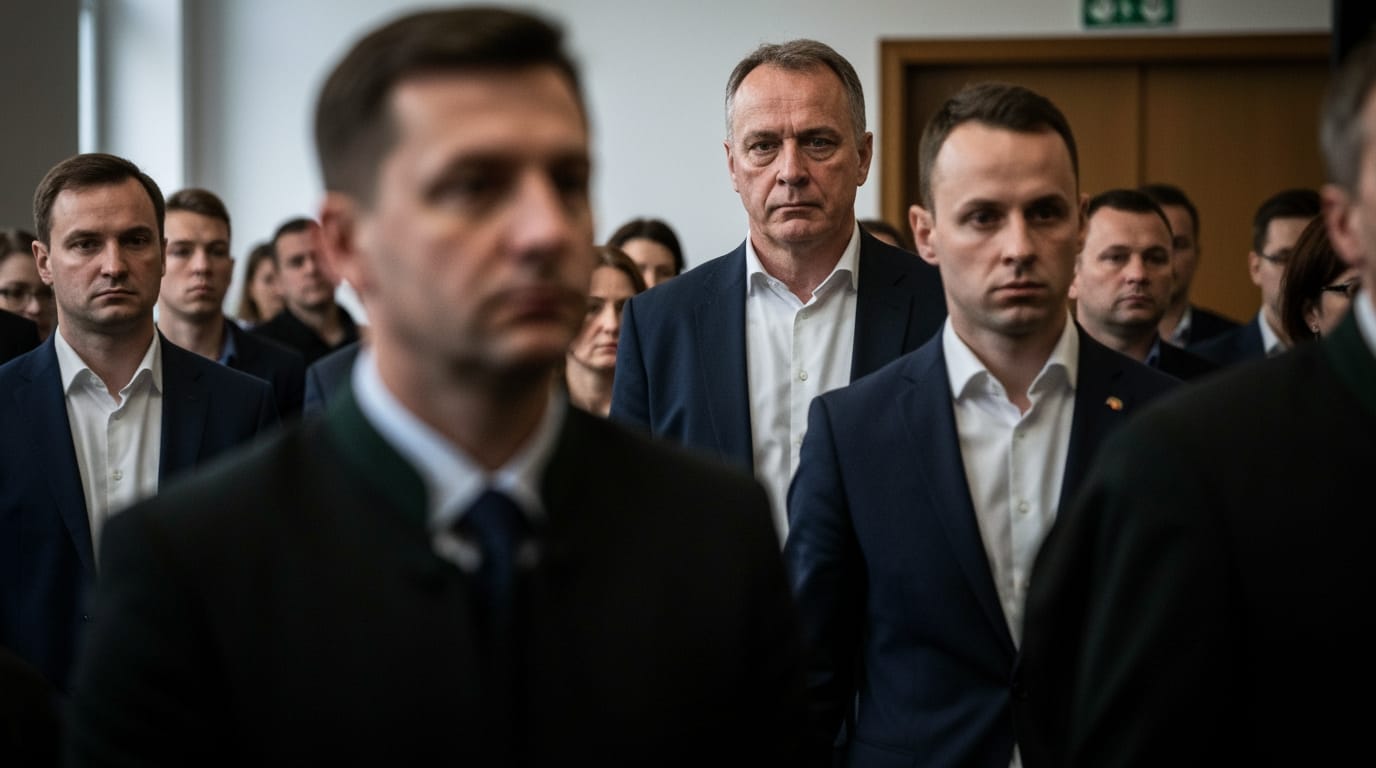
Bratislava, Slovakia – The deeply divisive retrial concerning the 2018 murders of investigative journalist Ján Kuciak and his fiancée Martina Kušnírová has culminated in a fresh verdict, once again acquitting alleged mastermind Marian Kočner of ordering the killings while convicting his associate, Alena Zsuzsová. This latest outcome, delivered in May 2023, marks another agonizing chapter in Slovakia's prolonged pursuit of justice, reigniting public debate and leaving the victims' families profoundly disappointed, even as they vow further appeals. The double murder, a brutal act that shook the foundations of Slovakian society, remains a defining moment for the young democratic nation, testing its commitment to the rule of law and the protection of journalistic freedom.
The Murders That Shook a Nation
On February 21, 2018, the quiet village of Veľká Mača was shattered by the discovery of two bodies: 27-year-old Ján Kuciak, an investigative journalist for the news website Aktuality.sk, and his fiancée Martina Kušnírová, both shot dead in their home. Kuciak was a dedicated reporter who focused on exposing tax fraud involving influential businessmen with alleged ties to high-level Slovak politicians. His investigations frequently delved into intricate networks of corruption and, critically, alleged links between organized crime, specifically the Italian mafia, and the Slovakian political and business elite. At the time of his death, Kuciak was working on a story detailing these connections, a piece posthumously published by his employer.
The murders ignited an unprecedented wave of public outrage, triggering mass demonstrations across Slovakia, the largest seen since the 1989 Velvet Revolution. Tens of thousands of citizens took to the streets, demanding accountability and an end to widespread corruption. The immense public pressure ultimately led to a significant political crisis, culminating in the resignation of Prime Minister Robert Fico and his entire cabinet in March 2018. The slayings served as a stark, violent reminder of the dangers faced by journalists exposing power, and underscored the fragility of democratic institutions when confronted by corruption and impunity.
The Initial Legal Battles and Controversial Acquittals
The investigation into the double homicide quickly identified several individuals believed to be involved. Zoltán Andruskó, a middleman in the plot, cooperated with investigators and was subsequently sentenced to 15 years in prison after pleading guilty to all charges. Miroslav Marček, the gunman, also confessed to the killings of Kuciak and Kušnírová, receiving a 23-year sentence which was later increased to 25 years. Tomáš Szabó, identified as the getaway driver, was convicted and sentenced to 25 years for his role.
However, the legal fate of the alleged masterminds proved far more contentious. In September 2020, following an initial trial that began in January 2020, businessman Marian Kočner and his associate Alena Zsuzsová were acquitted of ordering the murders by the Specialized Criminal Court in Pezinok. The court cited insufficient evidence to prove beyond a reasonable doubt that Kočner had orchestrated the killings, applying the legal principle of "in dubio pro reo" (where there is doubt, favor the accused). While Kočner was found guilty of a minor charge related to unauthorized carrying of weapons, receiving a fine, the acquittal on the murder charges sparked international outcry and profound disappointment among the victims' families and media freedom advocates. Martina Kušnírová's mother, Zlata Kušnírová, stated at the time that the decision was a "tremendous setback for the fight against impunity".
Supreme Court Intervention and the Path to Retrial
The acquittals of Kočner and Zsuzsová were met with widespread condemnation, with prosecutors swiftly filing an appeal. In a significant development in June 2021, the Slovak Supreme Court overturned the Specialized Criminal Court's verdicts for both Kočner and Zsuzsová. The Supreme Court critically determined that the lower court had not properly assessed all available evidence, including crucial communications sent by Kočner via WhatsApp and Viber, which prosecutors argued demonstrated his violent intentions.
The Supreme Court remanded the case back to the Specialized Criminal Court for a retrial, ordering the re-examination of the evidence. This decision was hailed by many as a vital step towards ensuring accountability and justice, offering a renewed sense of hope for the victims' families. Zlata Kušnírová remarked that it was "the first shot in the dark for justice in Slovakia". The ruling highlighted the Supreme Court's commitment to a thorough and meticulous evaluation of all facts, recognizing the immense public interest and the implications for the country's judicial credibility.
The Second Trial and Its Divisive Outcome
The retrial against Marian Kočner and Alena Zsuzsová commenced in February 2022 at the Special Court for Organised Crime in Pezinok. This new phase of legal proceedings was particularly complex, as the case involving Kuciak's murder was linked to allegations of planned attacks against several prosecutors, including Maroš Žilinka, Peter Šufliarsky, and Daniel Lipšic. Prosecutors argued that Kočner had developed animosity towards these prosecutors due to their oversight of cases involving him or his associates, viewing Kuciak as an "enemy" after the journalist exposed his dealings.
After months of hearings, the Specialized Criminal Court delivered its second verdict on May 19, 2023. In a split decision, Marian Kočner was once again acquitted of ordering the murder of Ján Kuciak. Two of the three judges on the panel found him not guilty, while one judge, Jozef Pikna, expressed a dissenting opinion, convinced of Kočner's guilt. The court stated that it "was not proven" that Kočner was the mastermind, concluding that the concrete evidence necessary to rule beyond a reasonable doubt was not presented.
Conversely, Alena Zsuzsová was convicted of ordering Kuciak's murder, as well as the planned murders of two prosecutors, and sentenced to 25 years in prison. Despite her conviction, the court found no direct evidence linking Kočner to the specific act of ordering Kuciak's death through Zsuzsová, creating a perceived disconnect in the chain of command for many observers. The families of Ján Kuciak and Martina Kušnírová once again expressed profound disappointment, with Ján's father, Jozef Kuciak, stating, "There's no logic in it. I don't get it at all". Martina's mother, Zlata Kušnírová, declared their intention to appeal, calling the outcome "impossible" and "a shame for justice".
Broader Implications: Justice, Journalism, and Slovakian Society
The enduring saga of Ján Kuciak and Martina Kušnírová's murders and the subsequent legal battles have left an indelible mark on Slovakia. The case has become a symbol of the fight for media freedom, the struggle against corruption, and the profound challenges faced by judicial systems in confronting powerful, entrenched interests. While direct perpetrators have been sentenced, the repeated failure to secure a conviction against the alleged mastermind, Marian Kočner, has raised persistent questions about the reach of justice and the ability of the state to hold all responsible parties accountable.
The political fallout from the murders drastically reshaped Slovakia's landscape, ushering in a period of intense scrutiny on governance and public integrity. The case continues to serve as a stark reminder of the sacrifices made by investigative journalists globally and the critical importance of protecting their work. As the appeals process for the latest verdict continues, the eyes of Slovakia, and indeed the international community, remain fixed on the courts. The quest for complete justice for Ján and Martina is far from over, and its ultimate resolution will significantly shape public trust in the rule of law and the future of independent journalism in Slovakia.


