Iran Conflict Fractures BRICS Unity, Exposing Deep Geopolitical Fault Lines
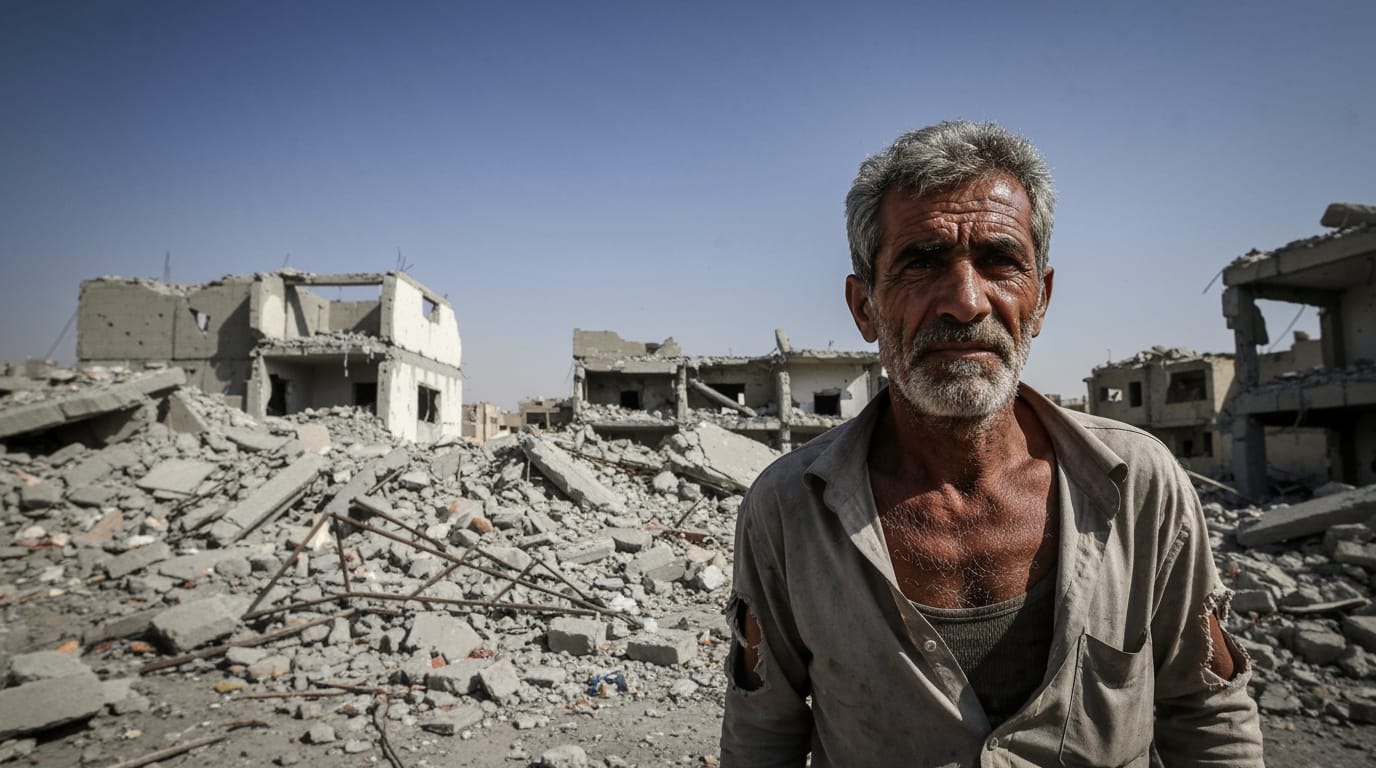
The escalating conflict involving Iran, marked by recent U.S. and Israeli strikes and subsequent Iranian retaliation, has thrust the expanded BRICS bloc into an unprecedented crisis, revealing profound divisions among its diverse members. Designed to challenge a unipolar world order, the grouping now grapples with its inability to forge a unified response, undermining its aspirations for global influence and exposing the inherent complexities of its rapid enlargement. The direct involvement of two newly admitted members, Iran and the United Arab Emirates, on opposing sides of the hostilities has brought the bloc's foundational principles under severe scrutiny.
The Unfolding Crisis and Internal Discord
The current geopolitical upheaval began with significant U.S. and Israeli military actions against Iran, including reports of strikes that resulted in the killing of Iran's Supreme Leader Ayatollah Ali Khamenei. In the immediate aftermath, Tehran launched retaliatory missile and drone strikes targeting American assets in the region, with several Gulf states, including the United Arab Emirates, also reportedly hit by these attacks. This "Iran war," as it has been termed by some analysts, immediately created a complex predicament for the recently expanded BRICS alliance.
BRICS, which originally comprised Brazil, Russia, India, China, and South Africa, underwent a significant expansion in late 2023 and early 2024, inviting countries like Iran, Saudi Arabia, the UAE, Egypt, and Ethiopia to join its ranks. This move was heralded as a step towards a more multipolar global order, intended to amplify the collective voice of the Global South. However, the conflict has pitted two of its newest members, Iran and the UAE, against each other, creating an almost insurmountable hurdle for any collective diplomatic action. The UAE, a key Gulf nation and economic powerhouse, finds itself directly impacted by Iran's retaliatory measures, jeopardizing the fragile regional stability that some BRICS members sought to foster.
A Coalition of Contradictions: The BRICS Expansion's Peril
The recent expansion of BRICS, while bolstering its demographic and economic footprint—now representing approximately 40% of the planet's population and nearly a quarter of global GDP—has simultaneously magnified its inherent challenges in achieving political cohesion. The bloc's strength lies in its economic diversity and shared ambition to reform global financial governance, yet its Achilles' heel remains the disparate geopolitical interests and foreign policy alignments of its members.
Within the BRICS framework, the responses to the Iran conflict have been anything but uniform. Russia and China, long-standing members with a declared objective of counterbalancing Western influence, have openly condemned the U.S. and Israeli military actions, framing them as violations of international norms and threats to regional stability. Both nations have deepened their strategic and economic ties with Iran, viewing Tehran as a crucial partner in their vision of a multipolar world. This alignment underscores their commitment to supporting states that resist perceived Western hegemony, even at the cost of internal BRICS unity.
In contrast, other significant BRICS players have adopted markedly different stances. India, currently holding the BRICS chairmanship, finds itself navigating a diplomatic tightrope. While maintaining historical ties with Iran and relying on Middle Eastern energy supplies, India also cherishes strategic partnerships with the United States and Israel. New Delhi has notably refrained from directly condemning the U.S. or Israeli actions, and has instead strengthened its defense and economic links with Israel, even condemning Iran's missile strikes on the UAE. This cautious approach reflects India's complex geopolitical calculus, aiming to preserve BRICS cohesion while safeguarding vital Western alliances. Similarly, Brazil, while joining Russia and China in condemning the initial U.S.-Israeli attacks, faces its own set of complicated positions, balancing its condemnation with other national interests.
The deep divisions extend to the new members from the Middle East. Saudi Arabia and the UAE, despite their recent accession, have sharply criticized Iran's retaliatory strikes, highlighting the inherent tensions between regional rivals now purportedly bound by a common BRICS identity. This internal discord within the bloc's newest cohort underscores the fragility of a unity built on diverse and often conflicting national interests.
The Silence of the Bloc: A Stress Test for Multipolarity
The most telling indicator of the BRICS fault lines has been the bloc's conspicuous inability to issue a joint statement or articulate a unified position on the escalating "Iran war." Despite the gravity of a conflict involving a permanent member and directly affecting another, the collective voice of BRICS has been largely silent. This diplomatic paralysis has drawn critical observation, with analysts suggesting that the bloc's rapid expansion has "outpaced its ability to speak as one".
Professor Sergey Toloraya of the Russian Academy of Sciences described the current situation as a "stress test" for BRICS, warning that internal divisions and regional conflicts are challenging its consensus-driven model. The traditional flexibility of BRICS, which previously allowed for differing geopolitical alignments among members, is now being strained to its limits as major crises demand clearer political positioning. The conflict compels members to take sides, making neutrality increasingly difficult to maintain amidst entangled energy markets, maritime trade routes, and financial systems.
For Iran, membership in BRICS was viewed as a strategic move to alleviate the pressure of Western sanctions, gain international legitimacy, and promote a non-dollarized global financial system. However, the economic benefits remain largely theoretical without a fundamental shift in its relationship with the West and a resolution to internal institutional challenges within BRICS itself. The conflict demonstrates that even within a bloc aiming to counter Western dominance, the realities of individual member state interests and bilateral relationships often take precedence over collective solidarity.
Whither BRICS: Fragmentation or Transformation?
The "Iran war" is forcing BRICS to confront a fundamental question about its future: Can it evolve from a platform primarily focused on economic cooperation to a cohesive geopolitical entity capable of responding to complex global crises? Experts propose various scenarios, ranging from a fragmentation into a mere dialogue forum, to a more China-centric bloc, or even a "two-speed" system with a core anti-Western group and more balanced members.
The current crisis highlights that BRICS is not a values-based coalition but rather a delicate balancing act among incompatible political systems. The diversity of its members' strategic interests makes a unified, interventionist foreign policy highly improbable. While Russia and China advocate for a more assertive, anti-Western stance, countries like India, Brazil, and South Africa are wary of actions that could jeopardize their relationships with Western powers or regional stability. The absence of a strong institutional architecture and the inequalities in economic development among members further complicate decision-making and collective action.
Ultimately, the Iran conflict has served as a crucible for the expanded BRICS. It has undeniably exposed the deep fault lines simmering beneath the surface of the aspirational bloc, testing its resilience and the very notion of a unified "Global South" challenging the established order. The long-term implications for BRICS will hinge on its capacity to adapt to a world where economic cooperation and geopolitical competition are increasingly intertwined, and whether its members can reconcile their divergent interests to maintain any semblance of collective influence on the global stage.


