Europe Grapples with Escalating War as Israel's Lebanon Offensive Drives Humanitarian Crisis
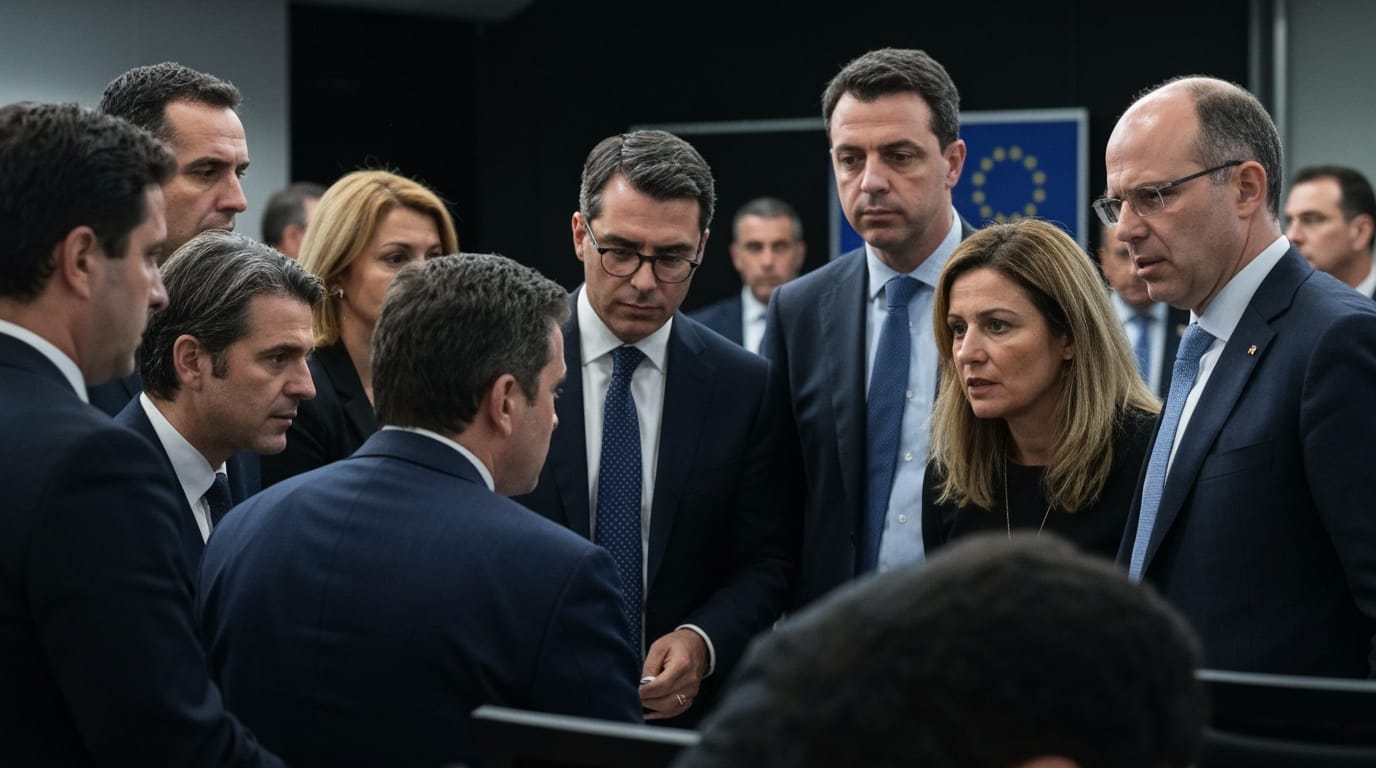
Brussels stands at a critical juncture, navigating a deepening conflict in the Middle East as Israel's military operations in Lebanon intensify, threatening wider regional destabilization and a worsening humanitarian catastrophe. What began as a series of cross-border exchanges has escalated into an ongoing war between Israel and the Lebanese Shia militant group Hezbollah since March 2, 2026, prompting urgent calls from European leaders for de-escalation and diplomatic engagement. The European Union, while affirming Israel's right to self-defense, has strongly condemned the "heavy-handed" nature of its response, underscoring the severe human cost and geopolitical risks involved.
The Descent into Open Conflict
The current hostilities were ignited on March 2, 2026, when Hezbollah launched missile and drone attacks on northern Israel. These actions, condemned by the Lebanese government itself, were reportedly in retaliation for the assassination of Iranian Supreme Leader Ali Khamenei by the US and Israel on February 28, 2026, marking a significant escalation in the broader regional conflict. Israel responded with intense airstrikes across Lebanon, including targeting Beirut, and commenced ground operations in southern Lebanon on March 16, 2026. The Israeli military has since pushed deeper into Lebanese territory, aiming to establish an expanded buffer zone and dismantle Hezbollah infrastructure, with officials stating their intention to continue operations until the threat posed by Hezbollah is eliminated. Hezbollah, in turn, has continued to launch rockets and drones towards Israel, escalating the cycle of violence. The Lebanese government has publicly denounced Hezbollah for initiating attacks without state authorization and has sought to ban the group's military activities, affirming that decisions of war and peace reside solely with the Lebanese state.
Humanitarian Catastrophe Unfolding
The human toll of the burgeoning conflict has been severe and immediate, precipitating a dire humanitarian crisis in Lebanon, a nation already contending with profound economic and political instability. As of March 18, 2026, over 886 people have been killed and more than 2,100 injured in Lebanon, with at least 111 children among the deceased. The relentless bombardments and ground incursions have forcibly displaced nearly 1 million people, constituting approximately 19% of Lebanon's total population. These internally displaced individuals are largely living in overcrowded conditions with limited access to essential services such as water, sanitation, and healthcare. International observers, including the UN human rights office, have decried Israeli rhetoric that suggested Lebanon could face destruction akin to that inflicted upon Gaza, labeling such statements "wholly unacceptable" and emphasizing the deep fear they instill among the Lebanese populace. Reports highlight widespread destruction of homes, farmland, and critical civilian infrastructure, exacerbating the challenges faced by aid organizations in delivering assistance.
Europe's Uneasy Stance
The European Union finds itself in a precarious diplomatic position, attempting to balance its recognition of Israel's security concerns with grave apprehensions over the escalating violence and its humanitarian consequences. EU foreign policy chief Kaja Kallas explicitly stated that while Israel possesses the right to self-defense, its response in Lebanon has been "heavy-handed" and "disproportionate." Kallas urged Israel to cease its operations in Lebanon, stressing that diplomatic solutions and a return to a ceasefire present the most viable path to prevent Lebanon from descending further into chaos.
A joint statement issued by the leaders of Canada, France, Germany, Italy, and the United Kingdom on March 16, 2026, conveyed "grave concern" over the escalating violence. They unequivocally condemned Hezbollah's attacks on Israel and its civilian targets, calling for the group's disarmament. Simultaneously, these European leaders cautioned that a significant Israeli ground offensive would entail "devastating humanitarian consequences" and could lead to a protracted conflict, emphasizing that such a scenario "must be averted." The EU has pledged emergency assistance to aid those affected by the conflict and has reaffirmed its steadfast support for the United Nations Interim Force in Lebanon (UNIFIL), underscoring the critical need to guarantee the safety and security of peacekeepers. However, there are acknowledged internal divisions within the EU regarding a unified approach to Israel's military actions, reflecting the complex interplay of human rights concerns, economic interests, and strategic alliances.
Regional Quakes and Global Reverberations
The ongoing conflict between Israel and Hezbollah is not an isolated event but a critical component of a broader, volatile regional landscape, with profound geopolitical and economic ramifications extending far beyond the immediate battle zones. The initial US-Israeli strikes on Iran, which preceded Hezbollah's entry into the current conflict, have set off a chain reaction across the Middle East. Concerns are mounting regarding the potential for wider regional destabilization, drawing in other actors and further complicating an already intricate web of alliances and antagonisms.
Economically, the conflict has already begun to send ripples through global markets. Reports indicate a surge in oil prices, with Brent crude exceeding $100 per barrel, and increased shipping costs due to disruptions in strategic waterways like the Strait of Hormuz. These economic shocks threaten to exacerbate global inflationary pressures and disrupt supply chains, impacting economies worldwide. For Lebanon, the economic impact is particularly devastating; the nation's already fragile economy, which has seen its GDP plummet and currency devalue significantly in recent years, faces further collapse. The destruction of infrastructure and widespread displacement will incur immense reconstruction costs and perpetuate a cycle of poverty and instability.
A Desperate Plea for Diplomacy
As the Israeli-Lebanese conflict continues its dangerous trajectory, the calls for an immediate cessation of hostilities and a robust diplomatic effort have grown increasingly urgent. The EU, alongside other international bodies, emphasizes that only a sustainable political solution, achieved through meaningful engagement between all parties, can avert a full-scale regional conflagration and mitigate the catastrophic humanitarian consequences. The stakes are exceptionally high, with the lives of millions hanging in the balance and the stability of an already volatile region teetering on the brink. The international community's ability to broker peace and ensure adherence to international humanitarian law will be critical in determining whether this latest chapter of conflict spirals into an even more devastating regional war.


