Russian Orthodox Church Ignites Canonical Storm with Rapid African Expansion
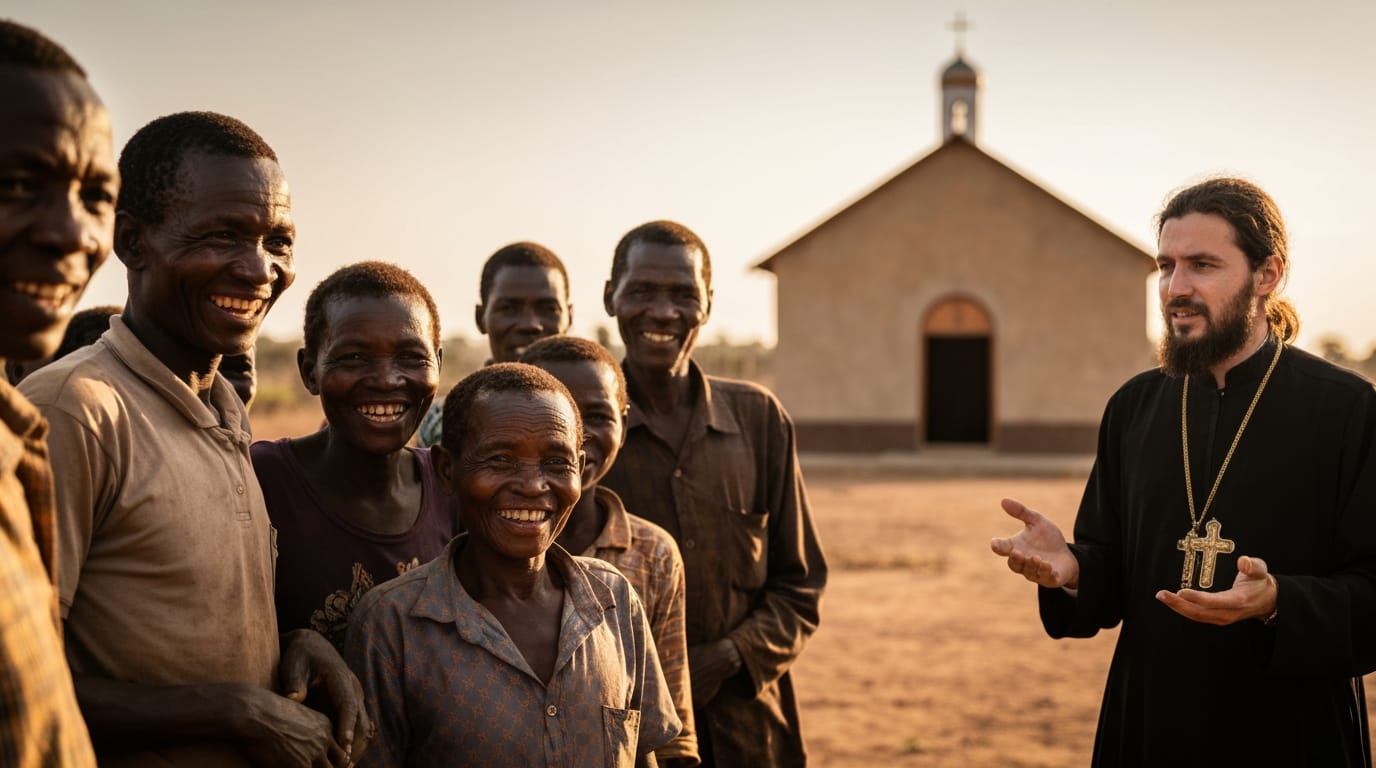
The Russian Orthodox Church has dramatically expanded its presence across Africa, establishing hundreds of new parishes and drawing thousands of congregants in a move that has deepened an existing schism within global Orthodoxy and sparked accusations of geopolitical maneuvering. This rapid expansion, initiated in late 2021, directly challenges the ancient Patriarchate of Alexandria and All Africa, which has historically held canonical jurisdiction over the continent for centuries. The development reflects a complex interplay of religious doctrine, political rivalry, and Russia’s broader efforts to cultivate influence in Africa amid shifting global alliances.
A New Ecclesiastical Front Opens in Africa
The Moscow Patriarchate formally established its Patriarchal Exarchate of Africa on December 29, 2021, a direct response to the Patriarchate of Alexandria’s recognition of the independent Orthodox Church of Ukraine (OCU) in 2019. Moscow viewed Alexandria's decision as a profound betrayal and an "ecclesiastical coup" against its authority, leading to the severing of relations between the two ancient Orthodox centers. The Russian Orthodox Church's Holy Synod subsequently created two dioceses within its new African Exarchate: the North African Diocese, centered in Cairo, and the South African Diocese, headquartered in Johannesburg.
Since its inception, the Exarchate has experienced unprecedented growth. By July 2023, the Russian Orthodox Church reported opening over 200 parishes across 25 African countries. This rapid influx continued, with official data in February 2025 indicating approximately 350 parishes in 34 countries, served by more than 250 priests. This marks potentially the most extensive territorial expansion in the Russian Church's history. Historically, the Russian Orthodox Church's presence in Africa was limited, primarily serving Russian emigrants in a handful of parishes established as early as the late 19th and early 20th centuries.
Beyond Faith: Geopolitical Ambitions and Financial Incentives
The sudden and extensive incursion by the Russian Orthodox Church into Africa is widely interpreted as a multifaceted strategic maneuver with significant geopolitical underpinnings. Analysts suggest the expansion serves as a soft power tool for Russia, aiming to enhance its image and expand state influence on the continent. This aligns with Russia’s broader foreign policy objectives in Africa, which include military cooperation and economic ties.
The Moscow Patriarchate's efforts are reportedly backed by Kremlin-linked entities, providing financial support for its operations. This backing enables the Russian Orthodox Church to offer financial incentives, such as higher pay and funding for church construction, which have reportedly drawn priests away from the Patriarchate of Alexandria. Reports indicate that over 100 African clerics had transferred their allegiance to the Moscow Patriarchate by late 2020, even before the formal establishment of the Exarchate. Beyond religious services, the Russian Exarchate engages in humanitarian and educational projects, including translating religious texts into local languages. The Church also operates in coordination with Russian cultural centers, known as "Russian Houses," and promotes Russian language and culture in African universities. This blend of religious outreach and cultural diplomacy seeks to foster conservative, anti-Western alliances and solidify Russia's global standing.
Alexandria's Anguish: A Violation of Canonical Order
For centuries, the Patriarchate of Alexandria and All Africa has been recognized as the sole canonical Eastern Orthodox Church with jurisdiction over the entire African continent, tracing its origins back to Saint Mark the Evangelist in the first century. This long-standing authority means the Russian Orthodox Church's actions are seen not merely as competition but as an "uncanonical incursion" and a severe violation of Orthodox ecclesiastical law and order.
Patriarch Theodore II of Alexandria has vehemently condemned Moscow's actions, describing them as "illegal and invalid" and driven by a "vengeful" spirit. He has taken steps, including unfrocking Russian exarchs in Africa, to challenge the expansion, though the results of these actions have been ambiguous. The Ecumenical Patriarch Bartholomew of Constantinople, considered the "first among equals" in Orthodox hierarchy, has also strongly denounced Moscow's moves, emphasizing the damage inflicted on Church unity. The Patriarchate of Alexandria maintains that Moscow's justification for its actions—claiming a need to provide pastoral care to African Orthodox clergy who disagreed with Alexandria's stance on Ukraine—is specious and self-serving. This conflict has further exacerbated divisions within the global Orthodox community, already strained by the Ukrainian autocephaly issue.
The Human Cost and Future Implications
Beyond the ecclesiastical and geopolitical battles, the Russian Orthodox Church's African expansion has raised concerns about potential human costs. Reports have emerged detailing allegations that some African converts to the Russian Orthodox Church have been lured to Russia with promises of employment, only to be subsequently forced into military service in Ukraine. The case of Charles Waithaka Wangari, a Kenyan who reportedly died in Ukraine in late 2025 after being recruited through church-linked contacts, has drawn significant attention. Human rights organizations indicate that Wangari's case might not be isolated, suggesting that hundreds of Kenyan families have sought assistance after their sons traveled to Russia under similar arrangements. These allegations underscore the darker implications of the intertwining of religious outreach with geopolitical strategies.
The ongoing struggle between the Moscow Patriarchate and the Patriarchate of Alexandria over Africa represents a critical moment for global Orthodoxy and for the continent itself. While Moscow asserts its right to offer spiritual guidance and support, Alexandria views this as an unprecedented and uncanonical challenge to its ancient authority. The expansion serves as a stark reminder of how religious institutions can become instruments in broader international power dynamics, with potential consequences for both faith communities and regional stability. The future of Orthodox Christianity in Africa, and indeed the unity of the wider Orthodox world, remains uncertain as this complex ecclesiastical and geopolitical contest continues to unfold.


