Poland Weighs Mandatory Health Education Amidst Deep Societal Divide
WARSAW, Poland – A pivotal decision is expected by the end of March that could fundamentally reshape health education in Polish schools, as Education Minister Barbara Nowacka prepares to announce whether the newly introduced subject will become compulsory. The move comes after a year of intense public debate, political infighting, and widespread protests surrounding a curriculum that, despite its broad scope, has been largely overshadowed by controversy over its sex education components.
The new "Health Education" subject, launched in September 2025 to replace the former "Family Life Education" classes, was initially slated to be mandatory. However, a significant public outcry from conservative, religious, and parent groups led to its provisional implementation as a voluntary subject. Now, the Polish government faces the challenge of reconciling divergent views on a subject proponents argue is vital for youth well-being and health literacy, while opponents decry it as a vehicle for ideological indoctrination.
The Genesis of a New Curriculum
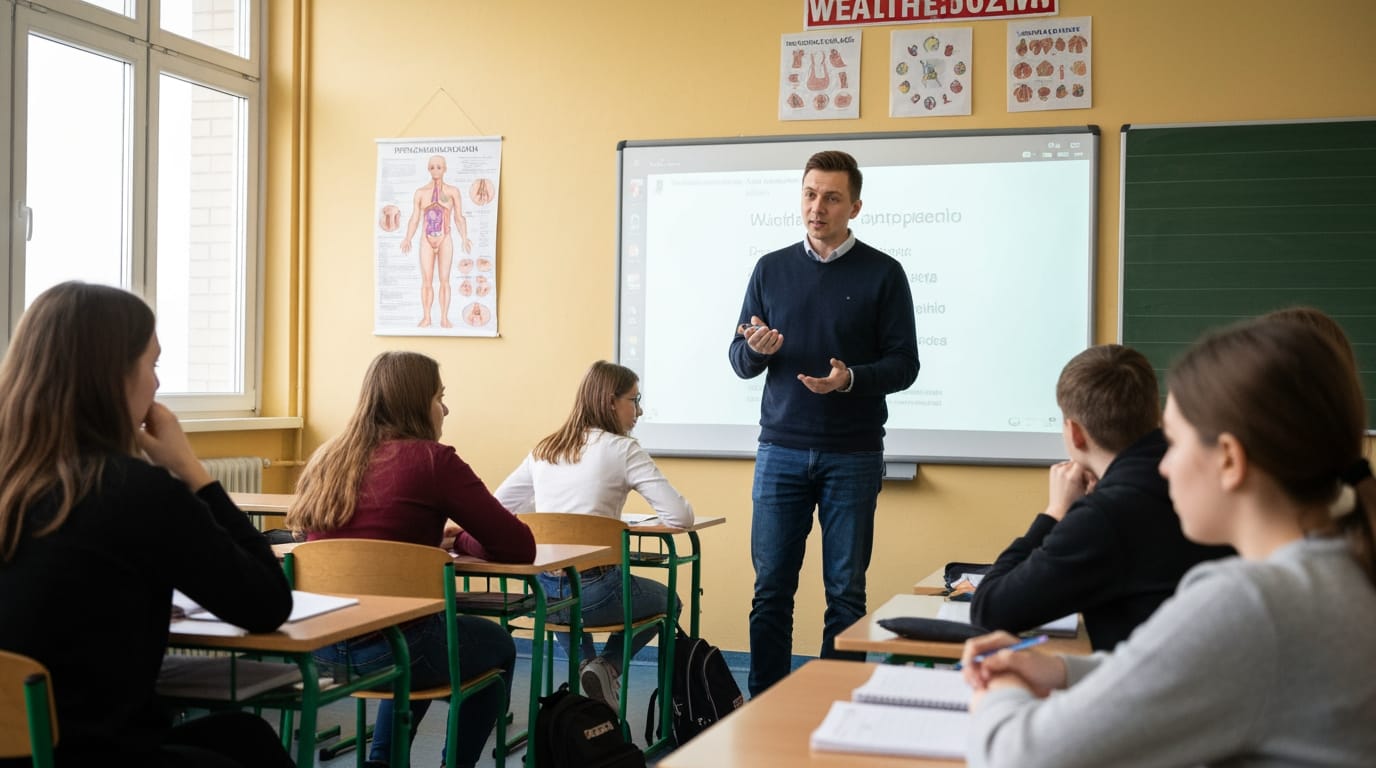
The Ministry of National Education, led by Minister Nowacka, introduced "Health Education" with the aim of equipping young Poles with essential life skills and comprehensive health knowledge. The curriculum is designed to be holistic, covering 11 thematic blocks that extend far beyond traditional biology lessons. These include physical and mental health, nutrition, physical activity, online safety, addiction prevention, environmental health, puberty, the healthcare system, and crucial social skills such as communication and stress management. Minister Nowacka has described it as "the best-prepared curriculum in years," emphasizing its role in fostering informed health decisions and combating health-related misinformation in an increasingly digital world. The program was launched in primary and secondary schools, targeting students from grades 4-8 and 1-3 respectively.
A Deeply Divided Nation: Arguments For and Against
The push for compulsory health education is rooted in the belief that robust health literacy is fundamental for individual and public well-being. Proponents, including Professor Dariusz Jemielniak, Vice President of the Polish Academy of Sciences, highlight research indicating that higher health literacy correlates with reduced susceptibility to health conspiracy theories and harmful online trends. Experts also point to alarming statistics regarding the deteriorating mental health of Polish children and adolescents, including a rising number of suicide attempts, as a compelling reason for comprehensive school-based support. They argue that a lack of knowledge often forces young people to seek information from unreliable sources, increasing risks to their health and safety.
However, the curriculum, particularly its inclusion of topics related to sexuality, sparked fierce resistance from conservative circles. Groups such as the Catholic Church and the opposition Law and Justice (PiS) party vehemently argued that elements concerning sex education were "anti-family," "gender destabilizing," and promoted "liberal-left indoctrination" inconsistent with traditional or religious beliefs. They contend that discussions about sexuality fall squarely within the purview of parental responsibility, not the state's. These concerns led to organized protests and explicit calls for parents to withdraw their children from the classes. Some critics, as noted by Professor Jemielniak, even spread misinformation, claiming the curriculum would include lessons on topics like masturbation, which were not part of the syllabus.
The Compromise and Its Consequences
The initial plan to make health education mandatory was abandoned in January 2025, when it was formally designated as an optional subject. This decision, according to Minister Nowacka, was a strategic move to de-escalate social tensions and protect schools from political conflict, reflecting a political compromise within the multi-party ruling coalition. Deputy Prime Minister Władysław Kosiniak-Kamysz, from the more conservative Polish People's Party (PSL), publicly supported the voluntary approach, emphasizing the importance of parental rights. Prime Minister Donald Tusk also voiced support for the voluntary nature, encouraging parents to review the curriculum before deciding.
The impact of this compromise became evident in November 2025 when nationwide data revealed that less than a third (approximately 30%) of eligible students participated in the voluntary health education classes. While attendance was higher in primary schools (40.36%) and in Poland's more liberal western provinces, it dropped significantly in secondary schools and in the more conservative eastern regions. This low uptake fueled renewed calls from student organizations, such as Akcja Uczniowska, to reinstate compulsory status, arguing that the subject's potential benefits were being undermined by its optional nature.
Awaiting the Final Verdict
As March 2026 draws to a close, all eyes are on Education Minister Barbara Nowacka for the definitive announcement regarding the future of health education. She has repeatedly stated that a decision on making the subject mandatory will be made by the end of the month. Nowacka has expressed her hope for "social consensus" that would allow health education to become a permanent and compulsory fixture in Polish schools. The Minister also indicated that the future of the subject would be influenced by an evaluation period conducted by teachers.
The impending decision carries significant weight. A move to make the subject compulsory would likely reignite fierce opposition, particularly from conservative groups who view it as an encroachment on family values. Conversely, maintaining its voluntary status could continue to limit its reach, potentially leaving a substantial portion of Polish youth without access to crucial health information and skills. The outcome will not only shape the educational landscape but also reflect the delicate balance between public health imperatives and deeply entrenched societal values in Poland.