Pyongyang's Unwavering Gaze: North Korea Extracts Critical Lessons from Global Conflicts
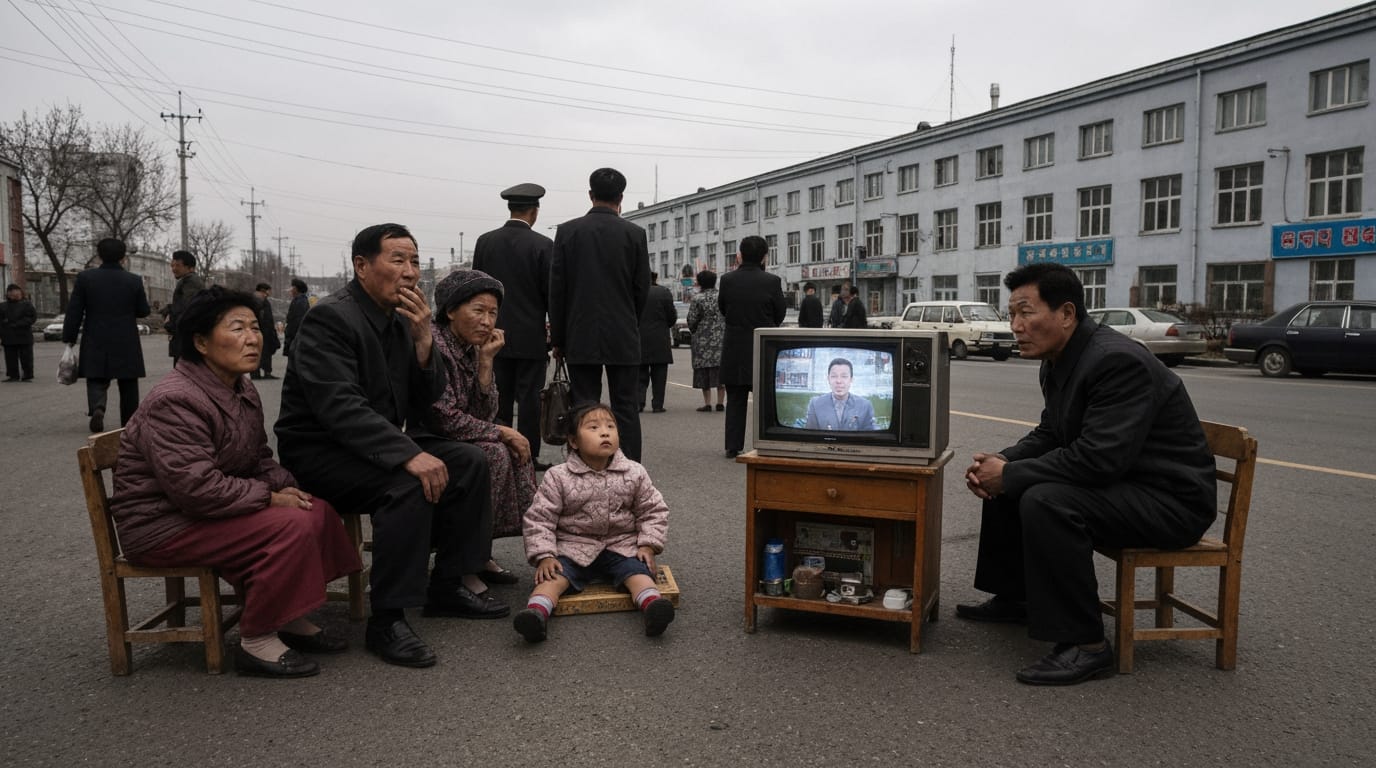
In the volatile landscape of international geopolitics, North Korea maintains an acute focus on global conflicts, meticulously scrutinizing military engagements involving the United States to refine its own strategic posture and ensure regime survival. Recent events, including reported U.S.-Israel strikes on Iran, have served to reinforce Pyongyang's long-held convictions regarding the indispensable role of nuclear weapons and advanced military capabilities as ultimate deterrents against external aggression. This persistent doctrine of observation and adaptation shapes North Korea's military development and diplomatic calculus, presenting formidable challenges to regional stability and denuclearization efforts.
A Doctrine Forged in Conflict
North Korea's approach to national security is deeply rooted in a history of perceived threats and a firm belief in self-reliance, known as Juche, coupled with a military-first policy, or Songun. This ideological framework compels the regime to view international military interventions, particularly those led by the United States, as critical case studies for its own defense strategy. From the Iraq War to more recent conflicts, Pyongyang has consistently drawn lessons, concluding that a strong military, especially one armed with nuclear capabilities, is the sole guarantor of its sovereignty. The official daily of the ruling Korean Workers' Party, Rodong Sinmun, underscored this sentiment during the Iraq War, claiming that Iraq's fate served as a warning against capitulation to "imperialist demands" and emphasizing that compromising revolutionary principles could lead to disaster. Such analyses invariably reinforce North Korea's resolve to never relinquish its own nuclear arsenal.
The Indispensable Nuclear Shield
The reported U.S.-Israel strikes on Iran in June 2025, and the broader "Iran conflict" occurring as of early 2026, have been particularly influential in hardening North Korea's nuclear posture. Analysts widely assess that these events underscore for Pyongyang the "value of deployed nuclear weapons in deterring potential attacks from the United States," a lesson also drawn from U.S. actions in Libya in 2011. This reinforces Kim Jong Un's often-stated position that he will not negotiate away his nuclear arsenal, seeing a nuclear force as "more protective" than the "hedging" strategy perceived to have failed Tehran. North Korea has openly condemned the U.S. and Israeli actions against Iran as "illegal aggression" and "gangster-like conduct," further solidifying its stance that regimes without nuclear weapons are vulnerable. The belief that nuclear weapons are the "ultimate guarantor of regime survival" is now more entrenched than ever within the Kim regime's strategic thinking.
Pyongyang's nuclear strategy aims for a "survivable deterrent capability" to ensure that a portion of its nuclear forces could retaliate even after an initial attack, thereby making a first strike against it too costly for any adversary. This objective has propelled a significant focus on developing tactical nuclear weapons, listed as a top priority in North Korea's strategic planning. These tactical nukes, along with larger warheads, are intended to provide both a deterrent against full-scale conflict and potential options for "assumed battles" in localized war scenarios. North Korea's ongoing expansion of nuclear enrichment facilities, such as those at Yongbyon, further illustrates its commitment to bolstering its nuclear arsenal.
Strategic Adaptations and Missile Proliferation
Beyond nuclear weapons themselves, North Korea meticulously extracts operational and tactical lessons from global conflicts to refine its conventional and unconventional military capabilities. The "Iran case" is believed to have highlighted potential vulnerabilities in leadership and road-mobile missile systems, prompting North Korea to consider increasing its stockpiles of conventional missiles, drones, and counter-drone technologies. There is an anticipated push for more solid-propellant missiles and road-mobile launchers, along with a possible strategy to construct numerous smaller, dispersed bunkers to protect these assets from attack, given the apparent success of attacks on Iran's underground "missile cities."
Recent military drills and pronouncements by North Korean state media underline these adaptations. Leader Kim Jong Un has observed live-fire tests of multiple rocket launch systems, which experts note blur the lines between artillery and ballistic missiles and are capable of delivering nuclear warheads. Furthermore, North Korea has conducted missile tests from naval destroyers, explicitly stating its intention to "arm the Navy with nuclear weapons." These developments are often framed as direct responses to ongoing joint military exercises between the U.S. and South Korea, which Pyongyang views as rehearsals for invasion.
Echoes Across the Indo-Pacific
The perceived "Iran war" and the resulting shifts in U.S. military posture have not gone unnoticed by Washington's allies in the Indo-Pacific. The redeployment of crucial assets, such as elements of the Terminal High Altitude Area Defense (THAAD) system from the Korean Peninsula, has raised concerns in South Korea and Japan regarding the U.S. capacity to maintain deterrence in Asia while simultaneously engaged in a major conflict elsewhere. Allies are reassessing the "reliability and limits of the American security umbrella," creating an environment where China or North Korea could potentially "exploit the moment."
For North Korea, U.S. military buildups, even those ostensibly for exercises, are frequently interpreted as precursors to attack, fueling its long-standing anti-U.S. rhetoric and justifying its "more aggressive actions." This dynamic of observation and reaction means that current international events, particularly those involving direct U.S. military engagement, tend to reinforce North Korea's isolationist stance and its determination to pursue an ever-stronger military. U.S. actions abroad, such as the reported military operations in Iran, may ultimately disincentivize North Korea from engaging in dialogue, instead strengthening its resolve to expand its nuclear deterrent and deepen alliances with "anti-imperialist and independent countries" like Russia and China.
A Hardened Resolve
In conclusion, North Korea's keen observation of international conflicts and U.S. military actions serves as a crucial feedback loop for its strategic decision-making. The "Iran conflict" has reinforced Pyongyang's core belief that nuclear weapons are the ultimate guarantor of regime survival, making it highly unlikely that the country will yield to pressure to denuclearize. Consequently, North Korea is expected to further intensify its efforts to expand and refine its nuclear and missile capabilities, including tactical nuclear weapons and advanced delivery systems. This persistent strategic adaptation, driven by a deep-seated conviction that only overwhelming force can ensure its security and protect its peace, solidifies a path that will continue to challenge global non-proliferation efforts and regional stability for the foreseeable future.