Minnesota Sues Federal Government Amid Escalating Immigration Enforcement Tensions
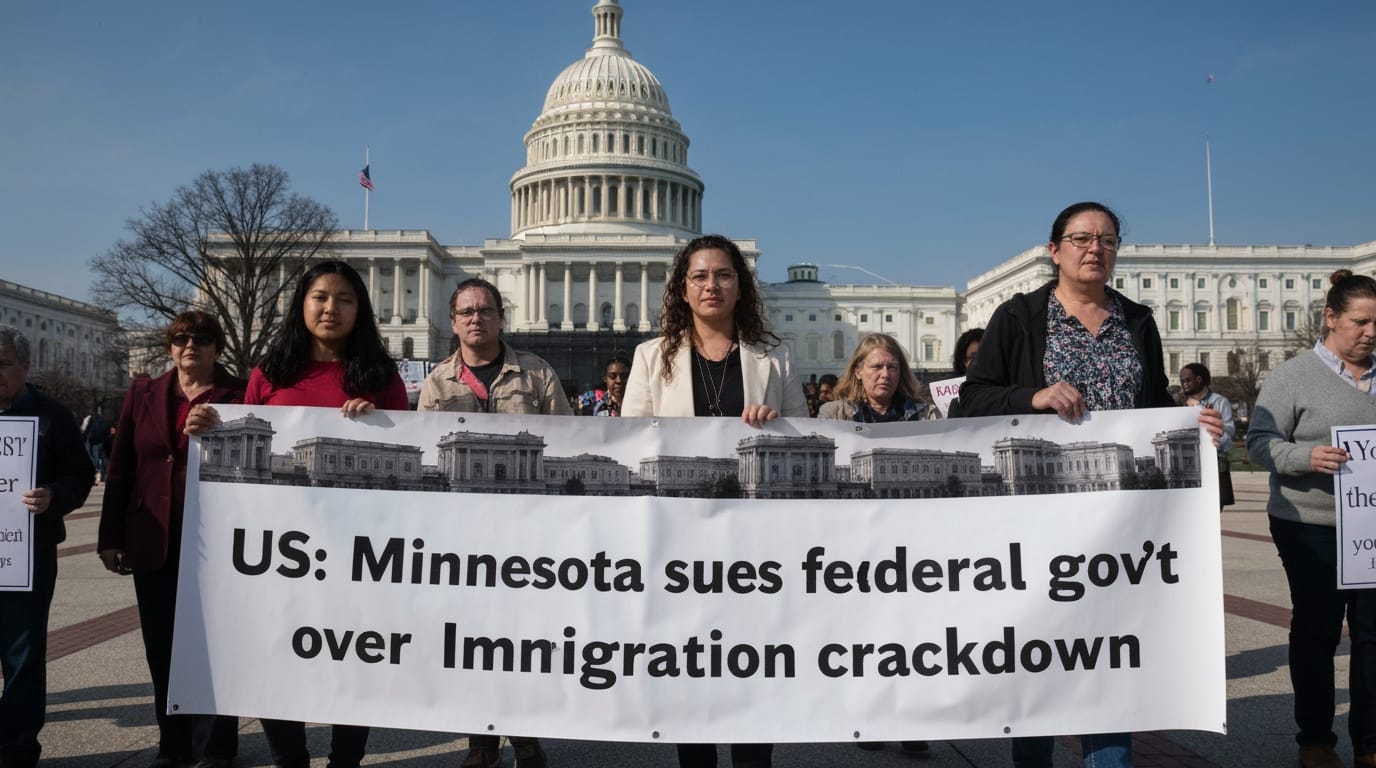
Minneapolis, MN – The state of Minnesota has launched a legal challenge against the Trump administration, alleging that a recent federal immigration crackdown, intensified following a fatal shooting by a federal agent, has jeopardized public safety and infringed upon the state's sovereignty. The lawsuit, announced by Attorney General Keith Ellison, marks a significant escalation in the ongoing dispute between the state and federal government over immigration enforcement policies, which has been simmering for months.
This legal action comes on the heels of a week marked by heightened federal immigration activity in Minnesota, culminating in the tragic death of a protestor during a confrontation with federal agents in Minneapolis. Local leaders have vehemently condemned the federal presence, asserting that the aggressive tactics of federal officers are creating an environment of fear and instability rather than enhancing security. The lawsuit aims to halt the Department of Homeland Security's expanded operations, arguing that the deployment of "poorly trained, aggressive and armed agents" has rendered Minnesota "less safe."
The Tragic Catalyst: Death of Renee Nicole Good
The immediate impetus for Minnesota's lawsuit appears to be the fatal shooting of Renee Nicole Good, 37, a U.S. citizen, by a federal immigration agent in Minneapolis last week. Good was reportedly shot in the head as she attempted to drive away from agents who approached her vehicle, which they claimed was blocking their way. Federal authorities, including Vice President JD Vance and the Department of Homeland Security, asserted that Good had "weaponized her vehicle" and was attempting to run over an officer, who then fired "defensive shots."
However, this account has been met with fierce skepticism and outright denial from Minnesota officials. Minneapolis Mayor Jacob Frey dismissed the federal government's claim as "bullshit," while Governor Tim Walz characterized the federal response as "propaganda." Eyewitnesses reported hearing multiple gunshots. Investigations revealed that Good was not the target of any immigration enforcement action and was merely suspected of blocking traffic. She leaves behind a wife and a six-year-old child, and her death has sparked widespread outrage, prompting vigils and protests across the nation. Over $800,000 has reportedly been raised for her family. Local officials have vowed to ensure a "full, fair, and expeditious investigation" into the incident.
Roots of Disagreement: The Sanctuary City Dispute
The current legal confrontation is not an isolated incident but rather the latest chapter in a protracted battle over immigration enforcement jurisdiction. Just months prior, in September 2025, the U.S. Department of Justice (DOJ) initiated its own lawsuit against Minnesota, as well as Minneapolis, St. Paul, and Hennepin County, challenging their "sanctuary" policies. The federal lawsuit alleged that these local ordinances and policies, which limit cooperation between local law enforcement and federal immigration agents, violate federal law and compromise public safety.
U.S. Attorney General Pam Bondi, in a statement at the time, asserted that "Minnesota officials are jeopardizing the safety of their own citizens by allowing illegal aliens to circumvent the legal process." The DOJ's action was part of a broader federal effort to target jurisdictions designated as "sanctuary cities" or states, following an executive order by President Donald Trump aimed at identifying entities that purportedly defy federal immigration law. The federal lawsuit sought to eliminate these policies, including those that restrict data sharing with federal immigration agents or prevent local police from inquiring about an individual's immigration status.
Minnesota's leaders, including Governor Walz and Attorney General Ellison, have consistently defended their state and local policies. Ellison, in response to the federal lawsuit, called it "baseless" and "political retaliation," emphasizing that Minnesota would respond in court and continue to use its law enforcement resources to improve public safety. Governor Walz has previously affirmed that Minnesota cooperates with federal immigration authorities in various ways and denied the state is a "sanctuary state," despite signing legislation that expands healthcare and driver's license access to undocumented individuals. Mayors of Minneapolis and St. Paul also pledged to vigorously fight the federal lawsuit, asserting their commitment to protecting immigrant residents.
Broader Implications and National Context
The legal skirmish in Minnesota reflects a national tension between federal immigration enforcement priorities and states' and municipalities' efforts to define their own roles in addressing immigrant communities. The Trump administration has consistently pursued aggressive enforcement policies and challenged jurisdictions that adopt "sanctuary" measures, viewing them as impediments to national security and the rule of law. Similar federal lawsuits have been filed against other major cities and states, including Boston and New York City, underscoring a concerted federal strategy to compel compliance with its immigration agenda.
Conversely, states like Minnesota argue for local control, emphasizing that their policies foster trust between immigrant communities and local law enforcement, making communities safer by encouraging all residents, regardless of status, to report crimes without fear of deportation. The fatal shooting of Renee Nicole Good, a U.S. citizen, further complicates the narrative, raising serious questions about the scope, tactics, and accountability of federal agents operating within local jurisdictions.
Conclusion
The dual lawsuits involving Minnesota and the federal government underscore a deep ideological and legal chasm over immigration policy in the United States. Minnesota's recent filing, catalyzed by the tragic death of a civilian, elevates the conflict from a dispute over policy to a direct challenge against federal enforcement tactics and their immediate human impact. As these cases proceed through the federal courts, they are poised to shape the contours of federalism, local control, and immigration enforcement for years to come. The outcomes will not only determine the legality of "sanctuary" policies and federal crackdowns but also potentially redefine the delicate balance of power between state and federal authorities in matters of public safety and civil liberties. The human cost of this struggle, starkly highlighted by the events in Minneapolis, ensures that the debate remains at the forefront of national attention.


