Modern Warlords: A Rising Threat in an Increasingly Fractured World
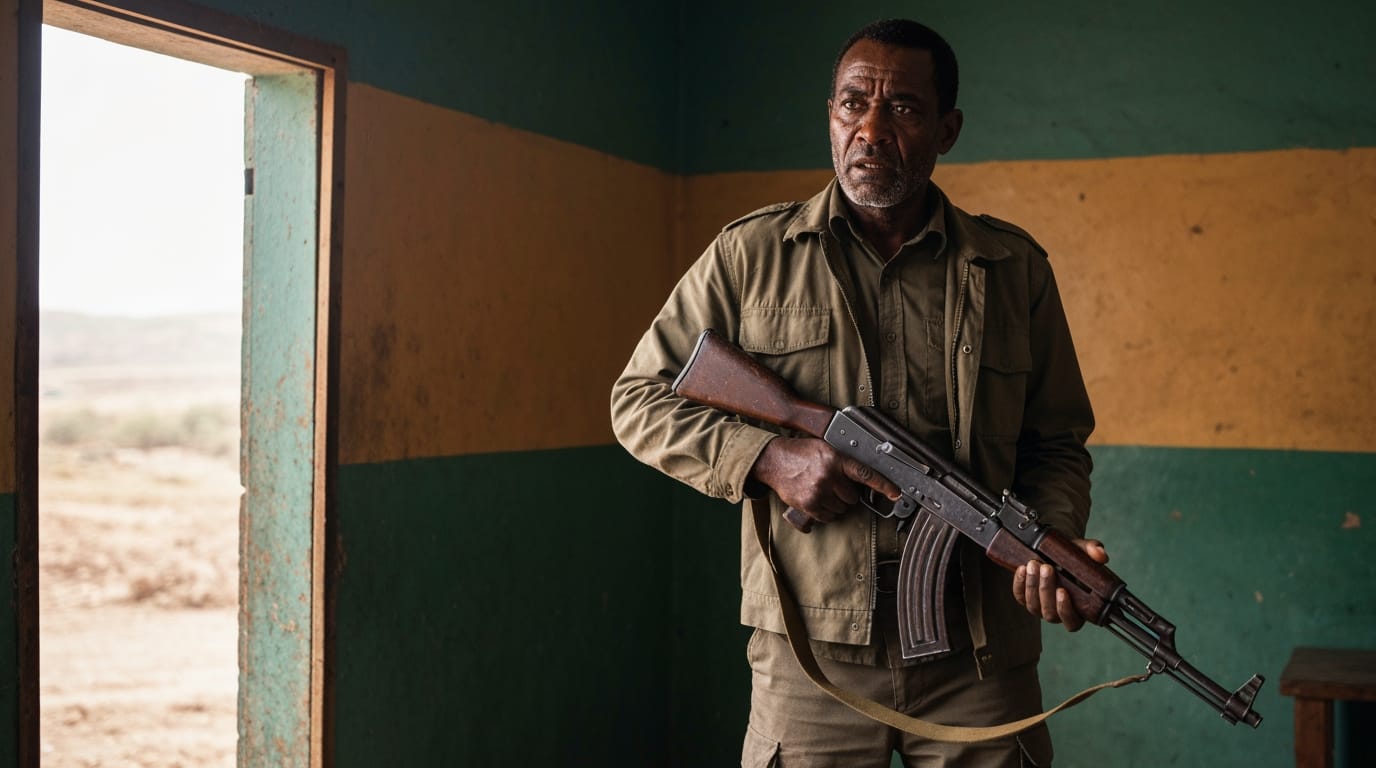
Global Peace Index Sounds Alarm as Non-State Actors Assert Control Amid Record Conflict Levels
A comprehensive analysis of global stability, including the recently released 2026 Global Peace Index (GPI), paints a stark picture of a world grappling with escalating conflict and the growing influence of non-state actors, raising critical questions about the very nature of modern governance. With global peacefulness deteriorating for the twelfth consecutive year, and conflicts reaching their highest point since the end of World War II, a new breed of "modern warlords" is emerging, or re-emerging, to exert military, economic, and political control over vast swathes of territory, fundamentally challenging traditional state sovereignty and exacerbating humanitarian crises.
The Shifting Sands of Global Conflict
The 2026 Global Peace Index, compiled by the Institute for Economics & Peace (IEP), reveals a significant decline in global tranquility, with 119 countries now less peaceful than they were in 2008. This alarming trend is predominantly driven by a surge in active state-based conflicts, numbering 61 in 2024 – the highest recorded figure since the conclusion of the Second World War. The expansion of violence is largely attributed to a staggering increase in internationalized intrastate conflicts, which have escalated by over 175 percent since 2010. This geopolitical "Great Fragmentation," characterized by the rising influence of middle powers and the waning strength of traditional European powers, is compounded by a rapid technological revolution in warfare, introducing new complexities and leaving international law struggling to keep pace. Drones, for instance, have become a defining weapon, with attacks surging by an astonishing 11,500 percent between 2018 and 2025, carried out by 565 different armed groups, including criminal cartels.
Defining the Modern Warlord and Their Reach
At the heart of this fractured landscape are modern warlords – individuals who wield significant military, economic, and political authority over specific regions, particularly where central governments are weak or absent. Unlike historical figures, these contemporary actors often operate within a complex web that extends to state institutions, international actors, and clandestine networks. Their rise is frequently a direct response to instability and the erosion of state power, effectively filling governance vacuums.
The economic underpinnings of modern warlordism are diverse and robust. They finance their operations through a blend of legitimate and illicit means, including control over natural resources, taxation of local populations, involvement in illegal activities like smuggling, and even the appropriation of foreign aid. These warlords skillfully leverage their armed forces not merely for defense, but as a primary tool to access and control these vital resources, thereby consolidating their power and influence. They effectively establish "quasi-states," commanding manpower, arms, and economic resources to enforce their will and maintain a semblance of order within their domains, often providing a degree of local security and stability, albeit often short-lived and brutal.
A Challenge to Sovereignty and International Order
The proliferation of modern warlords and other non-state armed groups (NSAGs) poses a fundamental challenge to the Westphalian concept of state sovereignty – the principle that a state exercises exclusive control within its borders. These groups actively undermine state authority through the use of force, contributing to social instability and eroding public confidence in legitimate governance. Many NSAGs function as de facto authorities over the territories they control, developing their own governance capabilities and directly competing with, or outright replacing, state functions.
Adding to this complexity is the growing phenomenon of Private Military and Security Companies (PMSCs) and mercenaries. Reports from the UN Working Group on the use of mercenaries highlight their increasing deployment as proxies and facilitators of violence, operating in ambiguous legal spaces and often contributing to human rights abuses. The emergence of state-sponsored military companies further blurs the lines between public and private force, raising concerns about accountability and the erosion of international legal frameworks. These actors, whether independent warlords, NSAGs, or private military enterprises, collectively contribute to a global environment where power is increasingly fragmented and the monopoly on violence by legitimate states is continuously challenged.
The Grave Economic and Human Toll
The proliferation of conflict and the entrenchment of warlordism carry devastating economic and human costs. The global economic impact of violence reached an staggering US$21.81 trillion in 2025, equivalent to 10.5 percent of the world's Gross Domestic Product (GDP). This figure encompasses direct costs such as military spending and losses from conflict deaths, as well as indirect consequences like terrorism and the massive displacement of populations.
Civil wars, often exacerbated by warlord activities, have particularly ruinous effects on national economies, leading to sharp declines in tourism, foreign investment, and domestic growth. Countries with high levels of armed conflict experience severe economic disruptions, with resources diverted from development to destructive military expenditures. The human cost is equally dire. Global conflict deaths remain at historic highs, with over 181,000 fatalities in 2025, marking a six-fold increase since 2008. Beyond direct casualties, millions are displaced, and entire generations are deprived of education, healthcare, and economic opportunity, trapping regions in cycles of poverty and violence.
A Fractured World and the Path Forward
The picture painted by recent peace reports and analyses of modern warlordism is one of a world at a critical juncture. The traditional international order, once underpinned by the clear sovereignty of nation-states, is being reshaped by a confluence of factors: persistent state weakness, the growing sophistication and proliferation of non-state armed groups, technological advancements in warfare, and the increasing entanglement of private actors in conflict. The rise of modern warlords is not merely a symptom of this fragmentation but a significant driver, creating persistent instability and hindering efforts towards sustainable peace and development.
Addressing this complex challenge requires a multi-faceted approach. While engagement with non-state armed actors is inherently risky and politically charged, it can be crucial for humanitarian access and future peace processes, particularly as many NSAGs function as de facto governance entities. Strengthening state capacity, fostering inclusive governance, and curbing the illicit financial flows that fuel warlord economies are essential. Furthermore, establishing robust international frameworks for regulating private military and security companies, and adapting international law to the realities of modern, technologically advanced conflict, are paramount to mitigating the pervasive influence of these powerful, often unchecked, actors. The future of global peace hinges on the international community's ability to navigate this intricate landscape and reassert the principles of stability and legitimate governance in an increasingly fractured world.


