Mojtaba Khamenei Ascends to Iran's Supreme Leadership Amidst Regional Turmoil
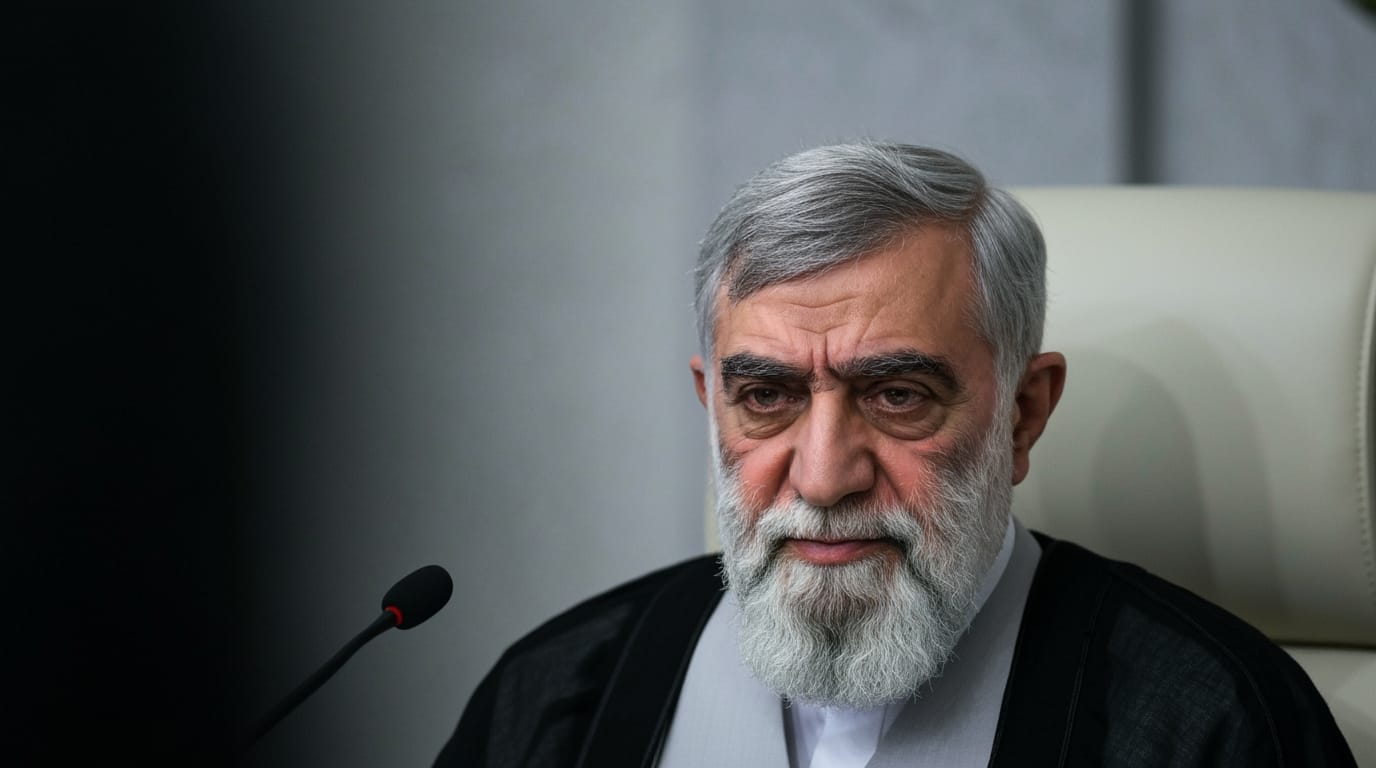
TEHRAN — In a historic and contentious transition, Mojtaba Khamenei, the second son of the late Ayatollah Ali Khamenei, has been appointed as Iran's new Supreme Leader. The decision, announced by the Assembly of Experts on Sunday, March 8, 2026, marks the first time since the 1979 Islamic Revolution that the nation's highest authority has passed from father to son. This succession occurs in a period of heightened regional conflict, following the death of Ayatollah Ali Khamenei in a US-Israeli strike on February 28, 2026, and is poised to reshape Iran's domestic and international trajectory.
The Ascent from the Shadows
Born on September 8, 1969, in Mashhad, Mojtaba Hosseini Khamenei's early life was intertwined with the formative years of the Islamic Republic. He participated in the Iran-Iraq War in the late 1980s, serving in the Islamic Revolutionary Guard Corps (IRGC)'s Habib Ibn Mazahir Battalion, an experience often highlighted by his supporters as evidence of his revolutionary credentials. Following his military service, he pursued extensive religious studies in the seminaries of Qom, Iran's primary center of Shiite scholarship, learning from prominent conservative clerics. Despite his deep immersion in religious education and teaching advanced jurisprudence courses, Mojtaba holds the clerical rank of Hojjatoleslam, a tier below Ayatollah, the rank held by his father and the Islamic Republic's founder, Ruhollah Khomeini. This has drawn criticism regarding his religious qualifications for the Supreme Leader position, which traditionally requires a higher clerical standing. For much of his career, Mojtaba maintained a low public profile, rarely appearing publicly or holding formal elected office, earning him the moniker of a "shadow operator" within Iran's political landscape.
Architect of Influence Behind the Throne
Despite his lack of formal government roles, Mojtaba Khamenei wielded significant informal influence, particularly within his father's office. He has been described as a key "gatekeeper" and power broker, managing his father's inner circle and acting as a crucial liaison between the Supreme Leader's office and various state institutions. His close connections to the Islamic Revolutionary Guard Corps and the Basij paramilitary force are well-documented, with analysts suggesting he helped consolidate influence within the regime's power structure. This relationship proved instrumental, particularly during politically volatile periods. He was widely believed to have played a significant role in the rise of hardliner Mahmoud Ahmadinejad to the presidency in 2005 and in supporting his disputed re-election in 2009. Accusations from reformist figures implicated him in orchestrating the security crackdown that followed the mass protests of the 2009 Green Movement, mobilizing Basij militias against demonstrators. In 2019, the United States Treasury Department imposed sanctions on Mojtaba Khamenei, citing his influence within the Supreme Leader's office and his alleged collaboration with the IRGC's Quds Force and the Basij in advancing the regime's regional ambitions and domestic repression.
A Controversial and Accelerated Succession
The process of selecting a new Supreme Leader falls to the 88-member Assembly of Experts, a clerical body responsible for appointing and supervising the nation's highest authority. Mojtaba Khamenei's appointment by a "decisive vote" on March 8, 2026, came swiftly after his father's death, accelerating a succession debate that had simmered for years. The swiftness of the decision, amidst ongoing military conflict and internal pressures, highlights the regime's desire for continuity and stability.
However, this transition is not without controversy. The elevation of a son to succeed his father marks a significant departure from the foundational principles of the Islamic Republic, which explicitly rejected hereditary rule after overthrowing the Pahlavi monarchy in 1979. Many critics, both inside and outside Iran, view this as the emergence of a dynastic system, challenging the regime's ideological legitimacy. Despite previous opposition from his father, Ayatollah Ali Khamenei, to dynastic succession, and theological principles that traditionally prohibit such a transfer of power, the Assembly of Experts moved forward with the appointment. The death of former President Ebrahim Raisi in a helicopter crash in May 2024, who was widely considered another leading contender for the Supreme Leadership, further cleared Mojtaba's path. State media has reported that Iran's armed forces leadership and the speaker of parliament have pledged allegiance to the new leader, with calls for national unity from the Assembly of Experts directed at citizens, particularly the religious and academic elites.
Implications for Iran and the Region
Mojtaba Khamenei assumes leadership at an exceptionally volatile moment. His perceived hardline political ideology and close ties to the IRGC suggest a continuation, and potentially an intensification, of Iran's current strategic orientation. Domestically, his appointment signals a determination by hardliners to maintain their grip on power and resist internal and external pressures for reform. This could lead to a more repressive domestic policy stance, particularly given his past alleged involvement in suppressing dissent.
Internationally, the succession takes place amidst an ongoing war that has seen direct US-Israeli strikes on Iranian soil and retaliatory actions from Tehran. U.S. President Donald Trump has publicly deemed Mojtaba Khamenei an "unacceptable" choice, insisting on a say in Iran's future leadership, while Israel has issued threats against any successor to the former Supreme Leader. This external pressure, combined with the internal controversy over his ascent, means Mojtaba Khamenei faces immediate and profound challenges in asserting authority and unifying a nation under stress. The transfer of power is expected to reinforce the IRGC's dominance and could lead to a more confrontational foreign policy, particularly concerning regional militias and Iran's nuclear program.
A New Era of Uncertainty
The formal appointment of Mojtaba Khamenei as Iran's third Supreme Leader marks a pivotal moment for the Islamic Republic. His ascent, though controversial and raising questions about the future of revolutionary ideals, was ultimately driven by the need for continuity during a period of extreme instability. He inherits a nation grappling with significant domestic discontent, a complex economic situation, and an escalating military confrontation on multiple fronts. As Iran navigates this unprecedented transition, the world watches closely to see how Mojtaba Khamenei, long a figure of quiet influence, will steer the nation through its current challenges and define his own legacy amidst the shadow of his powerful father and the principles of the revolution.


