Moldovan Prime Minister Alexandru Munteanu Resigns, Plunging Nation into Political Uncertainty
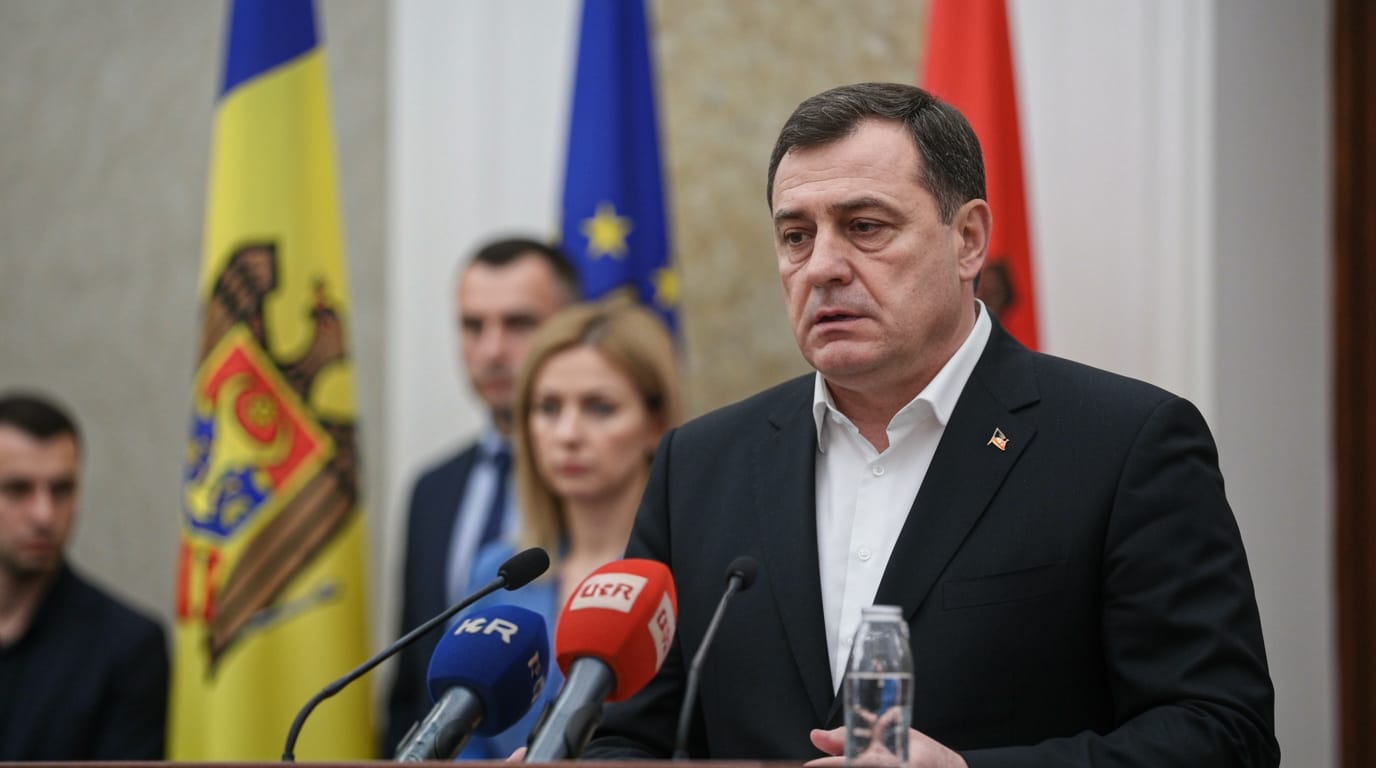
CHIȘINĂU, Moldova – Moldovan Prime Minister Alexandru Munteanu tendered his resignation on Friday, July 3, 2026, less than a year after taking office, triggering the automatic collapse of his pro-European government. The surprise move casts a shadow of political instability over the small Eastern European nation as it navigates a critical path towards European Union membership and grapples with internal challenges. Munteanu cited an inability to continue serving in accordance with his personal principles and beliefs, a statement that comes amidst swirling speculation of disagreements with President Maia Sandu and an unfolding scandal within a key state-owned enterprise.
The Abrupt Departure
Prime Minister Munteanu's resignation was announced via posts on social media platforms, including Facebook and X, where he stated, "Today, my term as Prime Minister comes to an end. The moment I understood that I can no longer exercise my mandate in accordance with my principles and beliefs, I chose to walk away." He had assumed the premiership in November 2025, following a parliamentary election that saw the pro-European Party of Action and Solidarity (PAS) secure a fresh mandate to pursue the country's EU ambitions. Under Moldova's constitutional framework, a prime minister's resignation immediately triggers the fall of the entire government, which then continues in a caretaker capacity until a new cabinet can be formed.
President Maia Sandu acknowledged Munteanu's departure, thanking him for his leadership during a "complex period" for the country. However, her remarks also hinted at underlying tensions, as she expressed a desire for "more involvement in complicated decisions" and "more openness to listening to people." Sandu emphasized the urgency of a swift transition, stating that consultations with parliamentary groups to appoint a new prime minister would begin next week, underscoring the imperative "not to take any breaks" in Moldova's European integration efforts.
Cracks in the Coalition: Scandals and Disagreements
While Munteanu's public statement focused on personal principles, several reports indicate deeper rifts within the government contributed to his decision. Sources suggested disagreements with President Sandu regarding policy direction and the handling of various issues. Notably, his resignation came just days after a political crisis erupted over alleged irregularities and governance issues within MoldATSA, the state-owned air navigation company. This controversy prompted President Sandu to promise a "general cleanup" and led to the Moldovan parliament establishing a special investigative committee to examine the management of state-owned companies. The committee's mandate includes reviewing recruitment procedures for senior management, the composition of boards of directors, and instances of individuals holding multiple public positions simultaneously. Sandu refuted speculation that Munteanu's resignation stemmed from a desire to fight abuses that he was not permitted to address, reiterating her expectation for greater engagement from her Prime Minister.
Munteanu's relatively short tenure, just eight months, points to the persistent fragility of Moldovan politics, characterized by a parliamentary representative democratic republic where the prime minister heads the government, yet often operates under the significant influence of the presidency, particularly in the current political climate. The nation, nestled between Ukraine and EU/NATO member Romania, frequently experiences political flux amid a deep cleavage regarding national identity, with a populace divided between pro-European and pro-Russian sympathies.
Munteanu's Brief Stint and Vision for Europe
Alexandru Munteanu, described as a 61 or 62-year-old economist and former World Bank expert, was seen as a key figure in advancing Moldova's European aspirations. Before his appointment as Prime Minister, he had spent two decades working outside Moldova, including a significant period in Ukraine. His pre-premiership public service included co-founding the American Chamber of Commerce in Moldova (AmCham), serving as founding president of the cultural and educational organization Alliance Française of Moldova for over 25 years, and co-chairing the Business Advisory Council for Southeast Europe and Eurasia.
Upon taking office, Munteanu outlined a clear pro-European vision, encapsulating his goals in three words: "EU, peace, growth." He pledged to complete EU accession negotiations by 2028, secure up to €4 billion in investments to strengthen Moldova's economy, and extend the benefits of European integration to the breakaway Transnistria region. His government faced formidable challenges from the outset, including economic recovery, persistent inflation, and the necessity for deep judicial and energy sector reforms. Munteanu, in his resignation statement, affirmed his commitment to serving his country in any capacity, whether in the public or private sector, stating, "I believe that our duty to the country does not depend on our position, but on the dedication we maintain."
Implications for Moldova's European Future
The resignation of Prime Minister Munteanu creates significant political uncertainty and poses a challenge to President Sandu and the ruling Party of Action and Solidarity. Moldova officially became a candidate country for EU membership in 2022, alongside Ukraine, and both nations formally opened the first of six "to-do lists" of reforms on June 15, 2026. The abrupt change in leadership threatens to disrupt the momentum gained in this crucial accession process. President Sandu has reiterated the country's obligation to "succeed in bringing Moldova into the EU and to develop the country," emphasizing the need for a "united, strong team in the Government that will fulfill our country's objective."
The instability comes at a precarious time for Moldova, which has been making speedy progress through the reform agenda, often second only to Ukraine in its pace. The political vacuum created by the government's collapse could be exploited by forces less keen on Moldova's Western integration, intensifying the long-standing geopolitical tug-of-war between pro-Western and pro-Russian factions within the country. Ensuring a smooth and swift transition will be paramount to maintaining the confidence of international partners and keeping Moldova firmly on its chosen European trajectory. The incoming government will inherit the formidable task of not only continuing the ambitious reform agenda but also restoring political cohesion and public trust in the country's leadership.


